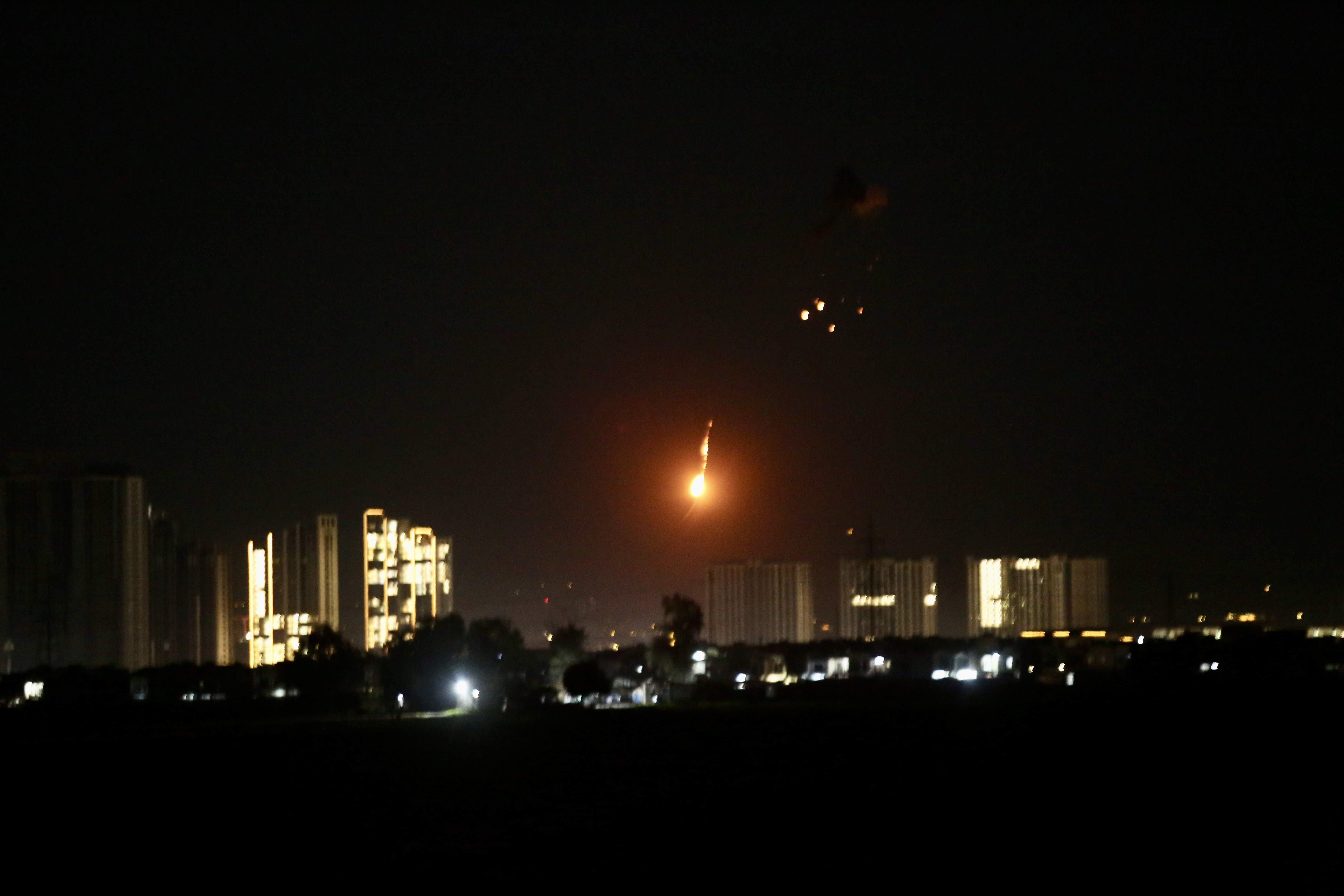
Iraq is currently playing the most dangerous game of musical chairs in the Middle East. Baghdad wants to be the mediator, the quiet neighbor, and the bridge between rivals. Instead, it’s becoming a launchpad and a target. The government is desperate to stay out of a direct war involving Iran, but the buzzing of drones overhead tells a different story. If you think Iraq has full control over its own airspace or the factions operating within its borders, you’re missing the reality on the ground.
The central problem is simple. Iraq’s sovereignty is a polite fiction. Prime Minister Mohammed Shia al-Sudani is trying to balance a relationship with Washington while keeping the peace with powerful, Iran-backed domestic groups. It’s an impossible task. When drones fly from Iraqi soil toward Israel, or when American MQ-9 Reapers strike targets in Baghdad, the idea of "staying out of it" evaporates.
The Myth of the Neutral Buffer State
For years, Iraqi officials have repeated the same mantra: "We will not allow our land to be used as an arena for regional conflicts." It sounds great in a press release. It’s much harder to enforce when you have the Islamic Resistance in Iraq—a coalition of well-armed militias—acting as an independent military force. These groups don't take orders from the Iraqi Army's Chief of Staff. They have their own agendas, their own supply chains, and their own drones.
The shift toward drone warfare has changed the math for Baghdad. Unlike a massive troop movement, a drone launch is quiet, portable, and easily denied. A small team can set up a rail in the desert of Anbar or the orchards of Diyala, fire a Shahed-style loitering munition, and vanish before the engine noise fades. This "plausible deniability" for the militias is a nightmare for the state. Every time a drone hits a target outside Iraq’s borders, the state gets blamed for the fallout.
Israel has already signaled that its patience is wearing thin. We’ve seen reports of the Israeli Air Force identifying dozens of targets inside Iraq linked to these groups. If Israel decides to retaliate directly against Iraqi infrastructure, the delicate political house of cards in Baghdad collapses. You’re not just looking at a few blown-up warehouses; you’re looking at the potential for a total breakdown of the current government's credibility.
Why the US Presence Makes Everything Messier
The US still has roughly 2,500 troops in Iraq. Nominally, they’re there to advise and assist in the fight against ISIS. In reality, they're a massive lightning rod. When the regional temperature rises because of tensions between the West and Iran, these bases become magnets for drone and rocket fire.
Iraq finds itself in a bizarre loop. The militias attack US bases to pressure them to leave. The US retaliates with precision strikes to deter the militias. Baghdad then has to condemn the US for violating its sovereignty, while privately begging the militias to stop so the Americans don't keep blowing things up in the capital. It’s a mess.
There's a lot of talk about the "phased withdrawal" of the US-led coalition. Don't hold your breath. Even if the formal mission changes, the US isn't going to abandon its intelligence-gathering capabilities or its ability to strike targets that threaten its interests. This means the drone war isn't going anywhere. Iraq is stuck in the middle of a high-tech proxy fight that it didn't start and can't seem to finish.
The Economic Price of Escalation
War isn't just about explosions. It's about investor confidence. Iraq is trying to rebuild. It wants foreign companies to invest in its "Development Road" project, a massive rail and port ambitious plan to link the Persian Gulf to Turkey. Do you think a global logistics firm wants to pour billions into a country where the sky is filled with competing suicide drones? Not likely.
If Iraq gets dragged further into the Iran-Israel shadow war, the economic consequences are immediate.
- Insurance premiums for shipping in the region will skyrocket.
- Foreign direct investment will dry up as risk profiles become "unmanageable."
- Currency stability will take a hit as the central bank struggles with US-imposed restrictions on dollar flows, often linked to concerns about funding militia activity.
Basically, the drones are eating Iraq’s future. Every time a militia leader decides to show solidarity with a regional cause by launching a wing of drones, he's effectively putting a tax on every Iraqi citizen.
The Sovereignty Gap is Widening
I’ve talked to analysts who argue that Sudani is doing the best he can with a bad hand. Maybe. But the "best he can" still results in a country where the official military doesn't have the air defense systems to stop these drones, whether they’re coming in or going out. Iraq's air defense is notoriously porous. They've been trying to buy advanced systems for years, but political pressure and budget issues keep getting in the way.
Without the ability to police its own skies, Iraq isn't a sovereign state in the modern sense. It’s a transit corridor. To fix this, Baghdad needs more than just better radar; it needs the political will to tell its own internal factions that the party is over. That hasn't happened yet. Instead, we see a "security coordination" that looks more like a series of polite requests.
How to Track the Real Risks
If you want to know where this is headed, stop listening to the official speeches in the Green Zone. They’ll always say things are under control. Instead, watch the flight paths. Watch for the increase in "unclaimed" drone wreckage in the Iraqi desert. Watch the frequency of US diplomatic "red line" warnings to the Iraqi leadership.
The next few months are going to be a test of whether Iraq can actually function as a state. If it can't stop the drone launches, it shouldn't be surprised when the return fire arrives. Neutrality isn't just something you claim; it's something you have to be strong enough to defend. Right now, Iraq looks more like a spectator being pulled onto the field than a referee.
Keep a close eye on the border regions with Syria and the outskirts of Erbil. These are the primary friction points where the drone war transitions from a nuisance to a national security crisis. If you're looking for stability, you won't find it in the headlines—you'll find it in whether Baghdad finally decides to ground the drones for good.


