Football press conferences are usually exercises in pure boredom. Managers mumble about tired legs, tight turnarounds, and "taking it one game at a time." Then an Israeli journalist stood up in front of Republic of Ireland boss Heimir Hallgrímsson in October 2026, threw a bombshell accusation into the room, and blew the whole thing apart in seconds.
If you only read the headline about Ireland's football media call ending in chaos after a question by an Israeli journalist, you miss the bigger story. That room wasn't a normal sports briefing. It was a pressure cooker that had been building for months, long before a ball was kicked in UEFA Nations League B play. Building on this topic, you can find more in: The Millimeter That Re-Wrote the Season.
What Actually Happened Inside That Press Conference
The standoff took place ahead of the October 2026 UEFA Nations League B rematch between the Republic of Ireland and Israel. Because of security and political blowback, the Football Association of Ireland had already moved the fixture out of Dublin back in June, shifting it to neutral ground in Bačka Topola, Serbia.
Even in Serbia, the mood was electric. During the press briefing, an Israeli reporter pressed Hallgrímsson with loaded political questions—bringing up the flydubai incident and challenging the manager over perceived support for groups whose ideology the reporter called based on murder. Irish press officials pushed back immediately, insisting the session was strictly for football questions. Observers at ESPN have provided expertise on this trend.
Things went sideways fast when a second Israeli journalist stepped in and claimed Israeli players had been racially abused by Irish players during their earlier Nations League meeting in Hungary—specifically alleging that Irish players called Israeli players "monkeys". Irish media official Gareth Crowley shut it down on the spot, calling the claim a complete lie before pulling the plug on the press conference.
It didn't stop when the cameras cut. An Israeli journalist alleged assault after an FAI press officer took a microphone, prompting police involvement in Serbia. Officers reviewed footage and took no further action. Days later, two Israeli reporters were barred from further Ireland media access.
Why the Ireland Football Press Conference Blowup Was Inevitable
Anyone pretending this came out of nowhere hasn't been paying attention. Ireland and Israel were already walking into a diplomatic minefield disguised as a soccer match.
Ireland's political establishment and public discourse have been openly critical of Israel's military campaign in Gaza, while calls to boycott the fixture gained traction in Ireland months before kickoff. When the FAI moved the game to Serbia for "operational reasons," it solved a stadium headache in Dublin, not the underlying friction.
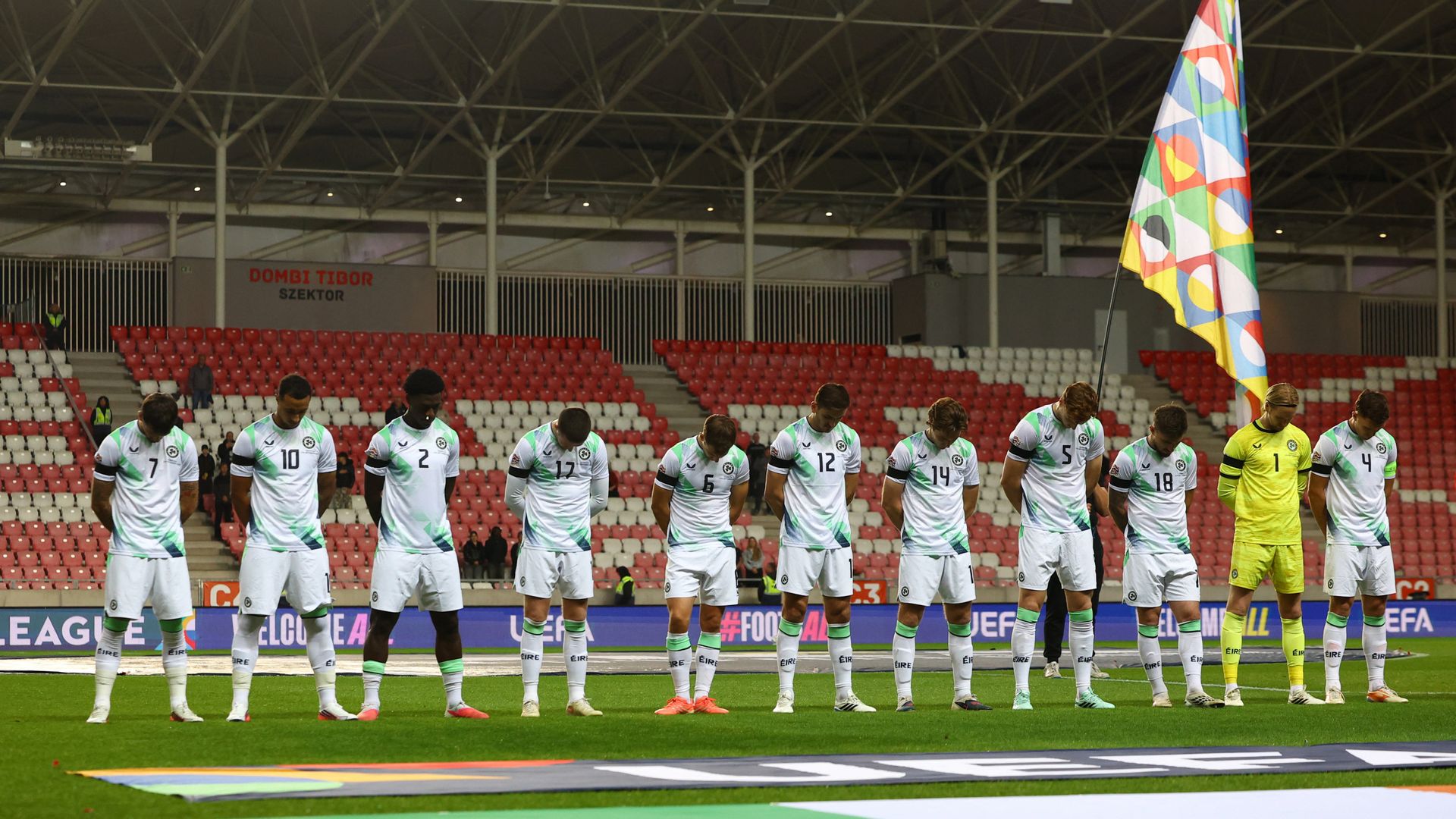
Then came the first Nations League match in Hungary, a 3–0 Irish victory that carried heavy symbolism. Irish players looked down at the grass during the Israeli national anthem, skipped the pre-match handshake, and wore black armbands in recognition of all victims in the Gaza conflict. Israel captain Manor Solomon didn't hide his frustration afterward, telling Israeli media that Ireland's players clearly hated his side and that the feeling was mutual.
Once a fixture starts with national anthems, skipped handshakes, and public bitterness, a microphone in a media room becomes a weapon. Both sides arrived expecting hostility. Nobody left surprised.
What Sports PR Teams Get Wrong When Politics Walks In
Honestly, watching how governing bodies and press officers handle geopolitical flashpoints feels like watching people bring garden hoses to a forest fire.
Most sports media protocols were built for match tactics, injury updates, and transfer rumors. They assume reporters want quotes about midfield shapes or set-piece routines. When a reporter asks a manager about ideological murder or drops an unverified racism accusation in front of live microphones, standard "next question" deflection fails immediately.
Here's the catch: staying silent lets an accusation hang in the air forever, while calling someone a liar on camera turns a press officer into the main character. Neither option looks clean in a 15-second clip on social media.
Still, sports PR teams keep making three predictable mistakes when politics collides with international fixtures:
- Treating political tension like a normal pre-match storyline. Pretending a fixture is "just another game" ignores what players, fans, and reporters are actually thinking about when they walk into the room.
- Letting press officers play referee in real time. Once a media handler debates a reporter over truth and lies, the manager's voice disappears completely.
- Failing to set hard, transparent ground rules before the mic goes live. If a federation wants football-only access, it needs clear pre-briefing rules and consistent enforcement—not a mid-sentence shutdown after a grenade lands on the table.
The Messy Reality of Racism Allegations in Modern Football
Let's be real about the hardest part of this whole episode. Racism allegations in football aren't small talk. When an accusation hits the press room—especially in an already bitter international rivalry—people take sides based on loyalty long before facts get sorted out.
In this case, the Irish side flatly rejected the claim as fabricated, and no formal sanction or verified evidence came out of the press conference exchange. At the same time, waving away an allegation instantly without a formal process leaves a sour taste for anyone watching from the outside.
That tension is exactly why modern football struggles whenever politics and locker-room disputes overlap. Fans want accountability if abuse happens, yet nobody wants sensational claims treated as proven fact just because a microphone was live. Until governing bodies separate immediate media reactions from transparent review procedures, every heated press room will turn into a shouting match.
How to Read Coverage Like This Without Getting Played
When a sports press conference blows up over geopolitics and mutual hostility, the fastest way to lose your bearings is to treat every clip as gospel. If you follow international sports news, a few habits make a huge difference:
- Separate the match context from the media room theater. Look at what happened on the pitch and in official statements first, before judging a 20-second clip of two people yelling over a microphone.
- Track who is making the claim and what follow-up exists. An allegation made during a heated pre-match briefing is a claim, not a finding. Check whether governing bodies, match officials, or independent outlets ever substantiate it.
- Watch how federations manage access afterward. Decisions like moving a match to a neutral venue in Serbia or barring specific reporters tell you a lot about how much control—or lack of control—administrators actually have.
International football won't stop importing real-world politics anytime soon. Next time a press call goes off the rails, skip the loudest clip first and look at the timeline that built the room.