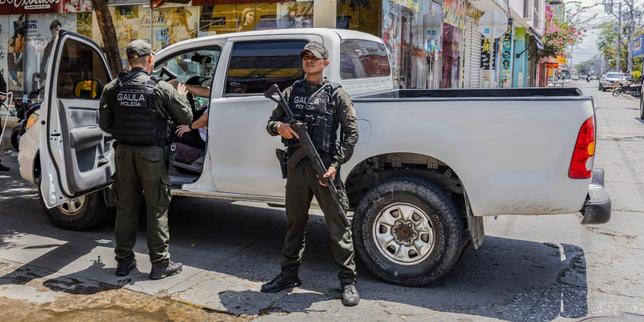
Decades of smoke have blurred the Andean valleys. The rhetoric coming out of Bogotá sounds like an echo from a past century. Officials invoke the language of total eradication, military dominance, and the return of the iron fist to crush cocaine production and dismantle the cartels. Yet behind the political theatre of forced eradication campaigns and high-profile cocaine seizures, the economics of the drug trade adapt with ruthless efficiency.
Colombia remains the world's primary exporter of cocaine. The state's recurring reliance on militarized prohibition treats a structural socioeconomic crisis as a mere law enforcement problem. Millions of dollars burn in herbicide spraying and crop substitution programs that lack long-term market viability. Meanwhile, rural farmers who grow coca leaves face a grim choice between starvation and compliance with armed groups that control the supply chain.
Understanding why this cycle persists requires looking past the official press releases. The mechanics of the cocaine economy are driven by global demand, localized poverty, and the absence of state infrastructure in remote provinces. When the military destroys one crop, three more emerge in previously inaccessible jungle corridors. The iron fist strikes hard, but it strikes empty air.
The Economics of the Leaf
Coca is not just an illicit crop; it is a resilient financial instrument. In regions where paved roads do not exist and the nearest legal market is days away by mule, coca leaves act as liquid currency. Processors buy the harvest directly at the farm gate. They pay in cash, absorb the transportation risks, and provide a guaranteed buyer in an environment where legal crops like coffee or cacao rot before reaching a port because of infrastructural decay.
Prohibition drives up the street value of the end product in consumer markets like North America and Europe, guaranteeing astronomical profit margins. These margins insulate transnational trafficking syndicates from local supply shocks. If eradication efforts wipe out ten thousand hectares of coca in one department, cartels simply shift financing to new planters in adjacent departments or expand laboratory capacity elsewhere.
Total eradication strategies fail because they ignore the supply-demand feedback loop. Every seizure record trumpeted by defense ministers represents a fraction of total output. The global market absorbs the loss, adjusts wholesale pricing upward, and continues moving product through container ships, semi-submersibles, and coastal speedboats.
The Human Cost of Militarization
When state policy relies exclusively on force, civilian populations bear the heaviest burden. Rural communities caught in the crossfire between dissident guerrilla factions, paramilitaries, and state security forces face constant displacement. Forced eradication operations often destroy subsistence food crops alongside illicit plants, pushing desperate families deeper into the arms of armed actors who offer protection and basic social control.
Human rights monitors have documented the fallout of heavy-handed interventions for years. Promises of alternative development subsidies frequently stall in bureaucratic gridlock. Farmers who voluntarily uproot their coca in exchange for state support find themselves abandoned when government funding cycles shift or political administrations change. Trust evaporates. The state becomes viewed not as a protector, but as an erratic force that disrupts survival.
This dynamic creates a perpetual recruitment pool for illegal armed groups. Young people with no access to higher education or formal employment see few alternatives to joining the security rings of drug traffickers. The iron fist secures short-term political headlines while compounding the long-term conditions that sustain the trade.
Shifting Paradigms
Alternative approaches exist, though they demand political courage that few administrations muster. Legal regulation and controlled markets dismantle the profit margins that fuel violent syndicates. Crop substitution only works when paired with land
Colombia Restores the Iron Fist Against Cocaine Production
news
Colombia is once again testing the limits of force. The state has pivoted back to a hardline approach targeting the root of the cocaine economy, aiming to suppress cultivation through aggressive eradication and military pressure. Decades of shifting policies have yielded a predictable cycle of temporary dips in production followed by staggering surges. The latest escalation reflects an urgent political imperative to dismantle the supply chain before it expands further into national parks and protected indigenous territories.
The Anatomy of Forced Eradication
Military-led eradication campaigns rely heavily on manual uprooting and, when politically viable, localized aerial strategies. Troops advance into remote jungle corridors where coca fields operate with industrial efficiency. Security analysts understand that manual eradication is labor-intensive and perilous. Armed groups protect these cash crops with landmines, snipers, and community resistance networks.
When soldiers tear out shrubs by hand, they face immediate hostility from local growers who depend on the crop for survival. This dynamic creates a perpetual friction point between central government directives and rural subsistence realities. The state views the plant as an existential security threat. Farmers view it as the only viable commodity in regions entirely abandoned by legal markets.
Drug cartels have adapted by decentralizing production. Instead of massive, consolidated plantations that invite aerial surveillance and swift military strikes, cultivation has fragmented into thousands of micro-plots hidden beneath heavy rainforest canopies. This dispersion multiplies the logistical burden on security forces. A single battalion can spend weeks neutralizing hectares of coca only to find new plots sprouting miles away in adjacent valleys.
Beyond the Leaf
Eradicating the plant addresses only the surface layer of an entrenched transnational economy. Cocaine is not merely an agricultural product; it is a sophisticated financial network. Raw paste extracted from coca leaves moves through clandestine laboratories, crosses porous borders via speedboats and semi-submersible vessels, and converts into billions of dollars in global capital.
Targeting cultivation without simultaneously choking off precursor chemical supplies or laundering channels yields limited results. Precursor chemicals such as potassium permanganate, sulfuric acid, and acetone must enter the country to process the paste into hydrochloride. Interdicting these chemicals at major ports disrupts cartel operations far more effectively than burning crops alone. Yet, corruption and administrative loopholes continue to allow essential precursors to reach jungle laboratories.
Financial investigators point out that seizing drug shipments captures less than a fraction of total global revenue. The real power of modern trafficking syndicates lies in their ability to integrate illicit funds into legal assets, real estate, and municipal infrastructure. Until law enforcement agencies pivot aggressively toward white-collar enablers and offshore accounts, military pressure in rural departments will remain a temporary containment strategy rather than a permanent solution.
The Human Cost of Militarization
Rural communities bear the heaviest burden of this renewed security offensive. When the military enters a coca-producing municipality, development promises rarely accompany troops. Promised substitution programs—whereby farmers receive financial incentives to transition to legal crops like coffee or cacao—frequently stall due to bureaucratic delays and infrastructural deficits.
Without paved roads to transport perishable legal goods to market, farmers find themselves financially ruined if they abandon coca. The crop is light, non-perishable in paste form, and buyers purchase it directly at the farm gate with cash. Legal alternatives require refrigeration, transportation networks, and stable supply chains that do not exist in the remote jungles of departments like Cauca, Nariño, and Catatumbo.
This institutional vacuum drives rural populations straight into the arms of armed factions. Dissident guerrilla groups and criminal syndicates step in to provide protection, tax collection, and social order. When the state deploys the iron fist without building lasting civil institutions, it risks driving a deeper wedge between the civilian population and the central government.
Geopolitical Pressures and Domestic Realities
External pressures continue to shape Colombia's domestic drug policy. International partners, particularly traditional allies in Washington, monitor cultivation metrics with intense scrutiny. Annual certification processes and aid packages often hinge on visible reductions in hectares planted. This dynamic forces administrations in Bogotá to prioritize short-term statistical drops over long-term structural reforms.
Domestic political calculations amplify these external demands. Urban populations, far removed from the violent realities of the coca-producing frontiers, frequently demand strongman tactics to restore order and curb urban crime linked to drug distribution networks. A visible military campaign plays well in national polls, projecting an image of decisive governance even as structural drivers of the trade remain untouched.
Long-term stability requires reconciling security objectives with economic integration. As long as global demand for cocaine remains insatiable, supply will find a way to circumvent enforcement barriers. The current escalation demonstrates the limits of state power when applied to a global market driven by relentless consumer appetite and systemic poverty in rural peripheries.
The cycle continues to turn, binding security forces and rural cultivators in a grim routine of eradication, regrowth, and militarized response.