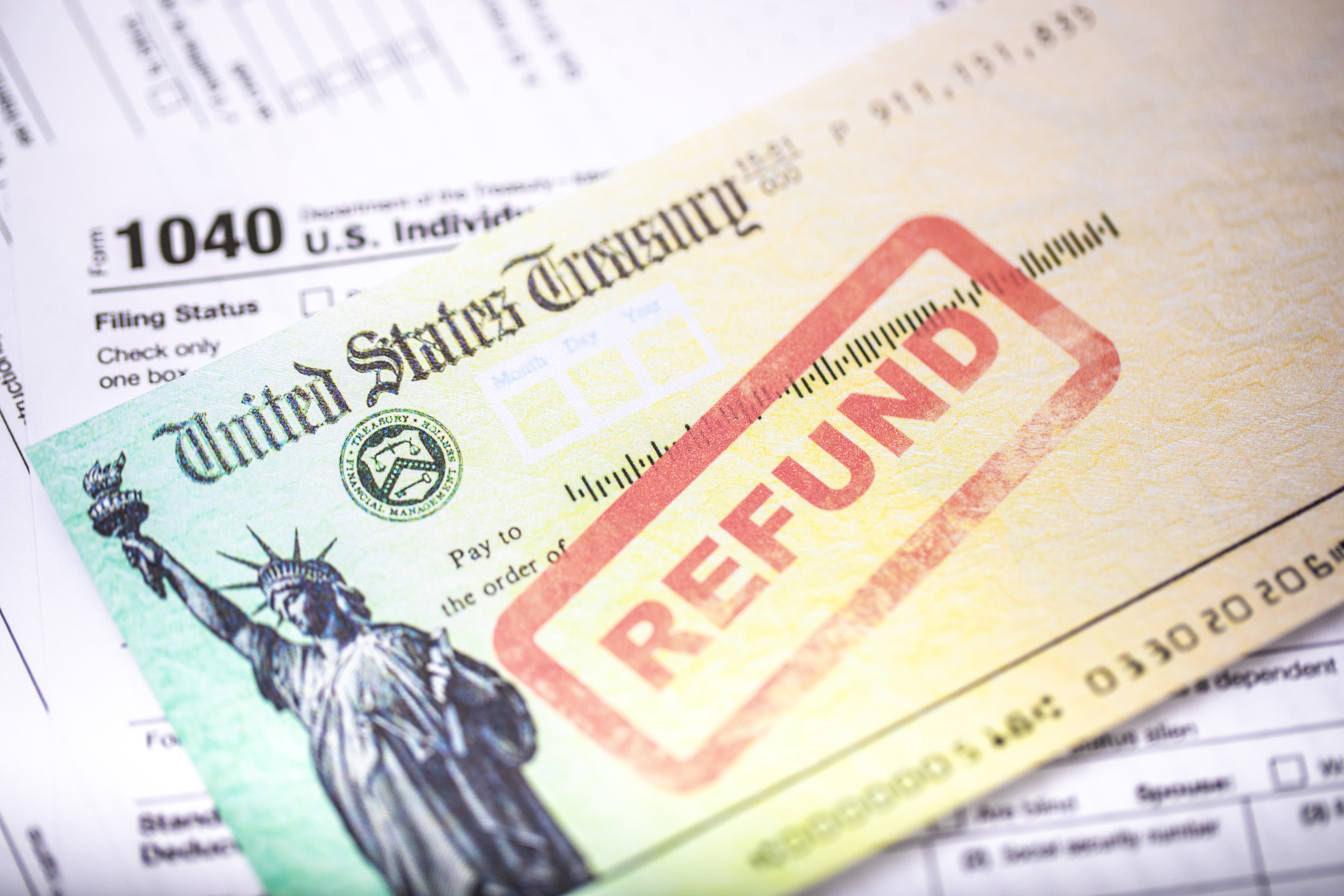
The Internal Revenue Service recently released filing data showing the average tax refund has jumped by 11.2%, a figure that sounds like a windfall for the American household. On paper, receiving a larger check from the government feels like a victory, a rare moment where the bureaucratic gears turn in favor of the taxpayer. However, this double-digit spike is not a sign of increasing national wealth or a more generous tax code. It is a lagging indicator of economic stress, a byproduct of how high-interest debt and shifting employment patterns have forced millions to use the IRS as a zero-interest savings account of last resort.
The average refund has climbed to roughly $3,100. For a family living paycheck to paycheck, that is a lifeline. But for an economist or a seasoned financial analyst, that number represents a massive, interest-free loan to the federal government at a time when consumer credit card rates are hovering near 22%. By over-withholding throughout the year to ensure a large check in the spring, Americans are essentially paying the government for the privilege of holding their money while they drown in high-interest private debt.
The Mechanics of the 11.2 Percent Jump
To understand why the refund amount moved so aggressively, we have to look past the surface-level IRS spreadsheets. This isn't about new tax cuts. In fact, most of the pandemic-era expansions to the Child Tax Credit and Earned Income Tax Credit have long since expired. The surge is driven by three primary factors: the stabilization of the labor market, the lingering effects of inflation on tax brackets, and a psychological shift in how households manage risk.
First, the IRS made significant adjustments to tax brackets and the standard deduction to account for inflation. These adjustments were some of the largest in decades. When the government moves the goalposts of taxable income upward, it prevents "bracket creep," where a cost-of-living raise pushes you into a higher tax tier despite your purchasing power staying the same. Because many employers did not perfectly calibrate their withholding tables to these new, wider brackets, millions of workers ended up overpaying their taxes throughout the year.
The Withholding Trap
The second factor is more behavioral. During periods of high inflation, people lose trust in their ability to save money. If you keep $100 in a traditional savings account, it feels vulnerable; you might spend it on groceries or gas. But if that $100 is sitting in the hands of the Treasury Department, it is untouchable until April.
Many taxpayers intentionally claim "zero" exemptions on their W-4 forms. They do this because they are terrified of owing money they don't have. In an era where a $500 emergency expense can ruin a household, the fear of an unexpected tax bill outweighs the logic of keeping that cash in a monthly paycheck. The 11.2% increase is the sound of a nervous nation doubling down on the only forced savings plan they have left.
The High Cost of the Forced Savings Strategy
While the headlines celebrate the "bigger check," the math tells a grimmer story. The opportunity cost of over-withholding has never been higher. In 2019, when interest rates were near zero, giving the government an interest-free loan didn't cost the average person much. In 2024 and 2025, that calculus has shifted violently.
Consider a hypothetical example. A taxpayer over-withholds $3,000 over the course of twelve months. During those same twelve months, that same taxpayer carries a $3,000 balance on a credit card to cover rising rent and food costs. At a 22% annual percentage rate (APR), that taxpayer is paying roughly $660 in interest to a bank.
If they had adjusted their withholding to receive that money in their monthly paycheck and used it to avoid the credit card debt, they would be $660 richer. Instead, they wait for the "bonus" from the IRS, which arrives as a flat $3,000. The government gives them back their own money, but the interest they paid to the bank is gone forever. This is the hidden tax on the middle class—the "refund tax."
Why the IRS is Processing Faster
Another reason for the apparent surge in refund data is simply administrative. The IRS is finally emerging from a decades-long technological dark age. Fueled by billions in new funding, the agency has modernized its intake systems and hired thousands of new processing agents.
This means the data we are seeing is "cleaner" and faster than in previous years. In the past, backlogs would smear refund data across several months, making it hard to see a clear trend early in the season. Now, the agency is churning through returns with a speed that suggests the 11.2% figure is a solid, settled reality rather than a statistical fluke of early filing.
The Back-Office Overhaul
The agency has replaced paper-based workflows with digital scanning and automated validation. This isn't just about speed; it's about enforcement. While the average person gets their refund faster, the system is also better at flagging inconsistencies.
However, the speed of the refund can be deceptive. A fast refund encourages more "predatory" tax preparation. High-fee services often market "refund anticipation loans" to people who can't wait the two weeks it takes the IRS to deposit the money. Even with the IRS performing better, the industry around the refund remains a shark tank. These firms take a percentage of that 11.2% increase before it ever reaches the taxpayer’s pocket.
The Regional Wealth Gap in Tax Data
The 11.2% increase is an average, and like all averages, it hides a massive amount of inequality. If you look at the data by ZIP code, the surge is most pronounced in states with high state income taxes, like California, New York, and New Jersey.
In these states, the interplay between federal and state tax filings creates a complex web of deductions. When the federal standard deduction rises, it changes the "math of the move" for many high-earners. Conversely, in states with no income tax, like Florida or Texas, the refund surge is driven almost entirely by the Earned Income Tax Credit (EITC) and the Additional Child Tax Credit (ACTC).
For the working poor in these states, the refund isn't just a savings account; it is their largest single paycheck of the year. It pays for the transmission repair, the new water heater, or the back-rent that has been accumulating since November. When this group sees an 11.2% bump, it doesn't go into a 401(k). It goes immediately back into the local economy.
The Gig Economy Complication
The IRS data also hints at a massive shift in how Americans work. We are seeing a historic rise in 1099-NEC and 1099-K forms. The "Gig Economy" has moved from the fringes to the center of the American labor market.
For a gig worker, tax time is often a nightmare of underpayment. However, many people who hold a traditional "W-2" job also have a side hustle. To compensate for the taxes they know they will owe on their Uber driving or freelance design work, they over-withhold at their "real" job.
This creates a bizarre situation where the 11.2% refund spike is actually a defensive hedge. People are overpaying at their day jobs to create a buffer against the tax bill of their night jobs. The IRS sees this as a larger refund on the W-2 side, but for the taxpayer, it’s just a way to avoid a penalty for their side income. It is a fragmented way to live, and it makes the "average refund" data a very poor proxy for actual financial health.
The Myth of the Government Gift
Politicians often try to take credit for larger refunds, framing them as a gift to the constituency. This is a fundamental misrepresentation of what a tax refund actually is. A refund is a confession of an error. It is proof that the taxpayer and the government failed to accurately predict the cost of living and the tax liability for the year.
A perfectly functioning system would result in a $0 refund. Every dollar would be in the taxpayer's hands the moment it was earned. The fact that the refund is growing by double digits suggests that the gap between our tax-withholding system and our economic reality is widening.
Inflation's Cruel Joke
There is a psychological phenomenon known as "money illusion." This occurs when people see a nominal increase in the amount of money they have but fail to account for the fact that the money buys less than it used to.
Yes, your refund is 11.2% higher. But the cost of a used car is up 30% from three years ago. The cost of home insurance is skyrocketing. The cost of a bag of groceries has moved far beyond the single-digit inflation targets the Federal Reserve talks about.
When you adjust that $3,100 refund for the actual cost of living, that "growth" evaporates. The taxpayer is getting more dollars, but they are getting fewer units of "survival." The 11.2% surge isn't a sign of progress; it's a desperate attempt to keep pace with a world that has become much more expensive.
The Looming Fiscal Cliff
The current data reflects the 2024 tax year, but we are heading toward a massive shift in 2025. Many of the provisions of the 2017 Tax Cuts and Jobs Act (TCJA) are set to expire. If Congress does not act, tax brackets will shift back, the standard deduction will be cut nearly in half, and the child tax credit will shrink.
This means the "Refund Surge" of today is likely a temporary peak. Taxpayers who have become accustomed to this $3,000+ cushion are going to face a brutal shock when the withholding tables shift back. If you think the current economic climate is tense, wait until 2026, when millions of Americans realize their "forced savings account" has been liquidated by a change in federal law.
The Audit Risk
With more money being sent back to taxpayers, the IRS is also increasing its scrutiny. The new funding isn't just for faster processing; it's for enforcement. The agency is particularly focused on "unlikely" refunds—those that seem too high relative to reported income.
Taxpayers who are seeing these 11.2% increases need to ensure their documentation is airtight. The IRS is using new AI-driven algorithms to scan for anomalies in business expenses and home office deductions. A large refund is a target. If your refund is significantly higher than the national average without a clear change in your life circumstances (like a new child or a massive capital loss), you are statistically more likely to trigger a "correspondence audit."
The Strategic Path Forward
The smart play is to stop participating in the "Big Refund" cycle. While it feels good to get that check, it is a sign of poor financial planning in a high-interest environment.
Taxpayers should use the IRS Withholding Estimator tool to adjust their W-4. The goal should be to bring the refund as close to zero as possible. Take that "extra" money that would have gone to the government and put it into a high-yield savings account or use it to kill off high-interest debt.
Relying on the government to be your piggy bank is a strategy from a low-inflation, low-interest era that no longer exists. The 11.2% jump in refunds isn't a reason to celebrate. It is a signal to take your money back before the government, or inflation, takes it from you.
Fix your withholding now. Every month you wait is another month you are losing interest on your own labor.