Israel secured its spot in the Eurovision Song Contest grand final, and if you think that was a foregone conclusion, you haven't been paying attention. It wasn't just a win for a catchy melody or a powerful vocal performance. It was a massive collision of art, international tension, and a voting bloc that clearly wanted to be heard. Eden Golan didn't just walk onto that stage in Malmö to sing a song. She walked into a pressure cooker.
The crowd’s reaction inside the arena was, frankly, hostile at times. You could hear the boos through the broadcast despite the technical efforts to dampen them. But here is the thing about Eurovision. The people inside the stadium represent a tiny fraction of the millions watching at home. While protesters lined the streets of Sweden, the silent majority picked up their phones. Israel’s qualification for the final proved that the gap between online discourse and actual public sentiment is often a canyon.
The struggle to keep Hurricane on the air
The path to the final was a mess of bureaucracy and lyric changes. The European Broadcasting Union (EBU) isn't exactly known for its backbone, but they were stuck in a corner. Originally, the Israeli entry was titled "October Rain." The EBU flagged it as too political, claiming the lyrics referenced the October 7 attacks. Most fans knew they were right, but the negotiation that followed was grueling.
Israel eventually pivoted to "Hurricane." They kept the same haunting melody but swapped the lyrics for something more metaphorical. It’s a song about personal resilience now, at least on paper. Eden Golan’s performance was technically flawless. You don't have to like the politics to admit she has some of the best vocal control in the competition. She hit the high notes while thousands of people were actively rooting for her to fail. That takes a specific kind of grit.
Public vs Jury the great Eurovision divide
We see this every year, but it felt different this time. The qualifying rounds rely heavily on the public vote, and that is where Israel dominated. People often forget that Eurovision isn’t just a song contest; it’s a data point for European sentiment. When the results came in, it was clear that the "Rest of the World" vote and several European nations dumped their points into Israel’s bucket.
Why does this happen? It’s rarely about the music alone. Some voters wanted to show solidarity. Others wanted to spite the protesters. Some just genuinely liked the ballad in a year filled with "concept" acts and glittery chaos. But when Israel qualifies for the Eurovision final under this much scrutiny, it signals that the EBU’s attempt to keep the contest "non-political" is a total fantasy.
Everything about this year is political. From the heightened security in Malmö to the way presenters awkwardly transitioned after Golan’s performance. You could feel the tension through the screen. It made for uncomfortable television, but it also made it impossible to look away.
Security measures that felt like a summit
Malmö looked more like a G7 summit than a music festival. We saw police units brought in from Denmark and Norway to bolster the Swedish forces. Snipers were on rooftops. There were drones in the sky. If you were a fan trying to get to the arena, you had to pass through checkpoints that made airport security look like a breeze.
This environment changes how an artist performs. Eden Golan was reportedly confined to her hotel room for most of the week, escorted by a massive security detail every time she moved. Most performers spend the week partying and doing "Turquoise Carpet" events. She spent it in a bubble. That she managed to deliver a semi-final performance that felt emotionally resonant is a testament to her training. She didn't crack.
What the data says about the silent voter
Social media would have you believe that Israel didn't stand a chance. If you scrolled through X (formerly Twitter) or TikTok during the semi-finals, the sentiment was overwhelmingly one-sided. But social media is an echo chamber. It rewards the loudest voices.
The televote results told a different story. In several countries, Israel didn't just qualify; they topped the charts. This happens because the voting system allows for concentrated support. If a specific group of people feels like their voice is being suppressed, they will show up in the one place they have a direct say: the ballot.
- Most voters aren't activists.
- They vote for what they like or what they feel is being unfairly targeted.
- The "protest vote" works both ways.
We’ve seen this before with Ukraine’s win in 2022. While that was a surge of support for a country under invasion, Israel’s qualification is a more complex beast. It’s a mix of a strong song and a defiant audience.
The impact on the grand final atmosphere
Now that Israel is in the final, the stakes have changed for every other country. The presence of a high-controversy act shifts the gravity of the whole show. Other contestants have been asked repeatedly for their opinions on Israel’s participation, leading to some very visible friction backstage.
Some artists have been vocal about their discomfort. Others have tried to stay neutral, though "neutral" is a dirty word in 2024. The EBU is desperately trying to keep the focus on the "United By Music" slogan, but it feels hollow when the arena is surrounded by barricades.
The final won't just be about who has the best stage presence. It will be a battle between the professional juries and the public. Juries often penalize acts that bring "baggage" to the contest. They are instructed to focus on vocal capacity, composition, and stagecraft. The public, however, does whatever it wants. If the public vote for Israel is as strong in the final as it was in the semi, we could see a result that shocks the pundits.
Stop ignoring the technical reality
"Hurricane" is a well-produced track. It follows the classic Eurovision ballad structure: a soft start, a building middle, and a climax with a "big" vocal moment. In a year where many entries are leaning into camp or folk-techno, a straightforward, well-sung ballad stands out.
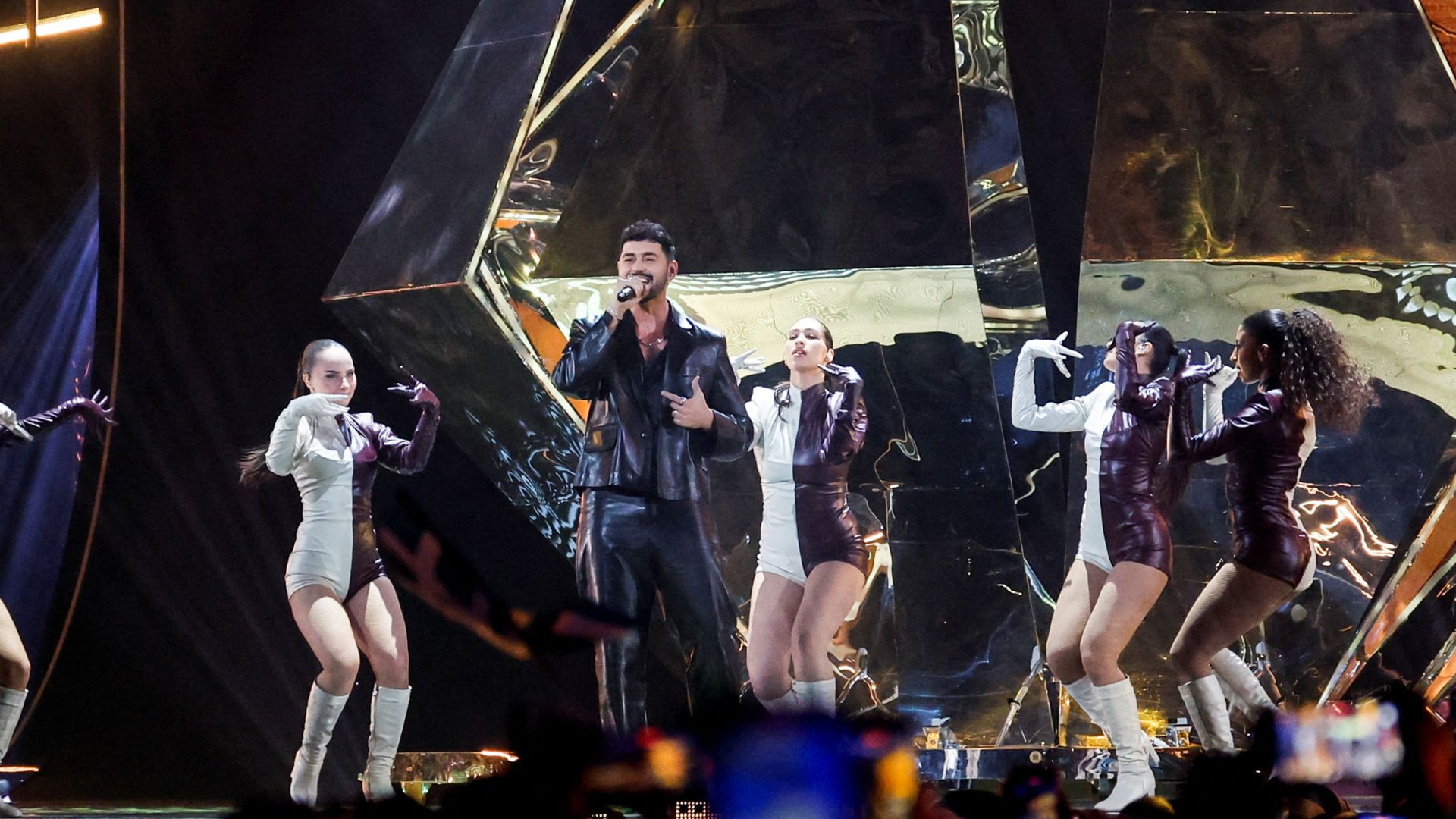
It’s easy to get lost in the noise of the protests, but from a purely competitive standpoint, the song works. It’s catchy enough to remember and dramatic enough to fit the Eurovision stage. The staging—a large circular light structure—is minimalist compared to some of the other fever dreams we saw on stage, which actually helps focus the attention on the singer.
Moving toward the final results
If you’re following this closely, don't just look at the betting odds. They’ve been volatile all week. Instead, look at the viral trends in individual countries. Israel’s qualification wasn't a fluke. It was the result of a disciplined performance and a global audience that decided to participate in the controversy rather than ignore it.
The EBU has a lot of work to do if they want to save the "non-political" reputation of this contest. Honestly, that ship has probably sailed. For now, the focus is on Saturday night. Security will be tighter. The boos will probably be louder. But the phone lines will be open, and that’s where the real story will be written.
Keep an eye on the jury scores early in the night. If the juries tank Israel's score, it will set up a massive confrontation when the televote is announced at the end of the broadcast. That is the moment everyone is waiting for. It’s not just about a trophy anymore. It’s about seeing exactly where the public stands when the lights are at their brightest.
Check the official Eurovision app for the running order. Israel's position in that order will tell you a lot about how the producers are trying to manage the flow of the show. Watch the wide shots of the crowd during the performance. See if the flags stay up or if the security guards move in. This is the most tense final in decades. Pay attention.