The fluorescent lights in an administrative hallway hum at a frequency that feels designed to induce compliance. Walk down one of those corridors at almost any major university, clutching a manila folder or staring at a printed email chain, and the air smells faintly of floor wax, stale coffee, and polite evasion. Nobody raises their voice. Everything is framed in the soothing, bloodless vocabulary of risk management, procedural fairness, and institutional review.
For years, that quiet hum has swallowed the lives of students who believed that enrolling at an elite institution meant entering a community bound by basic moral obligations. When something went terribly wrong on a Saturday night in a dorm room or an off-campus apartment, they expected the adults in charge to act like guardians. Instead, they met a labyrinth.
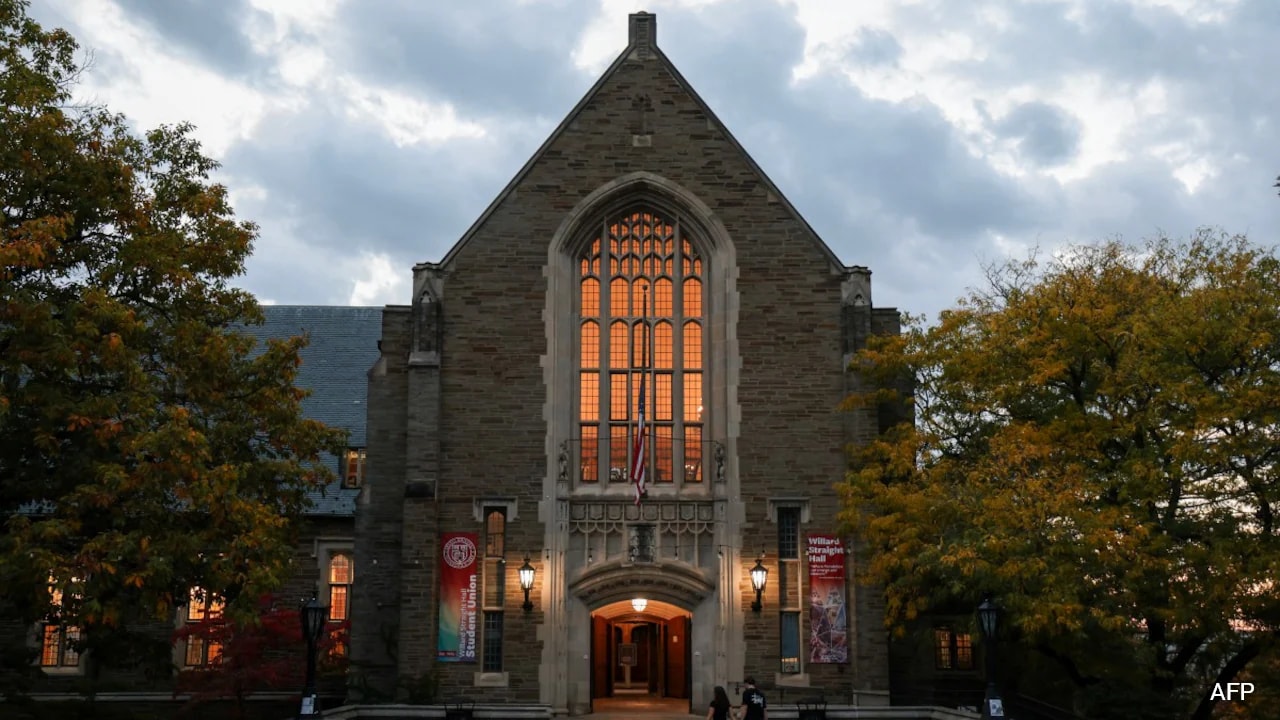
At Cornell University, that labyrinth finally collapsed under the weight of its own contradictions.
In a rare, blistering rebuke that echoed far beyond Ithaca, New York, the Cornell Faculty Senate voted on a resolution of no confidence in the university administration’s handling of sexual assault and campus safety. On paper, a "no confidence" vote is a parliamentary gesture—a formal register of dissatisfaction that carries no immediate power to fire a president or rewrite a legal charter. In reality, inside the cautious, consensus-driven culture of American higher education, it is the equivalent of pulling the fire alarm in a crowded theater. Professors do not lightly declare their own leadership unfit to protect the students sitting in their lecture halls.
To understand why tenured academics broke decades of institutional decorum, you have to step away from the press releases and look at what happens in the quiet spaces between a campus crime and a bureaucratic response.
The Anatomy of a Broken Promise
Consider a hypothetical scenario—a composite drawn from the patterns documented across campus Title IX disputes nationwide. Call her Maya. She is a sophomore, nineteen years old, studying biology, still learning how to balance organic chemistry problem sets with the sudden freedom of living away from home. After an assault at an off-campus gathering, Maya does what all the orientation pamphlets tell her to do. She reports it. She sits across from an intake coordinator whose face is practiced in neutral empathy. She hands over text messages, medical records, and timelines.
Then, she waits.
Weeks stretch into months. While the university debates jurisdiction—whether an incident three blocks past the campus boundary falls under its purview, or whether federal Title IX rules require a live cross-examination that feels more like a criminal trial than an educational inquiry—Maya still has to walk across the Arts Quad. She still has to check her syllabus to see if the person who hurt her is enrolled in the same Tuesday seminar. The administration offers "supportive measures," which often translate to advising Maya to change her own class schedule, move out of her own dorm, or alter her route to the library so she doesn't cross paths with the respondent.
The victim shrinks her life to accommodate the institution's caution.
This is the invisible tax of bureaucratic paralysis. When universities treat sexual violence primarily as a liability puzzle to be solved by general counsel, the human being at the center of the crisis becomes a file number. At Cornell, frustration over this exact dynamic had been simmering for years, fueled by repeated student protests, temporary suspensions of fraternity activities, drugging alerts that sent shockwaves through the student body, and a growing sense that administrative responses were reactive, opaque, and designed to protect the university's brand rather than its people.
You can feel the exhaustion in the way students talk about campus alerts. An email arrives at 2:00 AM with a subject line about a reported incident. By noon, life on campus is expected to resume its glossy, brochure-ready rhythm. Tour groups still walk backward past the clock tower, listening to guides boast about Nobel laureates and gorge views, while students inside the dorms pass around screenshots of warnings about spiked drinks and unsafe parties.
That dissonance—between the pristine public image of an Ivy League powerhouse and the lived anxiety of the people walking its paths at night—is what finally pushed the faculty past their breaking point.
Why Professors Finally Broke ranks
Academia is built on hierarchy and patience. Faculty members spend their lives navigating peer review, grant cycles, and committee meetings where change moves at a glacial pace. To get a majority of a faculty senate to vote "no confidence" requires more than a single bad headline. It requires a sustained pattern of broken trust.
When I think about how institutions fail, I always come back to the difference between a smoke detector and a sprinkler system. Most university administrations love smoke detectors. They form task forces. They commission external reviews. They issue statements declaring that "sexual violence has no place in our community" and that they are "deeply committed to student safety." Smoke detectors make noise; they signal awareness. What students actually need, however, is a sprinkler system—mechanisms that actively intervene, remove danger, and put out the fire before the building burns down.
At Cornell, professors watched the administration install one smoke detector after another while the structural flaws remained untouched.
The grievances that converged in the Faculty Senate chamber were specific and damning:
- A pattern of delayed and inadequate accountability: Students and faculty alike pointed to cases where serious allegations of sexual misconduct and drugging were met with sluggish investigations, lenient sanctions, or jurisdictional finger-pointing between the university and local law enforcement.
- Erosion of shared governance: Faculty members felt sidelined from critical policy decisions affecting student welfare and campus climate, discovering major shifts only after administrative decrees had already been finalized.
- A failure to address systemic Greek life and off-campus risks: Despite repeated incidents tied to fraternities and off-campus social spaces, temporary pauses on Greek events repeatedly gave way to business as usual without fundamental structural reform.
Think about what happens inside a classroom when that trust erodes. A professor stands at a whiteboard trying to teach macroeconomic theory or Victorian literature, looking out at twenty-year-olds who are running on four hours of sleep and carrying trauma the university has effectively told them to manage on their own. When a student knocks on a professor's office door during office hours, trembling, asking for an extension because they spent the morning in a disciplinary hearing or a clinic, the professor becomes the accidental frontline responder for a system that has failed at the top.
You cannot separate the intellectual mission of a university from the physical and psychological safety of its students. A mind cannot explore freely when the body is constantly scanning the room for exits.
The Regulatory Tightrope Is Not an Excuse
Whenever university leaders face criticism over sexual assault handling, they inevitably point to the shifting sands of federal regulation. And to be fair, the legal terrain has been chaotic. Over the past fifteen years, Title IX guidance from the U.S. Department of Education has swung like a pendulum with every change in the White House—from the Obama-era "Dear Colleague" letter that pushed aggressive campus enforcement, to the Trump-era regulations that mandated live hearings and narrow definitions of jurisdiction, to subsequent revisions that attempted to recalibrate the balance between due process and survivor protection.
Universities are caught between competing lawsuits. If they act too swiftly against an accused student, they risk a due process lawsuit from the respondent's family. If they move too slowly, they face federal civil rights complaints and public outrage from survivors.
It is a genuine bind. Pretending otherwise would be dishonest.
Yet, recognizing the legal complexity does not absolve leaders of moral cowardice. The law sets a floor, not a ceiling. Nothing in federal Title IX regulations forces a university to treat survivors with cold detachment. Nothing prevents an administration from communicating transparently with its faculty and students about where its hands are tied and where it chooses to exercise authority. Nothing stops a university from taking decisive action on campus housing, student organization recognition, and interim safety accommodations that protect a complainant without waiting eighteen months for a final legal verdict.
When an administration hides behind legal ambiguity to justify inaction, people notice. They feel the chill in the tone of the emails. They see the gap between the swiftness with which a university enforces trademark violations or unpaid tuition bills and the agonizing slowness with which it addresses bodily harm.
That contrast tells you everything about what an institution truly values.
What a Vote of No Confidence Actually Changes
If you are looking at this from the outside, you might wonder whether a symbolic vote matters at all. The Board of Trustees still holds the legal authority to hire and fire the president. The endowment still sits in the billions. Classes still meet on Monday morning.
So what does a no-confidence vote actually do?
It shatters the illusion of consensus.
University presidents rely heavily on the quiet acquiescence of their faculty to project stability to donors, trustees, prospective students, and accreditors. When the Faculty Senate formally declares that it lacks confidence in the administration's handling of sexual assault, that vote becomes part of the permanent historical record. It forces the Board of Trustees to look past carefully curated executive summaries and confront the reality that the people who actually run the university's classrooms and laboratories believe the leadership has lost its moral compass.
More importantly, it validates the voices of the students who were told for years that they were overreacting, that the system was working as intended, or that their individual cases were unfortunate anomalies.
Historically, major shifts in university governance rarely begin in the boardroom. They begin when internal coalitions—students, staff, and faculty—refuse to keep pretending that a broken machine is running smoothly. At institutions from Michigan State to the University of Southern California, public reckonings over campus safety only gained traction when insiders broke the code of institutional silence and demanded accountability in broad daylight.
Cornell’s vote sits squarely in that lineage. It is a refusal to let polite bureaucratic language sanitize real human harm.
The Heavy Cost of Looking Away
I still think about that fluorescent-lit hallway. Every university has one. Behind those closed doors, administrators are probably drafting another statement right now, calibrating every adjective to reassure alumni donors while avoiding any admission of legal liability. They will likely announce a new working group. They will promise to "listen closely" to faculty concerns. They will reiterate their commitment to due process and community standards.
Words are cheap in places built on lectures and libraries.
The real test will not be found in the minutes of the next Senate meeting or the wording of a spring task force report. It will be found in the lived experience of the next nineteen-year-old who walks into a campus office on a gray Tuesday morning, hands shaking, trying to decide whether telling the truth is worth the cost of being dismantled by the very institution that promised to educate her.
Until that hallway feels like a place of shelter rather than an interrogation room, the faculty's verdict stands. No confidence.