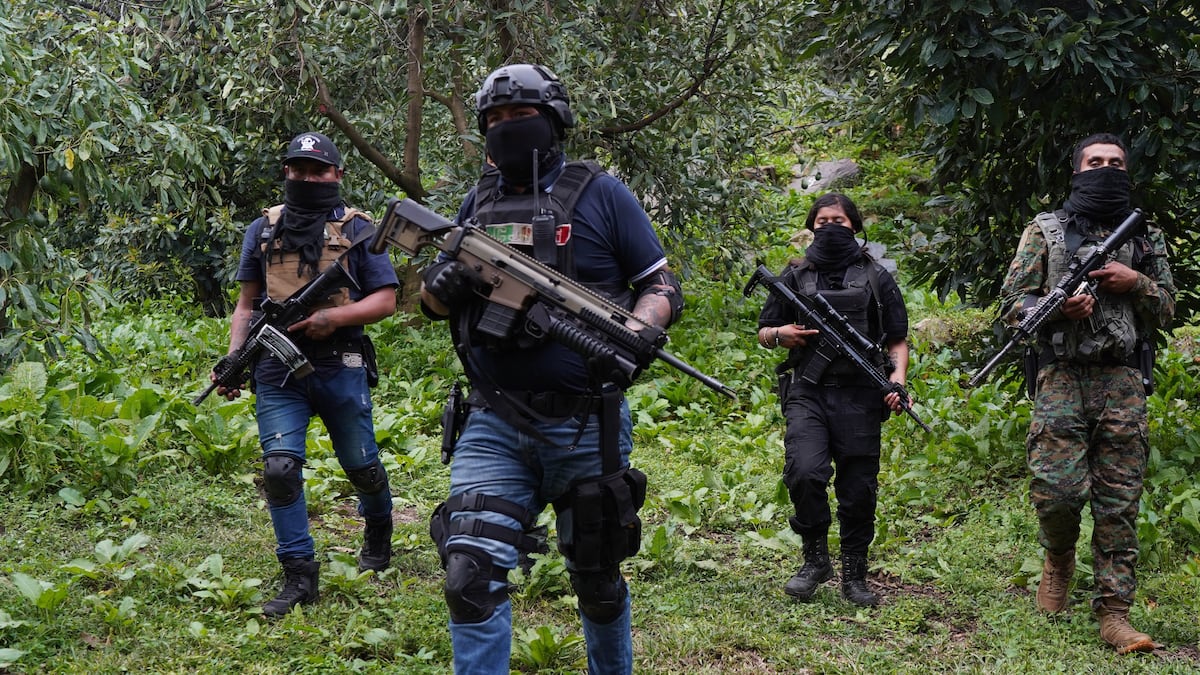
The sudden grounding of flight operations at Puerto Vallarta International Airport this week was not a standard reaction to regional turbulence. It was a structural collapse of the unspoken agreement between the Mexican state, the tourism industry, and the Cártel de Jalisco Nueva Generación (CJNG). When major US carriers like American, United, and Delta pulled their metal off the tarmac following the targeted killing of a high-ranking cartel lieutenant, they weren't just reacting to local gunfire. They were acknowledging that the "tourist bubble"—the invisible shield that supposedly separates five-star resorts from the bloody mechanics of narco-economics—has officially burst.
For decades, the Mexican Pacific coast has operated under a policy of compartmentalization. Violence was expected in the mountains or the dusty suburbs of Colima and Michoacán, but the "Zona Romántica" and the luxury enclaves of Punta Mita were treated as sovereign ground. The death of a kingpin in a high-profile military operation has changed that calculus. By paralyzing the airport, the carriers signaled that the risk of collateral damage to foreign nationals has reached a threshold where insurance premiums and brand reputation outweigh the lucrative spring break and retirement revenue.
The Geography of a Controlled Conflict
Puerto Vallarta sits in a precarious geographical position. It is the crown jewel of Jalisco, the home base of the CJNG, which currently stands as the most aggressive paramilitary organization in the Western Hemisphere. To understand why a single death could ground a fleet of Boeing 737s, one must understand the logistics of the region.
The airport serves as a critical choke point. There is only one major highway artery leading in and out of the city from the north and south. When the military successfully neutralized a top-tier asset, the retaliatory "narcobloqueos"—the practice of hijacking semi-trucks, setting them ablaze, and parking them across main thoroughfares—effectively turned the city into a beautiful, sun-drenched trap. For airlines, the nightmare scenario isn't a direct attack on a plane. It is the logistical impossibility of getting three thousand passengers from their hotels to their gates through a ring of fire.
The Mechanics of the Narcobloqueo
A blockade is not a random act of chaos. It is a sophisticated military tactic designed to achieve three specific goals:
- Immobilization: Preventing the rapid movement of federal troops and the National Guard.
- Psychological Dominance: Showing the local population that the state does not control the streets.
- Economic Sabotage: Forcing the government’s hand by strangling the lifeblood of the local economy—tourism.
When the smoke rises over the highway to Tepic, the international community watches. The airlines, which operate on razor-thin schedules and high-density rotations, cannot afford to have crews stuck in hotels or aircraft sitting idle on a high-risk apron. They cut their losses and wait for the "plaza" to stabilize.
Beyond the Official Press Release
The official narrative from the Mexican federal government often emphasizes that "tourists were never the target." This is a hollow comfort. In the modern era of cartel warfare, the target is the infrastructure itself. The CJNG uses a tactic known as "total territorial control." This means every taxi union, every souvenir stall, and every luxury tour operator pays a percentage of their earnings as "derecho de piso" (protection money).
When a leader is killed, these systems of extortion and control undergo a violent recalibration. The "peace" in Puerto Vallarta was never a result of effective policing; it was a result of a stable hierarchy. With that hierarchy disrupted, the rival cartels—specifically the Sinaloa Cartel—see an opening. The suspension of flights is a recognition by international analysts that the vacuum left by a fallen leader is often more dangerous than the leader’s presence.
The Aviation Industry Response and the Liability Gap
Aviation is a business of cold math. The decision to halt flights involves a complex web of stakeholders: the FAA, the State Department, airline security chiefs, and global insurers.
Most travelers assume that a flight cancellation due to "civil unrest" is a simple matter of safety. In reality, it is a matter of liability. If an airline continues to fly into a zone where the local government has lost control of the transit routes, the airline assumes a massive legal burden. Under the Montreal Convention, airlines are liable for passenger safety. If a bus shuttling passengers to a United flight is caught in a crossfire because the airline ignored a known security escalation, the legal damages would be catastrophic.
The Profit Margin of Peril
Despite the violence, the demand for Mexican sun remains stubbornly high. This creates a moral hazard for travel providers.
- Airlines: Move quickly to cancel because they can re-route aircraft to safer Caribbean hubs.
- Hotels: Frequently refuse to issue refunds, citing that the resort itself is "secure," even if the city around it is burning.
- Cruise Lines: Often continue to dock, as they can pull anchor and move into international waters at the first sign of trouble.
This creates a fractured reality for the traveler. You may be told by your resort that everything is fine while the US State Department is issuing a "Level 4: Do Not Travel" advisory for the surrounding blocks. This disconnect is where the danger lies.
Why the Military Strategy is Failing Tourism
The current administration’s approach—often referred to as "Abrazos, no Balazos" (Hugs, not Bullets)—has been criticized for being reactive rather than proactive. In Puerto Vallarta, the presence of the National Guard on the beaches is a cosmetic fix. They are soldiers trained for combat, not detectives trained for urban security.
The killing of a cartel leader is often a political maneuver, a "trophy" to show the US that Mexico is cooperating on fentanyl and arms trafficking. However, these operations are rarely followed by a plan to secure the city during the inevitable blowback. The military enters, hits the target, and retreats to their barracks, leaving the tourism industry to deal with the burning trucks and the empty flight monitors.
The Economic Aftershock
The financial impact of a 48-hour flight suspension stretches far beyond the lost ticket sales. Puerto Vallarta’s economy is a monoculture. Without the steady flow of US dollars and Canadian loonies, the local infrastructure begins to fray.
- Labor Instability: Service workers who cannot reach their jobs due to blockades lose daily wages in a system with no social safety net.
- Real Estate Churn: The "Expat Dream" of owning a condo in Jalisco is being re-evaluated. When the airport closes, that condo feels less like an investment and more like a liability.
- Supply Chain Decay: The same blockades that stop tourists also stop the delivery of food, fuel, and medical supplies to the hotel zone.
We are seeing a permanent shift in how Jalisco is perceived. It is no longer a "safe" destination; it is a "conditional" destination. The condition is that the cartel remains unchallenged. The moment the state asserts its authority, the city suffers. This is the definition of a failed security state.
The Illusion of the Safe Zone
Travelers often find comfort in the idea of the "walled garden." They believe that as long as they stay within the confines of a gated resort, the geopolitics of Mexico don't apply to them. This is a dangerous fallacy. The water you drink, the electricity that powers the AC, and the staff that cleans your room are all integrated into the local ecosystem—an ecosystem currently under the thumb of organized crime.
If the airport can be shut down because of a shootout thirty miles away, then the wall around your resort is purely psychological. The groundings in Puerto Vallarta were a reminder that in the battle between the Mexican state and the CJNG, the tourism industry is merely a hostage.
The airlines will return. They always do. The tarmac will be cleared, the charred remains of the trucks will be towed away, and the flight schedules will resume. But the precedent has been set. The "Blackout" proved that the cartels hold a literal kill-switch for the region’s economy. Until the Mexican government can guarantee the safety of the roads as well as the resorts, every vacation to the Pacific coast is a gamble on the stability of a criminal hierarchy.
Next time you book a flight to the tropics, look past the infinity pool and at the mountain ridges. The real power in Jalisco isn't found in the lobby of a hotel, but in the hills where the next leader is already being chosen. Check the security updates from your carrier before you pack, because your airline knows something you don't: the beach is only as safe as the highway leading to it.


