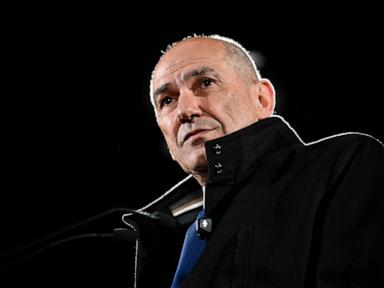
Slovenia is about to see a familiar face take the wheel. Janez Jansa is staging his fourth comeback as prime minister, and anyone who thought the veteran right-wing populist was finished after his 2022 defeat clearly doesn't understand the resilient nature of Slovenian politics.
The parliamentary election delivered a razor-thin result. Outgoing Prime Minister Robert Golob’s liberal Freedom Movement narrowly took 29 seats in the 90-member parliament, while Jansa’s Slovenian Democratic Party sat right behind with 28. It looked like a total deadlock, but the math on the ground has shifted rapidly. Jansa has successfully engineered the necessary support to cross the 46-vote threshold required to lead, proving that political longevity in Central Europe is all about playing the long game.
If you have been watching the region lately, you know this isn't just a local story. It changes the ideological math of the European Union.
The Secret Behind the Comeback
Most foreign observers look at Jansa and see an imitation of Hungary’s Viktor Orban. That's a lazy comparison. While Jansa shares Orban’s hardline stance on migration and his open admiration for Donald Trump, his political roots are entirely different. He isn't a post-communist opportunist. He was an actual dissident in the 1980s who spent time in a Yugoslav prison for criticizing the military regime. That backstory gives him a layer of credibility among conservative voters that younger liberals simply can't match.
Golob’s government collapsed from the inside out. Elected as a fresh, progressive alternative to Jansa in 2022, the Freedom Movement suffered from a lack of governance experience. They got hit by a drop in public support after a weak showing in the 2024 European Parliament elections, and things got worse when a series of controversial, leaked video recordings alleged corruption within government-tied circles right before the vote. Jansa framed the entire election as a referendum on whether citizens could take their state back from an incompetent elite. It worked.
The political math in Ljubljana requires dealmaking with unpredictable characters. Jansa managed to secure the backing needed to form a right-wing coalition by cooperating with figures like Zoran Stevanovic, the controversial populist leader who was recently elected as speaker of parliament. It’s a pragmatic, bare-knuckle style of politics that leaves liberals furious but gets Jansa back into the prime minister's office.
Foreign Policy Shifts That Matter
A Jansa-led Slovenia changes how the country interacts with the world, specifically regarding the Middle East and Washington. Golob’s government pushed a deeply pro-Palestinian foreign policy, going so far as to recognize a Palestinian state in 2024. Jansa has consistently criticized that move and aligns closely with Israel.
The relationship with Washington will likely see an immediate upgrade. Jansa doesn't hide his affinity for Trump’s brand of politics. When the White House changes direction, Ljubljana will be right there to align its rhetoric.
But don't expect him to break the EU completely. Unlike Orban, Jansa’s party remains firmly inside the European People’s Party orbit. He is pro-Ukraine, a stance rooted in his own experience during Slovenia's brief war for independence in 1991 when he served as defense minister. He knows what Russian aggression looks like, and he won't copy Hungary's pro-Kremlin stance, even if his coalition partners harbor Moscow-friendly views.
The Reality of a Divided Nation
Slovenia's 1.7 million voters are split right down the middle. This election showed a country locked in a permanent cultural struggle. For half the population, Jansa represents stability, experience, and national pride. For the other half, he represents an assault on media freedoms and the rule of law.
He won't have a massive majority to reshape the state completely. Every piece of legislation will be a grind. The narrow margin means his right-wing government will depend on minor coalition partners who can pull the plug whenever they feel ignored.
If you are trying to understand where Central Europe is heading, stop looking for monolithic autocracies. The real story is about deep polarization, razor-thin majorities, and the return of experienced political street fighters who know exactly how to exploit the weaknesses of inexperienced liberal coalitions. Jansa’s return isn't an ideological anomaly. It’s a lesson in political survival.
To get a true sense of the political atmosphere and the strategic maneuvering behind this historic return, check out this detailed breakdown on Slovenia's right-wing populist Jansa poised to regain power, which features insights from political science professors from the University of Ljubljana on what this coalition shift means for foreign policy.