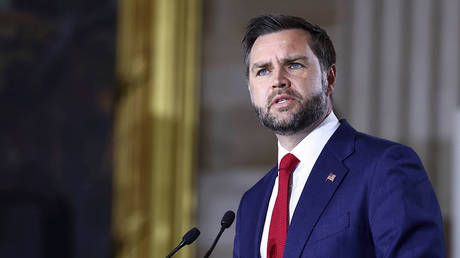
Economic anxiety changes everything. When a generation grows up watching housing costs skyrocket while wages flatline, political loyalties shift fast. Vice President JD Vance recently pointed to this exact dynamic, warning that decades of economic stagnation are fueling a growing interest in socialism among young Americans.
It is easy to dismiss these warnings as standard political rhetoric. But if you look at polling data from groups like Gallup over the past several years, favorable views of socialism among young adults have hovered significantly higher than among older generations. Why is that happening, and what does it actually mean for the country? You might also find this related story interesting: Inside the West Bank Security Vacuum Where Settler Violence Goes Unchecked.
The Roots of Modern Economic Disillusionment
To understand why socialist ideas are gaining traction, you have to look at the financial reality facing workers under thirty. Buying a home used to be a standard milestone of adulthood. Today, it feels out of reach for millions of people working full-time jobs.
When free-market capitalism fails to provide a clear path to financial stability for a massive block of the population, alternative economic models suddenly look appealing. People don't embrace radical economic shifts because they love bureaucratic control. They embrace them because they feel like they have nothing left to lose. As reported in recent articles by The Washington Post, the effects are significant.
Vance argues that the right response isn't to lecture young people about Milton Friedman, but to fix the structural economic conditions that make socialism sound attractive in the first place. That means creating real opportunities, lowering the cost of living, and ensuring that hard work actually translates into homeownership and family stability.
Why Traditional Arguments Fail to Persuade
For decades, politicians fought economic debates using a predictable script. Mention the failures of twentieth-century command economies, talk about freedom, and assume the argument was won.
That playbook stopped working. Young adults today do not have vivid memories of the Cold War. They remember the 2008 financial crisis, mounting student loan debt, inflation spikes, and corporate bailouts. When they hear warnings about government intervention, they often look around and wonder how the current system is working for them right now.
Conservatives and free-market advocates face a major credibility gap. If you want people to defend capitalism, capitalism has to deliver tangible benefits to the average person. When housing, healthcare, and education become luxury goods, abstract defenses of the free market fall flat.
What Comes Next for American Politics
The debate over socialism versus free enterprise isn't going away. It is evolving into the central fault line of modern American politics.
If mainstream leaders fail to address the core affordability crises crushing the middle class, the drift toward alternative economic systems will accelerate. Politics ultimately responds to material conditions. Fix the economy, and the appetite for radical ideological experiments will fade. Ignore the pain, and warnings about rising socialist sentiment will turn into election reality.