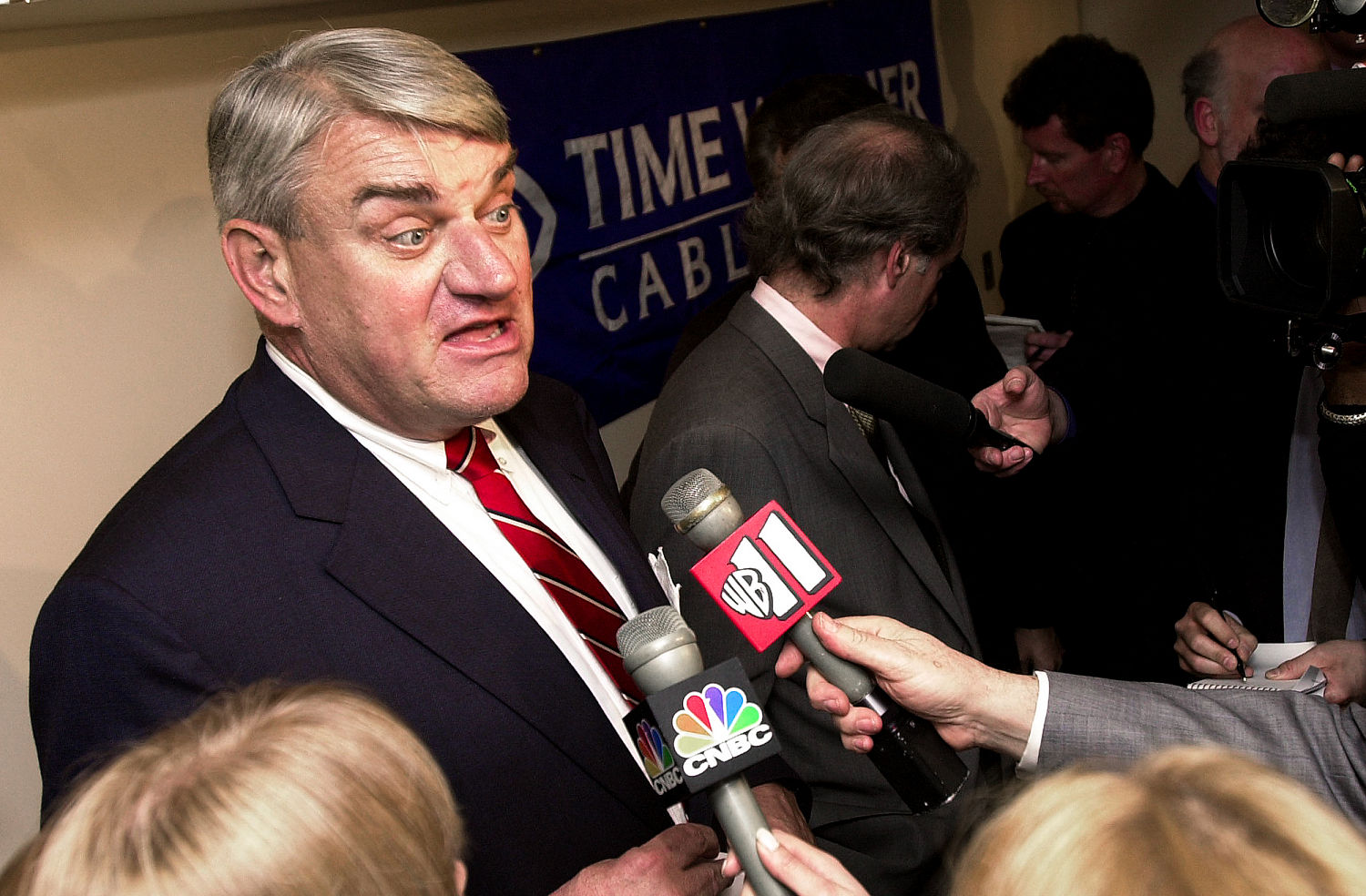
Joseph J. Collins didn't just run cable companies. He fundamentally changed how you watch everything today. When news broke that he passed away at 81, most people probably thought about old-school cable boxes or static-heavy TV channels. That misses the point entirely. Collins was the guy who saw the messy, unpolished world of early cable and realized it could be the backbone for a global digital shift.
If you enjoy binging shows on HBO or high-speed internet that doesn't lag during a Zoom call, you're living in the house Joe Collins built. He spent decades at the top of Time Warner and American Television and Communications (ATC). He wasn't just a suit making deals. He was a guy who pushed for the infrastructure that eventually made the internet a utility rather than a luxury.
The HBO gamble and the birth of premium content
In 1984, Collins took over as President of HBO. Back then, the idea of paying extra for a single channel was still a tough sell for many households. People were used to the big three broadcasters and the free-to-air model. Collins didn't just want more channels; he wanted better ones. He understood that for cable to win, it had to offer something broadcast couldn't touch.
Under his leadership, the strategy shifted toward high-value content. He focused on the marketing and distribution side of premium television, making it feel essential. He helped turn a fledgling service into a cultural powerhouse. It wasn't about "watching TV" anymore. It was about having access to a specific library of quality that didn't exist anywhere else.
How he paved the way for high speed internet
The real magic happened when Collins moved to the top of Time Warner Cable in 1989. For most of the 90s, the world was stuck on dial-up. You couldn't use your phone and your computer at the same time, and downloading a single photo took minutes. Most executives saw cable as a way to send video one way—from the station to your house.
Collins saw it differently. He pushed for "two-way" cable. This sounds like technical jargon, but it's the reason you have broadband today. By upgrading the physical cables in the ground to handle data moving in both directions, he turned the cable network into an internet delivery system. He was one of the first major executives to realize that the wire coming into your living room was more than just a pipe for sitcoms. It was the future of all communication.
He served as Chairman and CEO of Time Warner Cable until 2001. During that decade, he oversaw the massive rollout of Road Runner, which was one of the first high-speed internet services in the United States. While others were worried about the "dot-com bubble," Collins was busy laying the actual fiber and coaxial cable that would survive the crash.
Managing the AOL merger chaos
When Time Warner merged with AOL, it was supposed to be the deal of the century. We know now that it's widely considered one of the biggest corporate disasters in history. Collins was right in the middle of it. In 2001, he became the CEO of AOL Time Warner Interactive Video.
While the merger itself was a mess of clashing cultures and inflated valuations, Collins stayed focused on the tech. He was trying to figure out how to make video work over the web long before YouTube or Netflix existed. He saw the convergence coming. He knew that eventually, the distinction between "a TV channel" and "an internet stream" would disappear.
Leading the industry through regulation
Beyond his work at Time Warner, Collins was a heavy hitter in the broader industry. He served as Chairman of the National Cable & Telecommunications Association (NCTA). This wasn't just a ceremonial role. He was the industry's voice in Washington during a time when the government was trying to figure out how to regulate this new digital world.
He fought for the industry's right to compete and expand. He earned the Vanguard Award for Leadership, which is basically the Oscar of the cable world. He wasn't just building his own company; he was drafting the blueprint for an entire sector of the economy.
A legacy of infrastructure and insight
After he retired from the front lines, he didn't just disappear. He joined the board of Comcast in 2004, bringing his massive experience to another giant in the field. He stayed involved because he understood that the transition he started wasn't finished. Even in 2026, we're still seeing the ripples of his decisions. Every time a streaming service launches or a new fiber-optic line is buried, it's a nod to the groundwork Joe Collins laid down in the 70s, 80s, and 90s.
He graduated from Brown in 1966 and got his Harvard MBA in 1972. He was part of a generation of leaders who took the theoretical potential of technology and made it practical. He didn't invent the internet, but he helped build the roads it travels on.
If you want to understand the modern media world, stop looking at the apps on your phone for a second and think about the physical wires in your walls. Those wires exist because guys like Joe Collins bet their careers that we'd want more than just 13 channels of broadcast TV. He was right.
Take a look at your own internet bill or your list of streaming subscriptions. Almost every service you pay for today is a direct descendant of the business models and infrastructure Collins pioneered. He saw the digital shift coming decades before the rest of us were even online.


