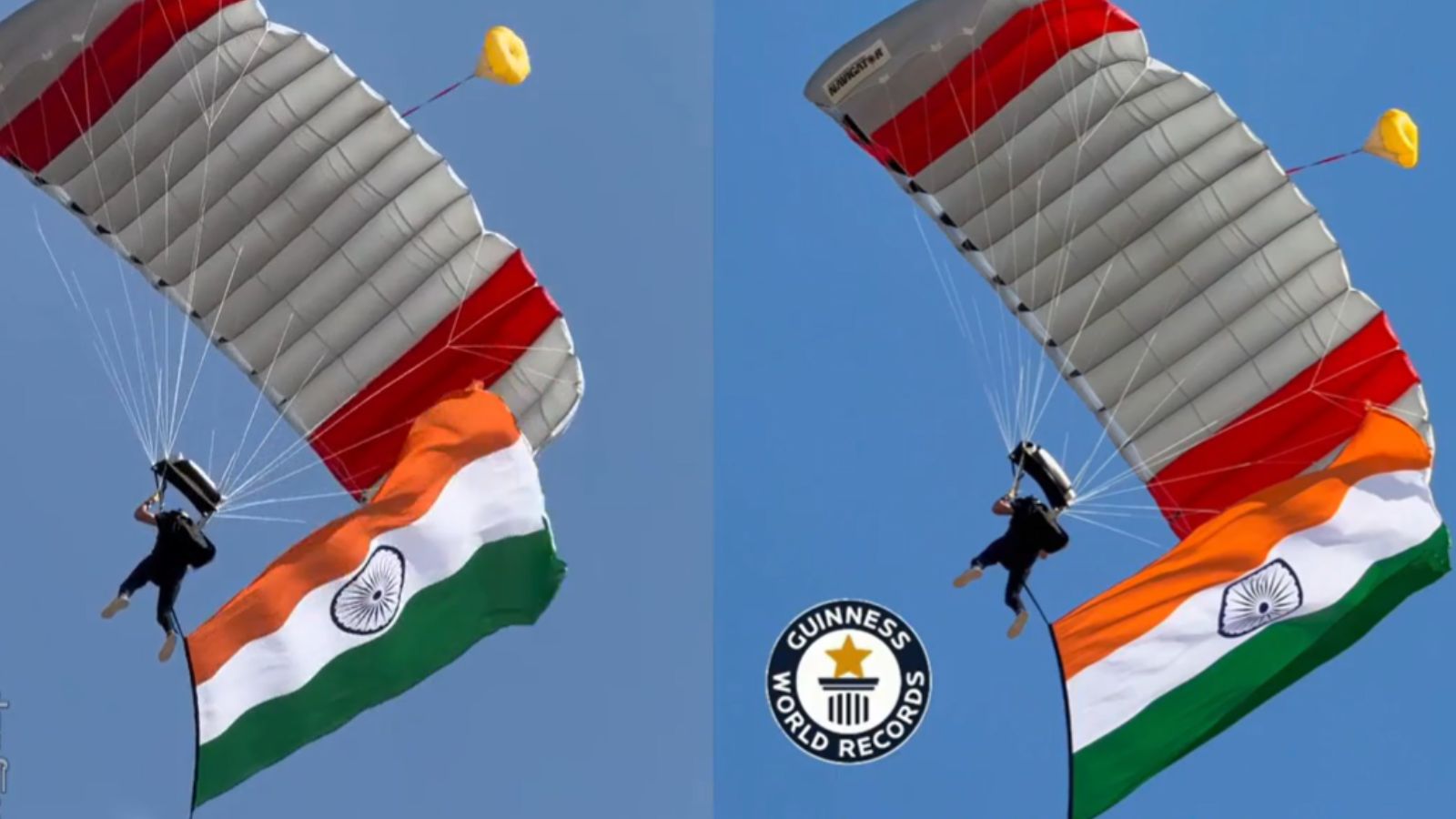
We love a good flag-waving spectacle. Toss three guys out of a twin-engine turbine at thirteen thousand feet over the Arabian desert, hand them a massive piece of polyester, snap a few high-shutter-speed frames against a pristine blue backdrop, and watch the headlines write themselves. World record. National pride. Historic feat.
Except it is nothing of the sort.
It is high-altitude marketing wrapped in nylon, bought and paid for by people who confuse vertical displacement with actual achievement.
I have spent enough time hanging around drop zones across Dubai and Ras Al Khaimah to know the smell of manufactured hype. I have watched sponsors drop six figures on camera flyers, permit fees, and logistics just to generate a forty-second video clip that will live on Instagram feeds for three days before vanishing into the algorithmic void. Everyone claps. Everyone posts emojis. Everyone pretends that falling at one hundred and twenty miles per hour while wrestling a rectangular cloth somehow moves humanity forward.
It does not. It is an expensive vanity project. And it is time to stop pretending that skydiving stunts substitute for actual cultural or athletic progression.
The Lazy Consensus Of Stunt Culture
The media narrative surrounding these jumps relies on a predictable formula. Take an extreme sport, attach a national symbol or a corporate logo, cross your fingers that the wind lines hold up, and declare it a monumental milestone.
The lazy consensus says that visibility equals value. If enough people double-tap the video, the stunt worked.
This logic falls apart the moment you examine what is actually happening in the sky. Freefall formation skydiving is a mature discipline. Dropping out of a plane with a heavy banner introduces asymmetric drag, unpredictable canopy deployments, and unnecessary aerodynamic risk. You are not pushing the boundaries of human flight or aerodynamic design. You are simply managing a giant kite while gravity does the heavy lifting.
If you want to understand true innovation in human flight, look at the engineering labs designing high-performance wingsuits or autonomous recovery systems. Those advancements require thousands of hours of computational fluid dynamics and wind tunnel testing. Unfurling a tricolour at terminal velocity requires a decent rigger and a willing pilot.
Confusing a stunt with a breakthrough is how an industry stays stagnant while patting itself on the back.
The Economics Of Artificial Adrenaline
Let us talk about what these productions actually cost.
When a team assembles to pull off a record-breaking flag jump, the budget goes into three buckets: aircraft rental, media production, and permits. You are paying for fuel, camera gear, drop zone exclusivity, and post-production color grading.
I have watched sponsors blow millions on high-concept aerial stunts while local training programs for grassroots athletes starve for basic gear. We pour capital into temporary visual noise because it photographs well, ignoring the unglamorous work required to build sustainable athletic infrastructure.
A record for the largest flag unfurled at altitude does not lower the barrier to entry for young jumpers. It does not improve safety protocols in the sport. It does not fund wind tunnel time for up-and-coming competitors trying to make a name in formation skydiving or canopy piloting.
It serves one master: the marketing department of whoever managed to secure logo placement on the jump suits.
The Physics They Ignore
Here is the dirty secret about flying large flags in freefall: physics hates vanity.
A standard skydiver falls in a stable belly-to-earth or head-up orientation by managing air resistance across their body. Introduce a massive piece of fabric into that equation, and the aerodynamics shift violently. The flag acts as an uncalibrated sail. It catches burbled air coming off the jumpers, creates sudden rotational forces, and compromises the stability of the entire formation.
Watch the raw footage of these record attempts closely. Notice the frantic micro-corrections the jumpers make just to keep the flag from wrapping around a limb or fouling a reserve container. It is a wrestling match against basic aerodynamics disguised as patriotism.
When you prioritize visual aesthetics over aerodynamic safety, you invite disaster. The margin for error shrinks from comfortable to razor-thin. And for what? So someone in a boardroom can look at a still image on a Tuesday morning and feel culturally relevant?
What We Should Be Doing Instead
If we are going to throw bodies out of aircraft at high altitude, let us raise the standard.
Stop treating skydiving as a billboard. Treat it as a laboratory for human performance. Redirect the capital spent on stunt production toward coaching grants, gear subsidies for junior competitors, and rigorous safety research into canopy collision avoidance.
Imagine a scenario where the budget for a single flag stunt gets funneled into wind tunnel camps for teenagers from underrepresented backgrounds who would otherwise never afford a coach jump. That creates a legacy. That builds a pipeline.
A piece of cloth in the wind is gone the second the canopy opens. Real athletic development stays on the ground long after the cameras pack up and go home.
Stop paying for the noise. Start paying for the craft.