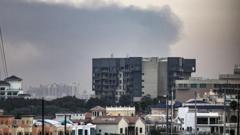
The intersection of Western social media norms and Emirati penal codes creates a high-friction environment for foreign nationals, particularly during periods of regional or domestic sensitivity. While a tourist may perceive the act of photographing a strike, a protest, or a security incident as a benign exercise in documentation, the UAE legal system categorizes these actions under the broad umbrella of national security and public order. This disconnect is not merely a cultural misunderstanding; it is a structural conflict between the "right to record" prevalent in liberal democracies and the "sovereign right to information control" exercised by the UAE.
Understanding the risk requires a breakdown of the specific legal mechanisms the UAE uses to regulate visual data. The British Embassy’s warning regarding the photography of strikes—whether labor-related or military in nature—is a response to a codified set of prohibitions that prioritize the state’s reputation and operational security over individual expression.
The Triad of Prohibited Documentation
Legal risk for visitors in the UAE generally clusters around three distinct categories of visual data. Each category triggers different enforcement mechanisms and carries varying levels of judicial severity.
1. Strategic and Military Infrastructure
The most direct violation involves the photography of "restricted" areas. This includes military installations, government buildings, palaces, and critical infrastructure like airports or oil refineries. The definition of "strategic" is fluid and often determined by the proximity of the observer to an active security operation. During an event such as a kinetic strike or a major fire, a previously public space can be instantly reclassified as a restricted zone.
2. Public Order and State Reputation
Article 197 of the UAE Penal Code is often the primary vehicle for prosecution in these scenarios. It criminalizes the use of any means of communication to spread news, photos, or comments that are deemed "prejudicial to the state's interest" or "harmful to public order." A photo of a strike or its aftermath, when uploaded to a public forum, is viewed through the lens of economic and reputational damage. In a state where tourism and foreign direct investment are pillars of the GDP, imagery that suggests instability is treated as a direct threat to the national economy.
3. Privacy and Cybercrime Laws
The UAE has some of the world's most stringent privacy laws. Federal Decree-Law No. 34 of 2021 on Combatting Rumors and Cybercrimes makes it illegal to take photos of others without their consent, especially in "private" or "sensitive" contexts. If a photo of a strike includes identifiable security personnel, victims, or even bystanders, the photographer is liable for privacy violations. This creates a "catch-22" for the observer: the more significant the event being documented, the higher the likelihood that the imagery contains protected subjects.
The Mechanism of Enforcement: From Capture to Prosecution
The path from a shutter click to a legal summons follows a predictable, albeit opaque, trajectory. It is essential to understand that in the UAE, the "intent" of the photographer is often secondary to the "impact" of the image.
- Surveillance Integration: The UAE, particularly Dubai and Abu Dhabi, maintains one of the highest densities of CCTV and facial recognition integration globally. An individual taking photos at the site of a sensitive incident is likely being tracked by the "Oyoon" or similar AI-driven surveillance systems before they even leave the vicinity.
- Digital Forensic Analysis: Once a device is seized, the authorities do not only look for the offending image. They conduct a comprehensive sweep of the device's metadata, cloud sync history, and encrypted messaging apps. A single photo of a strike can serve as the "probable cause" for a deeper audit of an individual's digital life.
- Administrative Detention: Unlike Western systems where bail is often a standardized right, the UAE legal system allows for extended periods of administrative detention during the investigation of security-related offenses. This means a visitor can be held without formal charges while the public prosecutor determines if the imagery constitutes a "threat to the state."
The Economic Logic of Information Suppression
The UAE’s stance on photography is not an irrational byproduct of authoritarianism; it is a calculated economic strategy. The country functions as a global "safe haven" for capital and high-net-worth individuals. The brand identity of the UAE is built on the pillars of safety, luxury, and hyper-modernity.
Visible evidence of strikes—whether they are missile strikes from regional conflicts or rare labor strikes—breaks the "spectacle" of the UAE. By strictly controlling the visual narrative, the state mitigates the risk of capital flight and ensures that the perception of the UAE remains untainted by the volatility of the surrounding Middle East. For the individual traveler, this means they are not just a tourist with a camera; they are a potential disruptor of a multi-billion dollar branding machine.
Operational Guidelines for Foreign Nationals
Navigating this environment requires a shift from "incidental documentation" to "active compliance." The following protocols serve as a framework for risk mitigation:
- The Immediate Cessation Rule: At the first sign of a security incident, emergency response, or public gathering, all recording devices should be stowed. The act of holding a phone in a recording position is sufficient to draw the attention of plainclothes security personnel.
- Metadata Management: Travelers should be aware that even if a photo is deleted, metadata and cloud backups (iCloud, Google Photos) may still be accessible. If a sensitive image is captured accidentally, the hardware itself remains a liability until it is professionally scrubbed or the sync is disabled.
- The "Official Source" Protocol: If a traveler witnesses an event and feels the need to share information, the only safe method is to amplify official statements from the WAM (Emirates News Agency) or the Ministry of Interior. Generating original "on-the-ground" content is inherently high-risk.
Structural Limitations of Diplomatic Protection
It is a common misconception among British and other Western travelers that an embassy can "undo" a local legal violation. Consular assistance is limited to providing a list of local lawyers, notifying family, and ensuring that the individual is not being mistreated in custody. They cannot intervene in the judicial process of a sovereign state.
The UAE’s judiciary is independent in its application of the law, and once a case enters the "State Security" track, the leverage of foreign diplomats drops precipitously. The burden of proof in these cases is often low, and the definition of "evidence" can include the mere possession of an image, regardless of whether it was published.
The strategic play for any individual or organization operating within the UAE is to treat the environment as a "Zero-Trust" zone for digital documentation of any event involving the state, the military, or public distress. The legal cost function—which includes potential imprisonment, massive fines (often exceeding 500,000 AED), and permanent deportation—heavily outweighs the social or journalistic value of the imagery. Professional travelers must adopt a policy of total visual neutrality; in the event of a crisis, your priority is physical evacuation from the site, not digital capture of it. Use the provided embassy contact numbers not as a safety net for risky behavior, but as a last-resort contingency for unavoidable proximity to an incident.


