When former heads of government accept academic fellowships, the public reaction usually splits into two predictable camps. Supporters frame the appointment as a natural validation of statesmanship and intellectual gravitas. Critics dismiss it as a vanity landing pad—a quiet, taxpayer-adjacent sinecure where embattled politicians retreat to polish their legacies away from the ballot box.
Both reactions miss the structural reality of how modern executive leadership transitions into institutional influence.
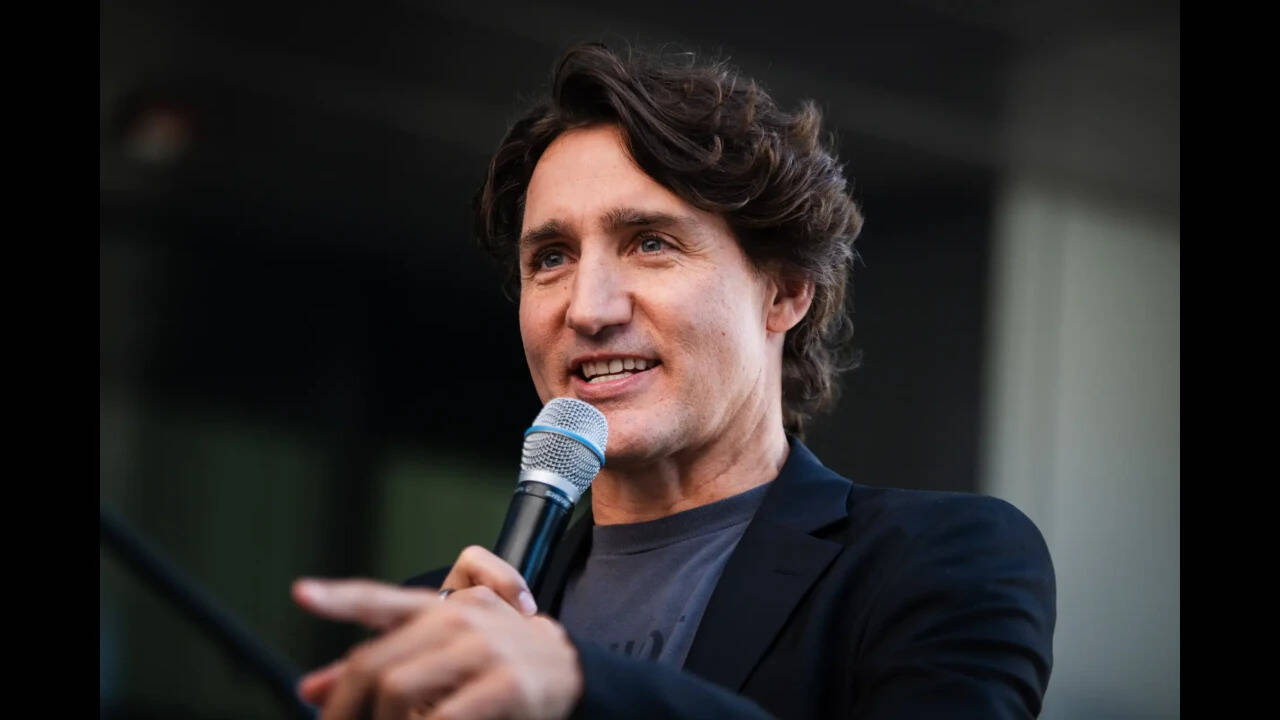
Reports surrounding former Canadian Prime Minister Justin Trudeau joining the Blavatnik School of Government at the University of Oxford as a fellow have followed this exact script. Coverage tends to treat the move as a singular, dramatic pivot—either a triumphant global encore or an abrupt exit into academia. In truth, a fellowship at an elite public policy school is neither a retirement home nor a coronation. It is a well-established operational exchange between former political executives and research institutions that need what only former leaders possess: firsthand operational memory of crisis governance.
To understand what a role at the Blavatnik School of Government actually entails—and why institutions like Oxford actively recruit former prime ministers and presidents—you have to look past the headlines and examine the mechanics of modern policy schools.
What a Government School Fellowship Actually Is
The phrase "university fellow" conjures images of tweed jackets, tenured professorships, and decades of peer-reviewed publishing. That is not what visiting or practitioner fellowships at public policy schools are designed to be.
Founded in 2010, the Blavatnik School of Government at Oxford was built specifically to bridge academic theory and the messy reality of public administration. Unlike traditional political science departments that analyze governance from the outside, policy schools—including the Harvard Kennedy School, the Blavatnik School, and the Blavatnik-adjacent networks across Europe and North America—rely heavily on "practitioner fellows."
These appointments are typically non-tenured, time-bound, and structured around specific institutional needs:
- Case Study Generation: Academic researchers can analyze legislation, economic data, and voting patterns, but they rarely have access to the real-time constraints inside a cabinet room during a pandemic, a trade war, or a constitutional standoff. Practitioner fellows participate in closed-door seminars and structured interviews that help faculty build teaching case studies for incoming civil servants.
- Executive Education: Policy schools generate substantial influence—and revenue—through executive education programs attended by mid-career bureaucrats, diplomats, and public-sector leaders from around the world. Having a former G7 leader lead workshops on crisis communication or coalition management draws international cohorts that traditional faculty alone cannot attract.
- Convening Power: A former head of government retains an active Rolodex of sitting ministers, central bankers, and multilateral officials. Universities use that network to host high-level roundtables on topics ranging from climate finance to artificial intelligence regulation.
In short, Oxford is not hiring a traditional scholar to grade undergraduate essays. It is acquiring an experienced operator to stress-test academic models against real-world political friction.
The Lazy Consensus Around Post-Office Politics
Media coverage of post-premiership transitions frequently relies on a pair of competing clichés.
The first cliché is the Cincinnatus Myth—the idea that a leader steps down from power and gracefully retreats to quiet contemplation, writing memoirs and offering lofty, non-partisan wisdom. The second is the Golden Parachute Critique—the assumption that high-profile fellowships, speaking circuits, and think-tank titles are merely lucrative rewards handed out by elite institutions to protect their own.
Both narratives flatten a far more transactional reality.
Consider the precedent across Western democracies. Former UK Prime Ministers, U.S. Presidents, European Commissioners, and Commonwealth leaders routinely cycle through academic fellowships immediately after leaving office. Tony Blair, Gordon Brown, David Cameron, Jacinda Ardern, and Barack Obama have all engaged with major universities or policy institutes in varying capacities—some through formal fellowships, others through affiliated leadership initiatives and guest lectureships.
Why does this pattern repeat regardless of party affiliation, ideology, or popularity ratings at the time of departure?
Because departing executives face an immediate structural problem: decompression without irrelevance. After years of operating at the center of national decision-making, a former prime minister loses the institutional machinery of the state overnight. There are no briefing books, no diplomatic cables, and no civil service apparatus to execute ideas.
At the same time, jumping immediately into private-sector corporate boards or lobbying often triggers intense scrutiny over conflicts of interest and optics. An academic fellowship solves both problems simultaneously. It provides an institutional platform, research support, and international legitimacy while maintaining a buffer from direct commercial entanglement.
What Critics and Supporters Both Overlook
If you want to evaluate whether a fellowship at the Blavatnik School of Government matters, stop asking whether the former leader "deserves" the title. That question leads nowhere because fellowships are not medals for popularity; they are functional arrangements. Instead, look at the three tensions that define these appointments.
1. The Distance Between Governance and Accountability
In office, every decision a prime minister makes is constrained by parliamentary arithmetic, media scrutiny, provincial or regional pushback, and the next election cycle. In a university seminar room, those constraints disappear.
The risk for any former leader entering academia is selective memory. Without opposition MPs or investigative reporters in the room, case studies can easily drift into retrospective justification—explaining why difficult policies were necessary while glossing over execution failures. The value of a practitioner fellow depends entirely on whether faculty and students push back hard enough to extract honest lessons about what went wrong, not just what went right.
2. The Institutional Trade-Off for Universities
Elite universities gain prestige and access when they bring former heads of state onto campus, but they also inherit political baggage. Every multi-term prime minister leaves office with a polarized record. Decisions on fiscal policy, energy infrastructure, immigration, or civil liberties remain fiercely contested long after a resignation or election loss.
For an institution like Oxford, hosting a prominent political figure invites criticism from detractors who view the appointment as an endorsement of that leader’s record. Policy schools accept this friction because their core mission—training future public leaders—requires studying power as it is actually exercised, not just as textbooks prescribe it.
3. The Reality of the Workload
Public perception often imagines a fellowship as a full-time, five-day-a-week campus job. In practice, senior practitioner fellowships are almost always flexible, hybrid commitments. Fellows travel to campus for intensive teaching blocks, public lectures, and workshops while balancing memoir writing, international speaking engagements, and foundation work.
Treating the announcement as a permanent relocation to Oxford misunderstands how modern academic fellowships operate. It is an anchor point in a broader post-office portfolio, not a conventional nine-to-five career change.
The Questions Worth Asking Instead
When news breaks that a former G7 leader is joining an institution like the Blavatnik School of Government, the most revealing questions have nothing to do with campus prestige:
- What specific policy area will the fellowship focus on? Former leaders who use academic appointments to tackle concrete, unresolved governance problems—such as democratic resilience, supply-chain security, or intergovernmental fiscal policy—produce tangible work. Those who stick to broad themes of "global leadership" rarely leave a lasting intellectual footprint.
- How open is the engagement with students and critics? The true test of an academic fellowship happens in unscripted Q&A sessions with graduate students from dozens of countries, many of whom bring sharp, skeptical perspectives on Western foreign and economic policy.
- Is the fellowship a bridge or a destination? For some former leaders, academia is a transitional phase before launching a dedicated foundation, taking on multilateral diplomatic roles, or advising international bodies. For others, it becomes a recurring platform for commentary on current affairs.
Separating Headline Drama From Institutional Reality
The cycle of political commentary thrives on extremes. Every move by a high-profile political figure is framed as either a masterstroke or a misstep, a triumphant reinvention or a quiet fade-out.
Joining Oxford’s Blavatnik School of Government is neither. It is the standard operating procedure of modern post-executive life—a mutually beneficial arrangement in which a global university gains direct access to a decade of prime ministerial experience, and a former head of government gains an authoritative, non-commercial platform from which to shape how that era is studied and remembered.
The real story isn’t that Justin Trudeau got a role at Oxford. It’s how predictably the modern political ecosystem turns the exercise of power into an academic case study the moment a leader steps away from the podium.