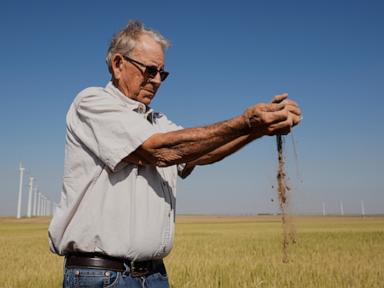
The High Plains are running on empty. If you want to see what happens when multi-year droughts collide with sky-high diesel and fertilizer bills, look at the western half of Kansas. Farmers are staring down fields that look more like concrete than cropland.
The upcoming Kansas wheat harvest is shaping up to be the worst since 1972. Think about that. We have better seeds, GPS-guided tractors, and advanced weather tracking. Yet, the crop is failing on a scale not seen in over half a century.
This isn't just a bad year. It's a systemic breakdown of the traditional dryland farming model. The reality on the ground is grim, and the ripples will hit food prices far beyond the Midwest.
The Reality of the Abandoned Kansas Wheat Harvest
Drive through Ford or Finney County right now. You won't see waves of grain. You'll see dirt.
According to data from the USDA National Agricultural Statistics Service, a massive chunk of the winter wheat planted last fall won't even be harvested. Farmers are adjusting their plans. They're dialing insurance agents instead of fueling up combines.
Abandonment is the real story here. When conditions get this dry, the wheat doesn't grow tall enough for a combine to clip. It stays stunted. It dies in the ground. The Kansas Wheat Commission estimates that some counties might see over half of their planted acres completely abandoned.
They won't even try to cut it.
Estimated Kansas Wheat Production (Selected Historical Lows)
Year      Bushels Produced
1972      314 Million
2023      208 Million
2025      215 Million
We saw a massive dip in recent years, and the recovery simply hasn't happened. The multi-year drought has sapped every drop of subsoil moisture.
The Math Behind the Misery
Farming is a business of margins. Right now, those margins are deeply negative.
It costs a lot to put a crop in the ground. Seed prices are up. Machinery parts are scarce and expensive. Crop nutrients, despite coming down slightly from their absolute peaks, still cost double what they did five years ago.
Let's do the quick math. If it costs you $250 an acre to plant, spray, and insure your wheat, you need a decent yield just to break even. When the local elevator is paying $6 a bushel, you need roughly 42 bushels per acre just to get your money back.
Western Kansas is averaging closer to 20 bushels an acre on the fields that actually survived.
You can't sustain that. Crop insurance keeps the bank from foreclosing, but it doesn't make you whole. It pays for your inputs so you can try again next year. It keeps you on life support.
Why the Ogallala Aquifer Won't Save Us
People think irrigation fixes everything. Just turn on the center pivot, right?
Wrong. The Ogallala Aquifer is drying up. This massive underground lake stabilizes agriculture across eight states, but it's finite. In western Kansas, the water table has dropped significantly.
Many producers can no longer pump enough gallons per minute to keep up with intense summer heat. The wells are sputtering. Irrigated corn fields are being converted back to dryland wheat because there simply isn't enough water left in the ground.
When the dryland wheat fails too, you run out of options.
The Myth of the Resilient Crop
We've been told for decades that modern genetics would save us. Geneticists engineered varieties to withstand harsher conditions. They made wheat that resists rust, survives late freezes, and tolerates drought.
But biology has limits. Plants need water. No amount of lab work can make a seed grow in dust without a drop of rain for six months.
The current crisis proves we've hit the wall of what technology can fix. The weather is changing faster than the seed science can adapt. The intense heat spikes in early spring are baking the plant right as it tries to develop grain heads. The result is empty pods and brittle straw.
The Hidden Costs of Growing Our Food
The consumer sees inflation at the grocery store and blames corporate greed or politics. They rarely look at the supply chain's starting point.
When Kansas produces less hard red winter wheat—the specific grain used for bread flour—millers have to look elsewhere. They buy from northern states or import it. That adds shipping costs. It drives up the price of every loaf of bread, every pizza crust, and every box of cereal.
The global market is tightly wound. With conflict disrupting shipments out of the Black Sea region, the world relies heavily on the American breadbasket. When Kansas falters, global food security gets shakier.
Shift Strategies Before the Bank Step In
If you're managing acres in this environment, doing what your dad did will get you broke. The climate has shifted, and your operational strategy has to shift with it.
- Stop aggressive tillage. Every time you turn the soil, you lose precious moisture to the air. No-till isn't a trend anymore; it's a survival mechanism. Leave the residue from the previous crop on top to shade the ground.
- Diversify away from monoculture. Relying solely on a wheat-fallow rotation is becoming too risky. Look into ultra-drought-tolerant alternatives like grain sorghum or specific millet varieties that require less water to finish.
- Audit your equipment overhead. High-horsepower tractors carry massive deprecation and repair costs. Lean into custom hiring for harvesting or spraying if your local acreage yield can't justify owning the iron.
- Maximize crop insurance structures. Work with an aggressive agent who understands how to blend enterprise units to maximize your safety net. Treat insurance design as seriously as you treat seed selection.
The farmers who will be here in a decade are the ones treating their land like an ecosystem rather than a factory. The old ways are gone, and they aren't coming back.