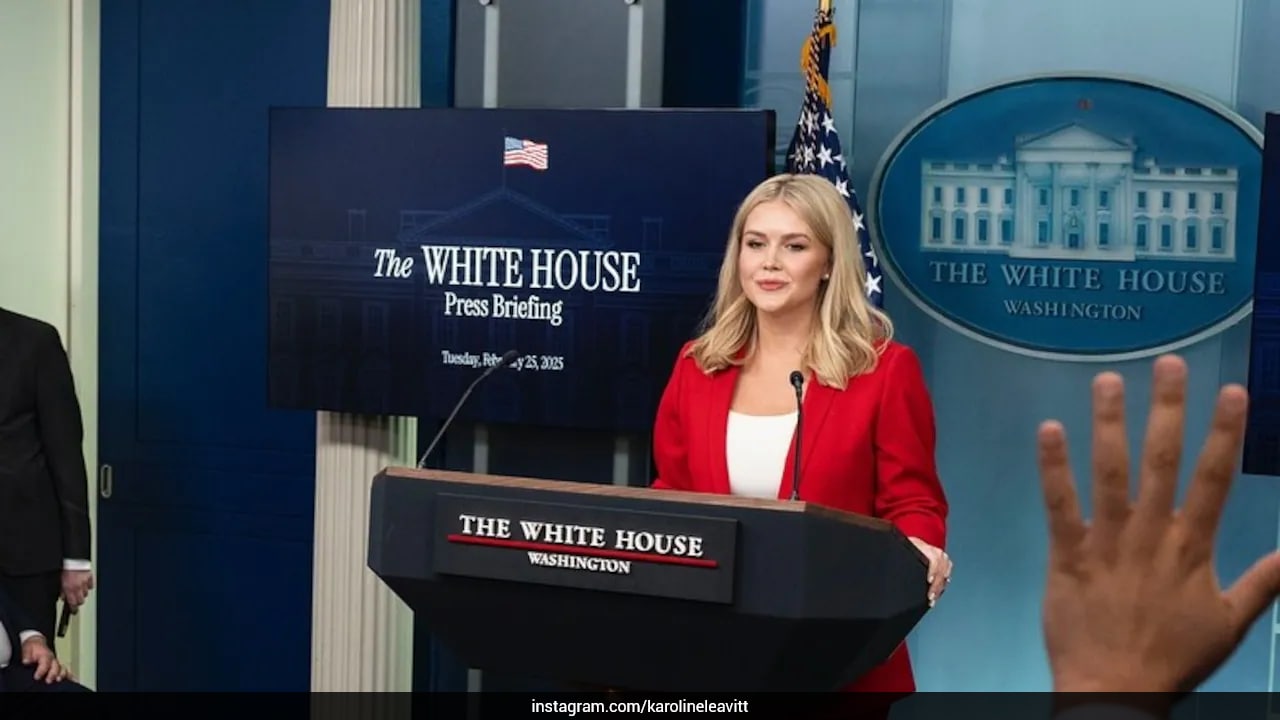
The media machine is currently hyperventilating over a predictable script. When a high-profile comms operator exits a high-pressure orbit, the pundit class instantly writes the obituary. They call it burnout. They whisper about internal friction. They frame the departure as a retreat from the arena.
It is lazy analysis at best and willful ignorance at worst. For a more detailed analysis into this area, we suggest: this related article.
I have watched communication directors cycle through the meat grinder of Washington for decades. I have seen administrations burn through rising stars like kindling, leaving them broken, toxic, and radioactive to future employers. But every once in a while, an operator looks at the chess board, recognizes that the marginal utility of staying in a reactive bunker has hit zero, and makes a cold, calculated exit while their equity is at an absolute peak.
Karoline Leavitt stepping away from the White House podium is not a crisis. It is a hostile takeover of her own market value. For further information on this topic, in-depth coverage can also be found at Reuters.
The Myth of the Infinite Burn
Let us address the baseline misconception plaguing mainstream political journalism: the idea that proximity to power is an asset that appreciates indefinitely.
It does not. In modern communications, proximity has a half-life shorter than a TikTok trend.
The conventional narrative insists that staying inside the beltway, absorbing daily shrapnel, and managing hostile press corps builds character and institutional weight. That is false. Beyond a certain threshold, a spokesperson stops being a strategist and starts becoming a human shield. You are no longer shaping the narrative; you are absorbing the kinetic energy of a polarized media apparatus until your brand is entirely defined by the boss you serve.
I have seen agency founders blow millions trying to rehabilitate political operatives who stayed six months too long. They walk out of government service sounding like damaged goods—defensive, punch-drunk, and utterly incapable of translating political combat into commercial or private-sector execution.
Leavitt is bypassing that trap entirely.
By cutting the cord while the stakes are highest, she sidesteps the slow-motion erosion that consumes most press secretaries. She is trading the daily theater of the briefing room for the ultimate currency in modern media: optionality.
The Economics of the Exiting Podium
To understand why this move terrifies establishment consultants, you have to look at the math of media positioning.
Most people look at a White House Press Secretary and see a public servant. That is a quaint, outdated framing. In the current media ecosystem, the podium is the ultimate top-of-funnel marketing engine. It generates billions of impressions, builds an unassailable personal database, and tests messaging frameworks in real-time against the most hostile audience on earth.
When you leave that post voluntarily, you are not stepping down. You are cashing out.
Look at the precedent. The market does not reward loyalty to an office; it rewards notoriety combined with execution speed. The moment a high-visibility communicator becomes a free agent, their valuation shifts from a government pay scale to a private-market free-for-all. Book deals, prime-time real estate, private equity advisory roles, independent media empires—the runway is infinite if you exit before the public grows fatigued by your face.
The amateur mistake is staying until you are pushed. The professional move is leaving when everyone is still asking why you would dare to walk away.
The Death of the Neutral Spokesperson
There is a deeper structural shift happening here that Washington insiders refuse to admit out loud: the traditional, buttoned-up press secretary model is dead.
For decades, the playbook dictated that a spokesperson should be a human speed bump. Their job was to absorb blows, offer bland non-answers, hide behind policy memos, and pretend that institutional decorum still masked partisan warfare. It was boring, it was ineffective, and audiences saw right through it.
Leavitt broke that mold by treating the briefing room not as a courtroom, but as a combat sport where the rules of engagement had already been rewritten. She understood a fundamental law of modern attention economies: conflict drives retention.
Whether critics loved her or loathed her, they tuned in. In an era of infinite content, indifference is a fatal disease. Hatred is monetizable; boredom is a corpse.
By leaning into direct, unvarnished friction, she transformed a traditional administrative role into a personal brand vehicle. And now, she gets to take that brand completely off the government balance sheet and monetize it directly.
What the Pundits Get Wrong About Leverage
The mainstream consensus argues that Leavitt is leaving to cash in on the current political cycle while the iron is hot. That is only half right. It misses the structural chess move underneath.
Cashing in is easy. Anyone with a government badge and a book agent can write a tell-all memoir and fade into the circuit of cable news hit-and-runs. That is a low-margin trap.
True leverage is refusing the predictable trajectory.
Imagine a scenario where she bypasses the traditional media consultancy route entirely, choosing instead to build decentralized, direct-to-consumer media infrastructure. The old guard expects former officials to become hired guns for corporate PR firms or talking heads on legacy networks. But legacy networks are dying a slow, painful death, and corporate PR is a race to the bottom of risk-averse compliance.
The future belongs to operators who own their distribution. Leavitt’s departure frees her from the bureaucratic handcuffs that prevent government officials from building independent digital assets. She is no longer constrained by ethics pledges or administrative disclosure rules. She is unbound.
The Downside No One Mentions
Let’s be entirely candid about the risks, because playing contrarian without acknowledging downside is just cheerleading.
Leaving the protective bubble of the executive branch is terrifying. Inside the machine, your logistics are handled, your security is managed, and every word you utter carries the institutional weight of the United States government. The moment you step outside, you are entirely on your own.
Independent operators face immediate market compression if they fail to diversify their income streams quickly. The public has an insatiable appetite for new faces, and yesterday’s news cycle is cleared out to make room for tomorrow’s outrage. If Leavitt fails to convert her current visibility into a durable, independent business model within the next twelve months, she risks becoming a footnote—a viral clip remembered only by internet historians.
Furthermore, burning the boats means alienating the institutionalists who control legacy power structures. By thumbing her nose at the traditional career arc, she ensures that the old guard will never welcome her back into polite establishment society.
Good. Polite establishment society is bankrupt anyway.
The Real Takeaway
Stop mourning the departure of political talent from public office as if it were a tragedy. Start viewing it for what it is: a ruthless reallocation of human capital away from stagnant institutions and toward high-growth, independent media markets.
Karoline Leavitt is not stepping away from influence. She is trading a government salary for a market valuation.
Watch what she builds next, not what the pundits write today.
Exit the stage while they are still screaming your name.


