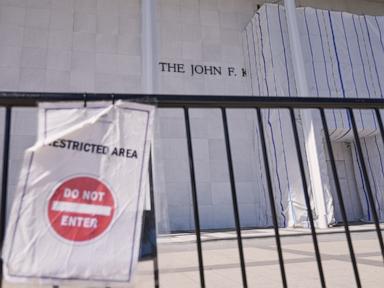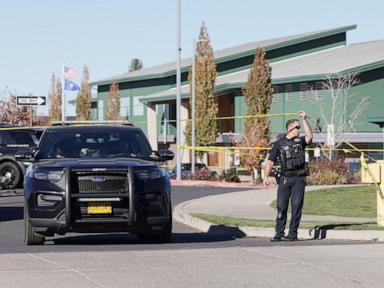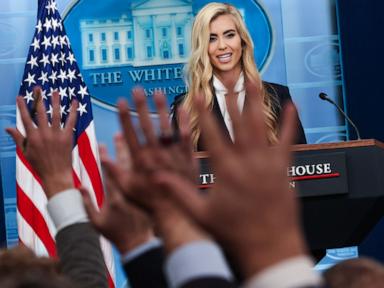
Former White House press secretary Katie Zacharia never passed a bar exam, despite repeatedly presenting herself as a lawyer and being promoted by President Donald Trump as an attorney. She earned a Juris Doctor from Pepperdine University in 2011 and sat for the California bar exam that year, but she did not pass and never obtained a license to practice law. That credential gap collided with a rough five-day tenure in October 2026, making her the shortest-serving White House press secretary in U.S. history before she was pushed out.
Bar exam news rarely moves markets or changes votes on its own. When a White House spokesperson's entire public brand rests on a title she never earned, however, the issue stops being a clerical footnote and becomes a test of institutional vetting and public candor.
How a Law Degree Turned Into an Unlicensed Title
A Juris Doctor proves you finished law school. It does not make you a lawyer.
In the United States, admission to the bar is the gatekeeper that separates law school graduates from licensed attorneys. Without passing a bar exam and meeting character and admission rules in a jurisdiction, a graduate cannot legally represent clients as an attorney or claim the official status of a licensed practitioner. Even foreign legal work carries strict jurisdictional boundaries; reporting on Zacharia's past remarks noted she had spoken of living in Beijing as a corporate lawyer, even though Chinese bar admission is restricted to Chinese nationals.
How does someone cross that line without getting stopped earlier? In modern political media, credentials often travel faster than verification. A social media bio, a cable news chyron, or a supportive post from a political ally can turn a law degree into shorthand for "lawyer" long before anyone checks a state bar database. Once a label sticks in television appearances and political circles, repetition starts to look like proof.
That dynamic explains why the revelation landed with such force in October 2026. President Trump had publicly described her on Truth Social as a graduate of Pepperdine University and its Caruso School of Law, calling her an attorney, while her own Instagram profile listed her as a lawyer. When reporters and watchdogs dug into her record, the gap between the label and the license became impossible to ignore.
Vetting Breakdowns in Fast-Moving Administrations
Nobody in Washington should be shocked by rushed vetting. I have watched press shops across administrations scramble to fill high-visibility slots on short notice, and loyalty or television polish almost always beats a deep background check when a room is waiting for a briefing.
When Karoline Leavitt stepped down in August 2026, the press secretary role sat open for weeks before Zacharia stepped into the job in mid-October. Earlier in 2026, she had a brief stint as deputy assistant secretary for public affairs at the Department of Homeland Security and worked as a communications advisor for Trump Media and Technology Group. In environments where speed and combativeness are prized over bureaucratic thoroughness, basic credential checks get treated as formalities rather than guardrails.
A press secretary does not need a law license to answer questions from the briefing room podium. A press secretary does need credibility, because every word spoken there is weighed against the credibility of the office itself.
Press secretaries from James Hagerty to Dee Dee Myers to Kayleigh McEnany came from wildly different backgrounds—journalism, politics, law, campaigns. Lack of a bar card is not what sank Zacharia's five-day run. Her lone briefing in the James S. Brady Press Briefing Room lasted roughly 15 minutes and drew sharp criticism across the political spectrum, followed swiftly by scrutiny over her legal claims and an ethics complaint filed with the State Bar of California.
The Gray Area Between Puffery and Unauthorized Pretense
Legal ethics watchdogs and political defenders read the fallout through very different lenses. Critics point to statutes prohibiting not only the unauthorized practice of law, but also holding oneself out as entitled to practice law without a license. Defenders argue political opponents weaponize technicalities and treat informal self-description as a criminal plot.
Both sides have a point, yet neither erases the gray area. In everyday speech, people sometimes say "I went to law school" and casually say "I'm a lawyer," especially in non-courtroom media roles. State bar regulators draw a much sharper line when public statements imply legal authority or mislead consumers and the public about licensure.
| Dimension | Law School Graduate (J.D.) | Licensed Attorney |
|---|---|---|
| Core Requirement | Completion of an accredited law program | Passing a bar exam and meeting state admission rules |
| Practice Authority | Cannot represent clients as an attorney | Permitted to practice law in admitted jurisdiction(s) |
| Public Representation | May state J.D. degree earned | May hold out as an attorney or lawyer |
| Regulatory Oversight | Governed by university and general law | Subject to state bar disciplinary rules |
For a hypothetical example of how this plays out outside politics, imagine a communications director at a mid-sized logistics firm who earned a J.D. ten years ago, never passed a bar exam, and puts "Corporate Counsel" on a LinkedIn headline while negotiating vendor contracts. Even if no court filing is ever made, a state bar or regulator looking at the title could ask whether the job title implies an active license that does not exist. In politics, the stakes are amplified tenfold because every public bio is a campaign document and a target for opposition researchers.
What This Episode Exposes About Modern Spin
Zacharia's brief stint is easy to treat as a quirky Washington trivia item—another entry on the list of ultra-short White House tenures. Doing so misses the larger pattern.
Modern political communication rewards certainty over precision. Calling yourself a lawyer sounds weightier than saying you attended law school; calling a spokesperson an attorney sounds more authoritative than saying they did communications work for a media company or a department press shop. When that habit meets basic public records, the blowback is fast and unforgiving.
For anyone hiring communicators, vetting surrogates, or evaluating public figures, the practical takeaway is straightforward: verify credentials before amplifying them. Check bar rolls, verify dates of admission, and separate academic degrees from active licenses in writing before a single bio goes to print or a single post goes live.