Every time a new press secretary steps behind the James S. Brady Briefing Room lectern, Washington media treats it like a coronation. New hair. New cadence. New "tone." A fresh face arrives, and suddenly the entire town pretends the messaging problem is solved.
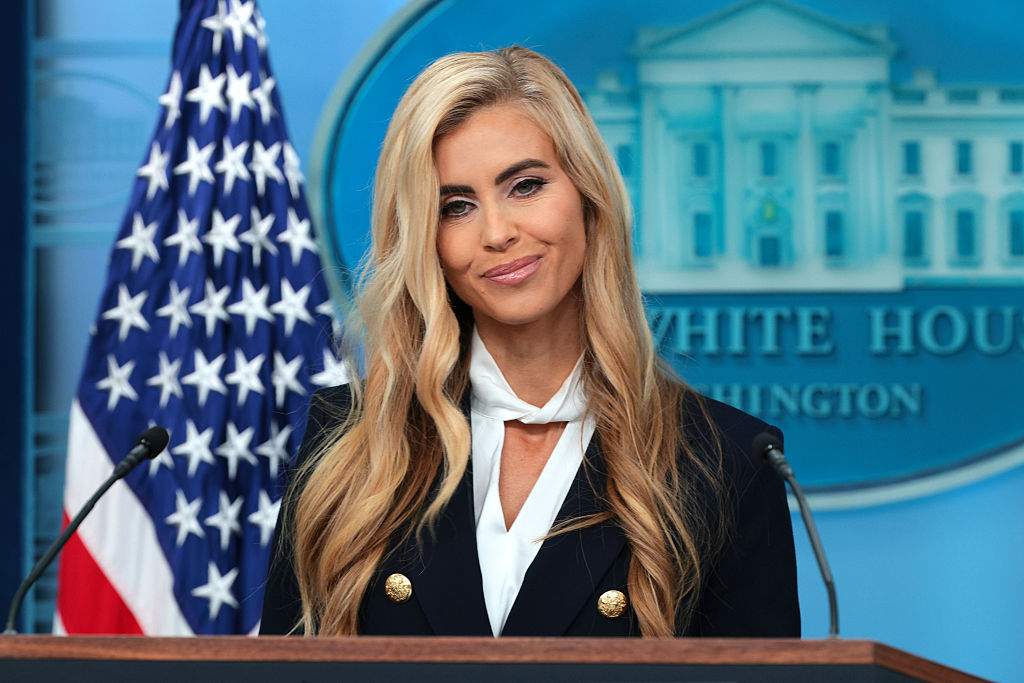
Here is the cold truth. Katie Zacharia making her debut as White House press secretary is a staffing event, not a strategic overhaul.
Standard coverage of a press secretary debut follows a script so predictable you could recite it in your sleep. Analysts weigh the newcomer's television polish. Reporters handicap whether they will be combative or conciliatory with the press corps. Pundits declare whether the administration is entering a "new chapter" in public communications.
That is lazy consensus. Worse, it mistakes the megaphone for the signal.
A press secretary does not set policy, move legislative votes on Capitol Hill, or rewrite economic reality at the grocery store. They manage real-time friction between an executive branch and a skeptical—often hostile—media ecosystem. Treating a press secretary's debut as the main event confuses performance with power.
The Briefing Room Illusion
Let's define the job cleanly. In modern Washington, the White House press secretary is an institutional shock absorber, not a chief strategist.
When people watch the daily briefing, they often assume the person at the podium is steering the ship. They aren't. Real message discipline starts months earlier in policy drafting, legislative sequencing, coalition building, and executive action. By the time a talking point reaches the briefing room, the hard choices have already been made—or botched.
I have watched high-stakes communications operations burn through millions of dollars and endless cycles of war-room energy trying to polish a message that had no structural alignment behind it. You cannot "spin" a policy that contradicts itself in practice. You can only delay the reckoning for twenty-four hours.
Consider the structural reality of the modern media environment. The days when a single televised briefing dominated the evening news cycle are long gone. Fragmentation has hollowed out the traditional gatekeepers. Clips get sliced, stripped of context, weaponized on social feeds, and argued over by partisans before the briefing even wraps up.
A sharp press secretary can win a clip in the room and still lose the week outside it.
That distinction is what standard debut coverage misses. Reporters love covering the theater of the briefing room because it gives them instant copy and clear villains or heroes. It is exciting. It is personal. It is also wildly overrated as a measure of governing effectiveness.
Why People Ask the Wrong Questions
When a high-profile communicator steps into a role like this, search behavior spikes around a predictable set of questions. People want to know how they will handle aggressive reporters, whether they will shift the administration's tone, and what their arrival signals about internal White House dynamics.
Those questions aren't useless, but they start from a flawed premise. They assume the press secretary's personality is the primary variable.
In practice, three structural constraints dictate almost everything that happens at that podium:
- The mandate from above. A press secretary speaks with borrowed authority. Their sharpest instincts are still bound by what principals approve, what legal counsel clears, and what political strategists fear.
- The adversarial incentive structure. Correspondents in the briefing room are rewarded for conflict, viral moments, and extracting concessions. Cooperative civility rarely makes the cut.
- The speed of counter-narratives. Even a flawless answer takes minutes to travel and seconds to be reframed by critics across cable and digital channels.
If you want to ask a better question when Katie Zacharia takes the lectern, stop asking whether she sounds tough enough. Ask how tightly the White House's operational decisions match the story she is being asked to tell.
What Veterans Know About Podium Politics
Seasoned observers of presidential communications—people like former press secretaries Mike McCurry, Dee Dee Myers, and Ari Fleischer—have pointed out for years how narrow the actual lever is. Across different parties and eras, the core mechanics stay remarkably consistent.
When an administration has momentum, a steady press secretary looks brilliant. Everything they say reinforces a visible trajectory. When an administration is bogged down by bad numbers, legislative gridlock, or internal division, even the quickest tongue in Washington looks like someone rearranging deck chairs.
Imagine a scenario where a new press secretary delivers a masterclass on day one. Every parry is crisp. Every dodge is smooth. Every fact is cited accurately. Two weeks later, an unpopular policy hits a snag or an economic report disappoints. Suddenly, the tone of coverage flips overnight—not because the person at the podium forgot how to speak, but because the underlying facts changed.
That is the trap of judging a press secretary in isolation. You are evaluating the messenger while ignoring the cargo.
There is also a deeper trap in how audiences consume political coverage: mistaking hostility in the room for accountability, or friendliness for competence. A combative exchange doesn't automatically mean a reporter uncovered truth, and a calm exchange doesn't mean the public got a straight answer. Often, it is just ritualized combat for an audience that has already picked a side.
Where the Contrarian View Can Go Wrong
Being skeptical of podium hype has its own blind spots, and I should own them directly.
First, competence at the lectern does matter at the margins. A sloppy press secretary can create unforced errors, walk an administration into avoidable controversies, or alienate swing audiences with careless phrasing. Over weeks and months, small stumbles compound.
Second, credibility isn't purely cosmetic. When a press secretary consistently gives straight answers—or at least avoids obvious untruths—reporters and audiences notice over time. Even in a polarized media environment, basic reliability carries weight when a genuine crisis hits.
Third, dismissing the role entirely ignores how public narratives form during fast-moving events. In breaking news, the first coherent explanation often anchors early coverage before critics can mobilize. A disciplined communicator can slow down a bad spiral during those critical first hours.
So no, the job isn't meaningless. It is just smaller, more constrained, and more reactive than the breathless debut coverage makes it look.
How to Read the Debut Like an Insider
If you are watching Katie Zacharia's debut and want real signal instead of noise, skip the superficial commentary and track four concrete indicators over her first month:
- Consistency across surrogates. Watch whether cabinet officials, lawmakers, and allies echo the exact same framing within hours of a briefing, or contradict it. Alignment proves coordination; contradiction exposes chaos.
- How errors are handled. Every press operation eventually misses a detail or gets tripped up by a question. Watch whether the response is rapid correction or defensive doubling down.
- Discipline on what not to say. Great communicators don't just answer well; they refuse to take bait on hypotheticals and trap questions without sounding evasive or angry.
- Connection to concrete deliverables. Look past clever lines and check whether the rhetoric ties directly to actions, deadlines, or measurable outcomes the public can verify.
Those markers tell you far more than whether a single exchange went viral.
The Real Test Ahead
A new press secretary brings energy, a reset in rhythm, and a fresh lens on daily messaging. For anyone inside the building, that reset can clear out stale habits and sharpen focus for a few weeks.
Once the novelty fades, though, the podium becomes a mirror. It reflects how organized the White House actually is, how clear its priorities are, and how well its actions hold up under scrutiny.
Katie Zacharia stepping up to the lectern gives Washington something new to talk about. Whether it changes anything enduring depends on what happens far away from the cameras.