Sports media runs on panic. A star player misses another seven days on the injury report, and the hot-take industrial complex immediately starts writing obituaries for a franchise's season.
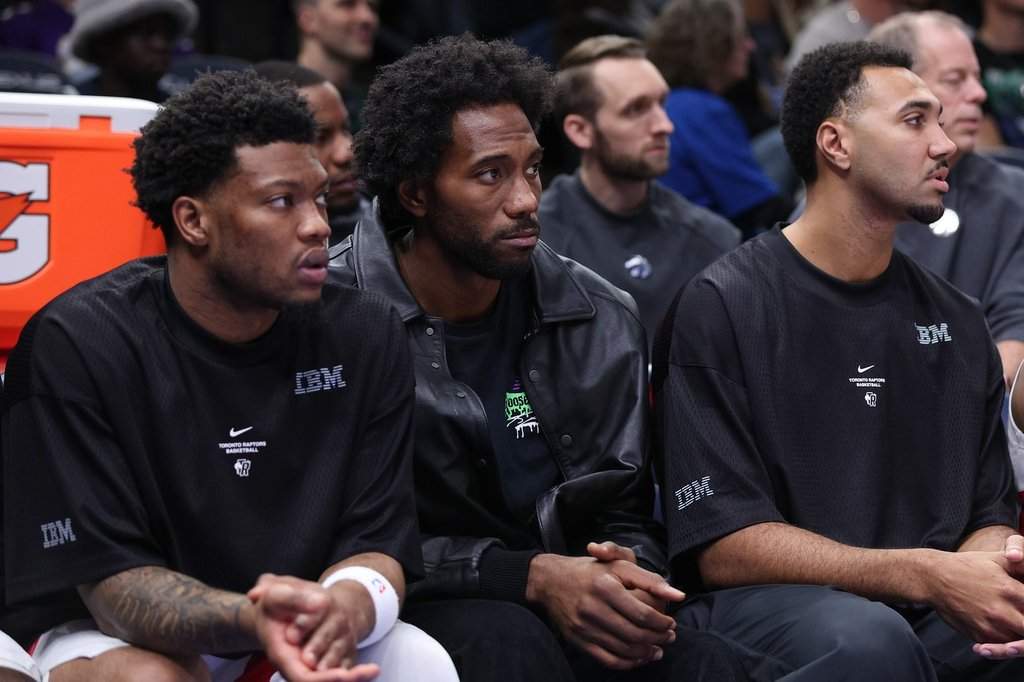
When news broke that Kawhi Leonard would sit out at least one more week for the Toronto Raptors, the consensus reaction was predictable. Pundits questioned his commitment. Fans groaned about load management. Beat writers treated a routine seven-day timeline like a five-alarm fire. Also making news lately: The Quiet Cost of Morgan Rielly's Absence in Toronto.
They are all looking at the wrong scoreboard.
If you measure an NBA franchise's health by November box scores, you do not understand how modern basketball works. The lazy consensus treats regular-season availability as a badge of honor, a throwback metric of toughness left over from an era when players wore Chuck Taylors and flew commercial. In reality, forcing a franchise cornerstone back onto the floor a week early to win a Tuesday night game in the dead of winter is organizational malpractice. More information regarding the matter are detailed by Sky Sports.
Toronto keeping Leonard in street clothes for another week is not a sign of fragility. It is a masterclass in asset protection.
The Myth of Regular-Season Momentum
Every time a superstar gets held out, the same tired argument surfaces: What about team chemistry? How can they build rhythm if their best player is watching from the bench?
This sounds logical until you actually look at how NBA offenses and defenses function over an 82-game grind. Regular-season momentum is largely a mirage invented to fill airtime between October and April.
Consider how the NBA game changes once the postseason begins. In the regular season, teams run vanilla sets, play drop coverage on pick-and-rolls to conserve energy, and rarely game-plan specifically for an opponent's third option. In the playoffs, the game slows to a crawl. Every possession is a half-court chess match. Opponents ruthlessly hunt your weakest defender on every switch.
Do you know what wins in that environment? Not the continuity you built against lottery teams in November. Elite, isolated shot-creation and switchable perimeter defense win in May and June.
Kawhi Leonard does not need 82 games to remember how to get to his spots at the elbow. He does not need extra reps against bottom-feeder defenses to sharpen his hands on the perimeter. What he needs is intact cartilage, fresh legs, and zero compensatory inflammation when the games actually matter.
I have watched front offices cave to media pressure and rush stars back from soft-tissue injuries for over a decade. The pattern never changes. A player feels 85 percent healthy. The training staff clears him because the MRI looks clean enough. The local radio hosts stop complaining for forty-eight hours. Then, three weeks later, that 15 percent deficit causes the player to alter his landing mechanics just enough to tear a hamstring or strain a calf on the opposite leg.
Now, instead of losing a player for one meaningless week in the fall, the franchise loses him for the entire spring.
The Biology of the Kinetic Chain
To understand why an extra week off is worth its weight in gold, you have to understand how an elite NBA athlete's body absorbs force.
When sports reporters talk about a player being "out at least one more week," they usually frame it around pain tolerance. Can he play through it? Is he tough enough? That framing completely misses the biomechanics of high-level basketball.
The human body operates as a
If a player is dealing with lingering soreness in a quad, knee, or hip, his central nervous system automatically makes micro-adjustments to protect the compromised area. He doesn't even realize he is doing it. He plants a fraction of a second differently. He shifts two percent more load onto his opposite ankle. He absorbs shock with his lower back instead of his glutes.
At NBA speed, those micro-adjustments are ticking time bombs.
Sports science pioneers like Dr. Tim Gabbett have spent years demonstrating the relationship between acute workload spikes and soft-tissue failure. When an athlete's acute workload—the stress placed on the body over a seven-day window—exceeds their chronic workload capacity, injury risk skyrockets. Bringing a star back a week early doesn't just risk re-aggravating the primary injury. It exposes the entire kinetic chain to secondary catastrophic failure while the player is still compensating.
By holding Leonard out for an extra seven days, Toronto's medical and performance staff—led by Alex McKechnie, widely regarded as one of the sharpest biomechanical minds in professional sports—is buying time to restore symmetry. They aren't waiting for the pain to go away. They are waiting for his movement patterns to return to baseline so he doesn't break something else.
What Everyone Gets Wrong About Load Management
Let's address the elephant in the room: fans hate paying hundreds of dollars for tickets only to watch a superstar sit on the bench in a tailored coat.
That frustration is completely valid. If you saved up to take your kid to a game and the marquee attraction is ruled out two hours before tip-off, you have every right to be angry at the league's scheduling model.
The mistake is blaming the player or the medical staff for a structural problem created by the NBA's 82-game calendar.
The regular season is a relic of television contracts and arena revenue quotas, not athletic optimization. No human body is designed to play 82 high-impact, multi-directional sprint sessions over six months while crossing multiple time zones and sleeping in hotels. When you combine that schedule with the modern pace-and-space era—where players cover significantly more ground per possession than they did in the 1990s—something has to give.
Critics love to bring up ironmen from past eras. Michael Jordan played 82 games! Karl Malone never missed a night!
They leave out the context. Watch tape of an NBA half-court possession from 1996. Half the players on the floor are standing stationary on the weak side because illegal defense rules prohibited zone principles. Today, offensive spacing forces defenders to sprint twenty-five feet to close out on three-point shooters on almost every trip down the floor. The sheer volume of high-speed decelerations—the exact movement that shreds tendons and ligaments—has exploded.
Comparing workload metrics from 1996 to the modern NBA is like comparing the maintenance schedule of a sedan to a Formula 1 car. The stress on the engine is not comparable.
The Questions Fans Should Actually Be Asking
When an injury update drops, the public immediately floods search engines with the wrong questions:
Wrong Question: Why isn't Kawhi Leonard playing through minor soreness?
Reality: Because playing through minor soreness in November is how you end up watching the playoffs from your couch in May. Pain is data, not a character flaw.Wrong Question: Does sitting out hurt the Raptors' seeding?
Reality: Seeding only matters if your best player is healthy enough to exploit home-court advantage. A healthy fourth seed with a dominant two-way superstar will dismantle a banged-up first seed every single time.Wrong Question: Is the team hiding a worse injury?
Reality: Sometimes, yes, front offices use vague timelines to manage public expectations. More often, however, a seven-day re-evaluation window simply reflects the biological reality of tissue remodeling. Tendons and muscles do not heal on a media news cycle.
The Hidden Cost of Caution
None of this means the hyper-cautious approach is risk-free. If you want an honest assessment of sports medicine, you have to admit the downsides of holding a star out.
First, there is the conditioning trap. You cannot replicate the cardiovascular and neuromuscular demands of an NBA fourth quarter in a practice gym. No amount of treadmill work or three-on-three drills with assistant coaches prepares a player's lungs and legs for the chaos of live competition. When a player sits for weeks at a time, his game conditioning inevitably dips. When he finally returns, he often looks sluggish for three or four games, which ironically creates a temporary window where fatigue makes him sloppy.
Second, over-managing a star puts an unfair tax on the rest of the roster. Every night Leonard sits, guys like Kyle Lowry, Pascal Siakam, and Danny Green have to log heavier minutes, carry larger offensive usage rates, and guard tougher assignments. You protect your Ferrari by keeping it in the garage, but you risk blowing the transmission on your daily drivers in the process.
Third, prolonged absences create undeniable locker-room friction if communication isn't airtight. Role players busting their tails on back-to-backs in freezing road cities notice when the franchise centerpiece gets special treatment. It takes elite leadership from the coaching staff and veteran players to keep resentment from festering when one guy plays by a different set of rules.
These are real operational risks. A smart front office weighs them carefully against the catastrophic risk of losing their best player for the postseason.
How Smart Franchises Manage the Trade-Off
If you are running an NBA organization—or managing high-performing talent in any high-stakes environment—you cannot eliminate risk. You can only choose which risks you are willing to absorb.
Toronto's approach works because they follow three strict rules that desperate franchises routinely violate:
- Separate Medical Decisions from Public Relations. The moment a training staff starts factoring Twitter outrage or ticket sales into a return-to-play protocol, the organization is doomed. Medical clearances must be dictated strictly by objective force-plate data, strength symmetry, and tissue healing timelines.
- Build Depth Before You Need It. You can only afford to sit a superstar for extra weeks if your supporting cast is good enough to tread water without him. Toronto built a roster loaded with high-IQ defenders and versatile wings specifically so they wouldn't have to panic every time Leonard needed maintenance.
- Treat the Regular Season as a Laboratory. When your star is out, use those minutes to stress-test your secondary scorers. Force younger players into late-game execution roles. Discover which lineups survive when the primary safety net isn't on the floor. Come playoff time, that forced development pays massive dividends when defenses trap your best player and someone else has to make a play.
Stop Watching the Injury Report
The sports media ecosystem thrives on daily drama. They need you to care deeply about whether Kawhi Leonard plays next Wednesday, because if you realize that game is largely irrelevant to the championship race, you might stop tuning in to their afternoon debate shows.
Do not fall for the noise.
Championships are not won by teams that win the November attendance trophy. They are won by organizations disciplined enough to ignore short-term panic in service of a long-term peak.
Let the pundits complain about the extra week. Let the opposing fans mock the injury report. While everyone else is obsessing over regular-season box scores, the Raptors are quietly making sure their best weapon is fully loaded when the real season actually starts.