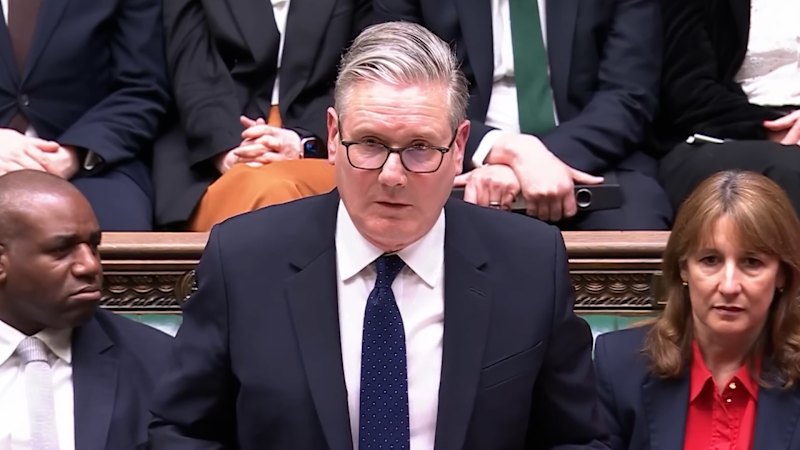
Keir Starmer didn't expect his week to be defined by a ghost from New Labour's past. Yet here we are. The Prime Minister is currently staring down a wall of angry MPs, both from the opposition and his own backbenches, over why Peter Mandelson wasn't properly vetted before being handed a high-profile role. It’s a classic political unforced error. You’d think a former Director of Public Prosecutions would have a tighter grip on background checks, but the Lord Mandelson situation proves that even the most disciplined administrations can get sloppy when old loyalties are involved.
The core of the issue isn't just that Mandelson is back in the fold. It's the "how" and the "why" behind his appointment to advise on trade and diplomatic strategy. Critics aren't just complaining about his politics; they're pointing to a massive gap in the standard security and conflict-of-interest protocols that apply to everyone else. When the government preaches transparency, failing to vet a man with a Rolodex as complicated as Mandelson's is a bad look. It's more than a bad look. It’s a liability. Also making headlines in this space: The United Nations Secretary General Selection Is A Grand Theater Of Pretend.
The Vetting Gap That Everyone Saw Coming
If you’ve followed British politics for more than five minutes, you know Mandelson isn't exactly a blank slate. He’s a man who has spent decades navigating the intersection of private business, international lobbying, and high-level governance. That’s exactly why the vetting process should’ve been airtight. Instead, it seems someone in Number 10 decided to skip a few steps.
Standard vetting for an advisory role of this magnitude usually involves a deep dive into financial ties, previous consultancy work, and any potential overlaps with current government policy. We aren't talking about a basic DBS check here. We're talking about the kind of scrutiny that ensures a public official isn't accidentally working for two masters. By sidestepping the full rigors of this process, Starmer has given his detractors a massive stick to beat him with. It looks like "one rule for the elite, another for the rest of us." That narrative is toxic for a Prime Minister who ran on a platform of cleaning up Westminster. More insights on this are detailed by Associated Press.
Why Labour MPs Are Fuming
It’s not just the Tories making noise. A significant chunk of the Labour party is privately—and sometimes publicly—livid. You have a new generation of MPs who were told that the era of "spin and cronyism" was over. Then they wake up to find a central figure from the 1990s bypassed the very rules they're expected to follow.
The frustration stems from a feeling that the "inner circle" is becoming too insulated. If you're a backbench MP trying to explain to your constituents why the government is making tough choices on spending, the last thing you need is a scandal involving a peer who seems to have been fast-tracked into influence. It undermines the "service" mantra Starmer uses in every single speech.
The internal pushback is about more than just optics. It's about the power dynamic within the party. Many feel that by bringing back Mandelson without the proper checks, Starmer is signaling a return to a top-down, opaque style of management. It creates a culture of distrust. If the vetting failed here, where else is it failing? That's the question currently echoing through the tea rooms and corridors of the Palace of Westminster.
The Real Risk of Neglecting Oversight
Vetting isn't just a bureaucratic hurdle. It’s a shield. It protects the individual, the government, and the public interest. When you bypass it, you leave everyone exposed. In Mandelson’s case, his extensive work with international firms and foreign entities makes him a lightning rod for conflict-of-interest claims.
Without a clear, documented vetting result, every piece of advice he gives is now under a microscope. If he suggests a specific trade direction, people will ask who benefits. If he meets with a foreign dignitary, people will wonder if it’s on behalf of the UK or a former client. This isn't just cynicism; it's the natural result of a lack of transparency. Starmer has essentially created a situation where even good advice from Mandelson will be viewed with suspicion.
A Lesson in Political Self-Sabotage
This whole mess was avoidable. That’s the most frustrating part for the administration. If they’d simply run the process, checked the boxes, and released a summary of the findings, the story would’ve died in a day. Instead, they tried to be clever. They tried to move fast and skip the boring parts.
Politics at this level is about managing risks. Starmer knows this. His background is in law. He knows that the process is often as important as the outcome. By letting this vetting failure happen, he’s signaled a momentary lapse in his own brand of "competence." It’s a crack in the armor. It gives the opposition a way to paint the government as disorganized or, worse, arrogant.
What Happens Now
Starmer has to fix this, and he has to do it fast. You don't survive this kind of pressure by digging in your heels and pretending nothing is wrong. The first step is admitting the oversight. He needs to subject the appointment to the full, standard vetting procedure retroactively. No shortcuts. No special treatment.
Government departments need to tighten their grip on how external advisors are brought in. There should be a public-facing register that doesn't just list names, but confirms that vetting has been completed and signed off by an independent body. This shouldn't be optional.
If you're watching this play out, pay attention to the language used in the House. Watch for the "administrative error" excuses. They won't fly. The only way out for Starmer is total transparency. He needs to prove that his government is still the one he promised—one that respects the rules, even when they're inconvenient.
Don't wait for the next headline to demand better from your local representatives. Ask your MP what they're doing to ensure that appointments in the heart of government are subject to the same scrutiny as any other public servant. The integrity of the system depends on it.