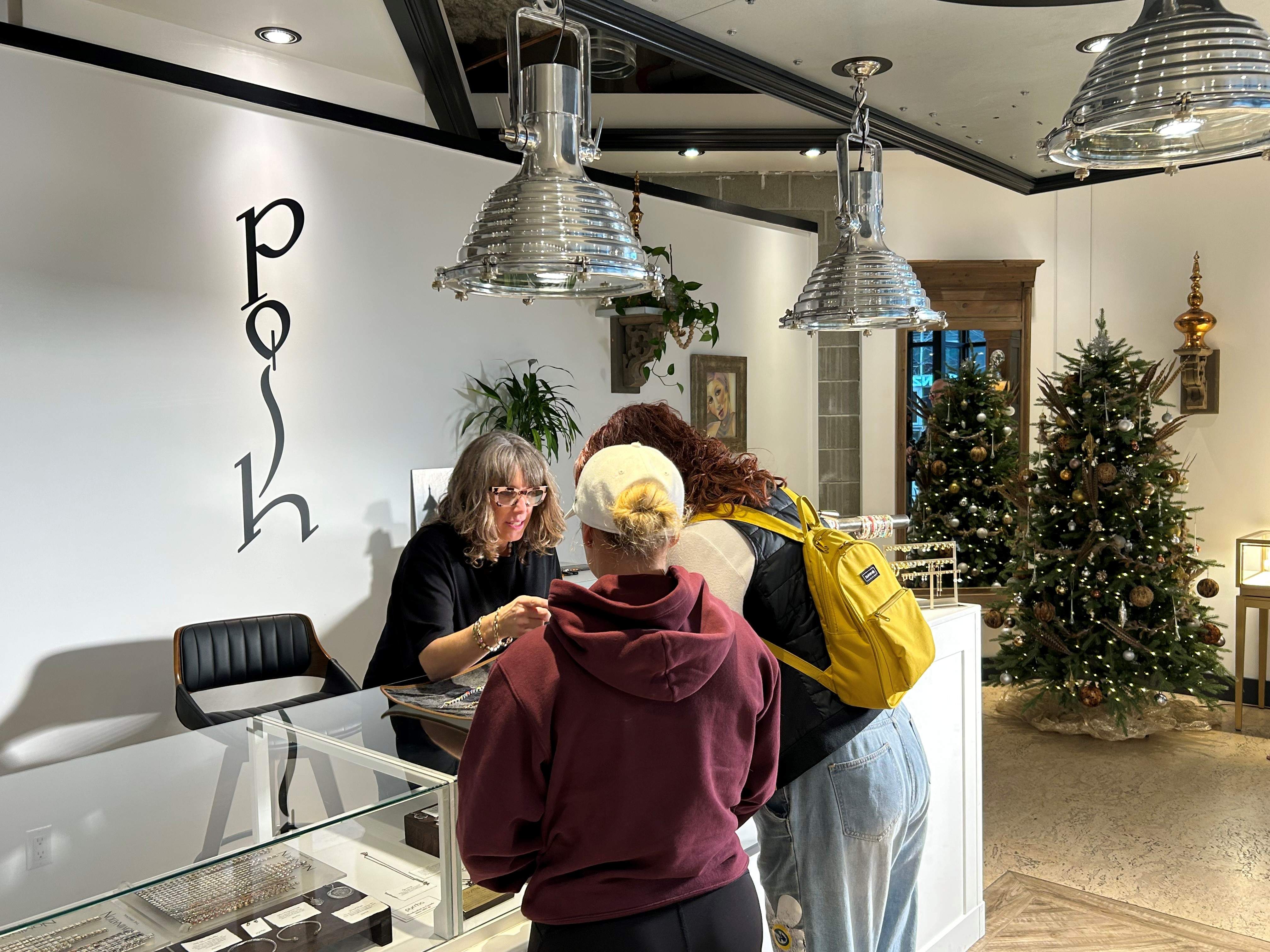
Walk down Bernard Avenue on a brisk November afternoon, and you'll feel two completely different economies colliding at the exact same time. Inside the independent boutiques, coffee shops, and specialty stores, owners are stacking inventory to the ceiling and praying the holiday rush saves their year. Outside on the sidewalk, shoppers are clutching travel mugs, checking price tags twice, and doing mental math before pulling out a credit card.
Kelowna retailers hope for a strong shopping season, and honestly, they don't have much room for error. Across the Okanagan Valley, household budgets are stretched thinner than they've been in years. Between elevated housing costs, mortgage renewals resetting at higher interest rates than pandemic-era lows, and everyday grocery bills eating up disposable income, the average Central Okanagan family is approaching holiday spending with extreme caution.
Yet local shop owners aren't just sitting around waiting for foot traffic to magically appear. They're adapting fast, reshaping how they price, market, and survive in a market where consumers are simultaneously loyal to local businesses and fiercely protective of their bank accounts.
The Reality Behind the Squeeze on Kelowna Households
To understand why this shopping season carries so much weight, you have to look at what's actually happening to household cash flow in British Columbia's interior. Kelowna isn't a sleepy retirement town anymore, nor is it shielded from national economic headwinds. It's one of the fastest-growing metropolitan areas in Canada, which brings high demand for housing and steep carrying costs for anyone who bought a home over the last five years.
When a household's monthly mortgage payment jumps by several hundred dollars upon renewal, that money doesn't vanish into thin air. It gets pulled directly out of discretionary spending. Restaurants feel it first. Boutique retail feels it right after.
Even shoppers with stable incomes are changing how they buy. Instead of impulse-buying a $90 sweater or browsing downtown shops with an open-ended gift list, people are arriving with strict budgets. They're comparing prices on their phones while standing right inside the store. If an item feels overpriced or non-essential, it stays on the rack.
Why Local Shops Feel the Pressure Harder Than Big Box Chains
National retail chains and massive e-commerce platforms can absorb a slow quarter by slashing margins across hundreds of locations. Independent businesses in Kelowna don't have that luxury.
Local retailers are dealing with their own version of the exact same cost squeeze:
- Commercial lease rates and property taxes in high-traffic corridors like Downtown Kelowna, Pandosy Village, and the Landmark District continue to climb.
- Wholesale inventory and shipping costs haven't dropped back to pre-2020 levels, forcing owners to either raise retail prices or watch their profit margins evaporate.
- Wage pressures make staffing peak holiday hours expensive, especially when foot traffic comes in unpredictable waves rather than steady streams.
When you combine rising overhead with price-sensitive customers, you get a razor-thin margin for mistake. A bad November and December doesn't just mean a disappointing bonus for a small business owner. It often determines whether they can pay down their operating line of credit before the notoriously quiet months of January and February roll around.
What Most People Get Wrong About Holiday Retail Spending
There's a common assumption that when times get tough, consumers completely abandon local stores and buy everything from massive online marketplaces. That's only half true.
In reality, consumer behavior during an economic squeeze splits into two distinct tracks. Shoppers get ruthless about commodity purchases—things like batteries, basic household supplies, or mass-produced toys—hunting down the lowest possible price online. At the exact same time, those same shoppers become more intentional about the gifts that actually matter.
People still want to buy something meaningful for their partner, parents, or close friends. They just want to know the money is going somewhere worthwhile. If they're going to spend $60 on a gift, they'd rather hand it to a neighbor running a shop on Lawrence Avenue than send it to an overseas warehouse—provided the local store gives them a reason to walk through the door.
The problem isn't a lack of goodwill toward Kelowna businesses. The problem is friction. If parking feels like a hassle, if store hours don't match when working people actually have free time, or if a store doesn't show its inventory online, convenience wins every single time.
How Kelowna Retailers Are Fighting Back for Every Dollar
The smartest shop owners in the Okanagan aren't relying on guilt trips or generic "shop local" slogans anymore. They know customers need real value, genuine convenience, and an experience you can't replicate on a smartphone screen.
Shifting Toward Practical Gifts and Lower Price Points
Walk into successful independent stores across Kelowna right now and look closely at the front tables. You'll notice a deliberate shift in merchandising. Instead of leading with $250 luxury items, retailers are curating high-appeal gifts in the $20 to $50 range.
Artisanal food products, locally roasted coffee, Okanagan wine accessories, cozy winter gear, and practical home goods are dominating display spaces. These items hit a sweet spot. They feel thoughtful and personal, yet they don't trigger buyer's remorse at the cash register.
Many retailers are also bundling smaller products into ready-to-give gift sets. It takes the guesswork out of shopping for stressed customers while nudging the average transaction value higher without feeling pushy.
Turning Shopping Into a Social Event
You can't compete with online algorithms on shipping speed, so local business districts have leaned hard into atmosphere. Seasonal light-ups, late-night shopping events, pop-up markets, and collaborations between neighboring businesses are turning errand runs into actual outings.
When a boutique teams up with a local bakery or winery to offer tastings during an evening shopping event, foot traffic changes immediately. People bring friends. They linger. They browse shelves they'd normally walk right past. Even if someone only buys a small item that evening, they remember the store when it's time to finish their gift list two weeks later.
Fixing the Digital Blind Spot
For years, plenty of brick-and-mortar shops treated their website or social media pages as an afterthought. That approach is dead.
Today's budget-conscious shopper researches before driving across the bridge from West Kelowna or heading down from Rutland. Retailers that post real-time inventory updates, clear pricing, and gift guides on Instagram and Facebook are capturing buyers before they ever leave their living rooms. Offering simple options like buy-online-pickup-in-store or local delivery removes the exact friction that used to send buyers straight to giant e-commerce sites.
What This Season Means for Kelowna Shoppers and Business Owners
If you're running a retail business in the Okanagan right now, survival comes down to discipline and visibility. Don't hide your best-value items in the back corner, and don't assume loyal customers automatically know your holiday hours or return policies. Make it effortless for someone on a tight budget to find a great gift under $40, wrap it quickly, and walk out feeling good about their purchase. Track your inventory weekly rather than waiting until mid-December to discount slow-moving stock—cash in the bank beats unsold boxes in the storage room every time.
If you're a Kelowna resident trying to stretch your holiday budget without abandoning your community, be strategic with where your dollars go. Use big-box stores for the basic necessities if you need to save every penny, then redirect whatever you saved toward independent shops for your standout gifts. Even shifting two or three purchases from a multinational website to a local storefront keeps money circulating right here in the valley—supporting local jobs, local sponsorships, and the exact neighborhoods that make living in Kelowna worth the cost in the first place.