Two hundred and fifty feet of gilded stone and concrete doesn't just alter a skyline. In Washington, D.C., it rewrites the meaning of sacred ground.
When nine members of the Kennedy family stepped into federal court on November 10, 2026, they weren't picking another routine partisan fight with Donald Trump. They were trying to stop bulldozers from breaking ground on a massive triumphal arch at Memorial Circle—a structure designed to stand more than twice as tall as the Lincoln Memorial right between the National Mall and Arlington National Cemetery. If you look at the basic French news wire blurbs circulating online, this lawsuit gets reduced to a celebrity political spat. That misses the actual legal, architectural, and historical story unfolding along the Potomac River.
I've followed federal land-use battles and capital preservation fights for years, and honestly, the speed of this project is unlike anything Washington has seen in modern memory. Usually, getting a modest plaque approved near the National Mall takes a decade of congressional hearings and design commissions. Here, the administration tried to fast-track a 76-meter monument topped with a 60-foot golden winged figure and flanked by gilded eagles without a single new vote from Congress.
What the Kennedy Family Lawsuit Actually Claims
Let's strip away the cable-news noise and look at the actual court filing in U.S. District Court for the District of Columbia. Nine relatives of the late President John F. Kennedy—including Rory Kennedy, Kerry Kennedy, Maxwell Kennedy, Christopher G. Kennedy, Courtney Kennedy, Kathleen Kennedy Townsend, Joseph P. Kennedy II, Joseph P. Kennedy III, and Edward M. Kennedy Jr.—moved to intervene as plaintiffs alongside an existing coalition of Vietnam War veterans, an architectural historian, the District of Columbia, and the Commonwealth of Virginia.
Their argument centers on a concept urban planners call reciprocal sightlines.
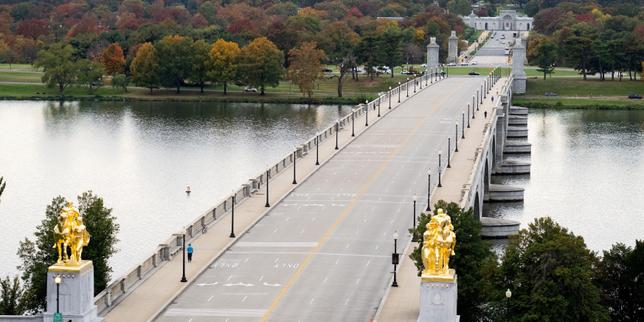
When Jacqueline Kennedy and architect John Carl Warnecke designed President Kennedy's gravesite in the mid-1960s, the placement wasn't random. The Eternal Flame sits on the hillside of Arlington National Cemetery specifically aligned with the axis of Arlington Memorial Bridge and the Lincoln Memorial. Walk across that bridge, and your eye travels straight from Lincoln to JFK's flame. Look back from the cemetery hillside, and you see the Lincoln Memorial framed across the river.
Trump's proposed arch drops a 250-foot wall of masonry directly into Memorial Circle, the traffic rotary on the Virginia side of the Potomac that anchors that corridor.
According to the Kennedys' legal complaint, the structure would:
- Sever the historic visual axis between the Lincoln Memorial and Arlington National Cemetery.
- Obstruct direct views of John F. Kennedy's Eternal Flame from Arlington Memorial Bridge.
- Cast physical shadows across the gravesites of JFK, Senator Robert F. Kennedy, Senator Edward M. Kennedy, Ethel Kennedy, and thousands of American service members buried nearby.
Kerry Kennedy put it plainly in her court declaration, calling Arlington National Cemetery a place of ritual, peace, and holiness. Rory and Maxwell Kennedy framed the intervention not as a family privilege, but as a defense of hallowed ground holding more than 400,000 veterans and their families. Notice too who wasn't on the plaintiff list. Robert F. Kennedy Jr., who has aligned himself with the administration and previously brushed off clashes over Trump adding his name to the Kennedy Center, stayed out of the suit.
Why Most Coverage Misses the Bigger Legal Trap
If you only read headlines about the Kennedys, you might think this lawsuit hinges on aesthetics or hurt feelings. It doesn't. The Kennedys joined a legal buzzsaw that was already tearing through the administration's paperwork.
Long before November, three Vietnam War veterans—Michael Lemmon, Shaun Byrnes, and Jon Gundersen—and architectural historian Calder Loth filed Lemmon v. Trump in February 2026. Then the Arlington County Board sued in October, followed on October 31 by D.C. Attorney General Brian Schwalb and Virginia Attorney General Jay Jones.
The core legal problem is straightforward. Under the Commemorative Works Act, nobody—not even the President of the United States—can unilaterally erect a new monument on federal parkland in the Washington metropolitan area without explicit authorization from Congress.
So how did Interior Secretary Doug Burgum and the National Park Service justify approving the arch on November 5, 2026, without a congressional vote?
They reached back more than a century. Administration lawyers argued in court filings that Congress already gave permission back in 1925 when lawmakers approved the original plans for Arlington Memorial Bridge, which once included two decorative entrance columns that were never built.
Let's be real about how weak that stretch is. Equating two unbuilt 1925 bridge pylons with a 250-foot gilded triumphal arch designed to celebrate America's 250th anniversary is like arguing a century-old permit for a garden shed lets you build a skyscraper in your backyard. Even Washington's own historic preservation officer, David Maloney, warned that the monument would severely damage one of the most important symbolic cultural landscapes in the country.
The Last-Minute National Security Pivot
Things got even stranger in late October when the administration realized its historical paperwork might not survive judicial scrutiny.
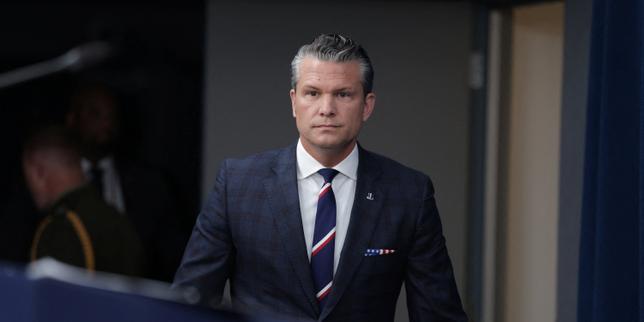
Suddenly, the triumphal arch wasn't just a tribute to American history or a Parisian-style landmark modeled after Napoleon's Arc de Triomphe. President Trump announced that, at the Defense Department's request, the arch would incorporate a military security complex complete with counter-drone systems and sniper positions. On October 28, Defense Secretary Pete Hegseth and Homeland Security Secretary Markwayne Mullin submitted sworn declarations claiming the structure was vital to protecting the capital's airspace.
Federal judges didn't buy it for a second.
In Alexandria, Virginia, U.S. District Judge Leonie Brinkema reviewed the Arlington County lawsuit and tore into the timeline. She called the project a "rushed job" lacking a legal basis, pointing out that the government hadn't even properly analyzed how a 250-foot structure—let alone one housing military hardware—would affect flight paths into nearby Ronald Reagan Washington National Airport. And in a scathing rebuke of the eleventh-hour Pentagon excuse, the court noted that the counter-drone rationale lacked credibility because it only surfaced after plaintiffs sued to stop construction.
Where the Court Battle Stands Right Now
Right now, heavy machinery is frozen in its tracks. Two separate federal courts have slammed the brakes on the administration's plans:
- In Washington, D.C.: U.S. District Judge Tanya Chutkan issued a temporary restraining order blocking all excavation, demolition, utility work, and road closures at Memorial Circle. She subsequently extended that freeze through December 3, 2026, while weighing a longer-term preliminary injunction in the consolidated Lemmon and D.C.-Virginia litigation where the Kennedy family is intervening.
- In Alexandria, Virginia: On November 20, 2026, Judge Leonie Brinkema granted a preliminary injunction from the bench in Arlington County's separate lawsuit, halting construction indefinitely until the merits of the case are resolved.
The Justice Department filed a notice of appeal to the Fourth Circuit on November 21, and White House spokespeople continue to insist the monument will unite the country and eventually prevail in higher courts. Given how the Supreme Court narrowly ruled 5–4 in favor of the administration's separate White House ballroom project, nobody in Washington is assuming this fight is over.
Why This Dispute Matters Beyond Politics
Strip away the names Trump and Kennedy, and you're left with a fundamental question about who owns public memory in a democracy.
Washington's monumental core isn't an empty canvas waiting for whichever president holds office to leave a personal signature. Pierre L'Enfant's original city plan, the McMillan Plan of 1901, and the Commemorative Works Act exist specifically to prevent executive vanity projects from overwhelming national memorials. The Lincoln Memorial sits low, horizontal, and solemn across the water from the quiet hills of Arlington for a reason. Every axis in that corridor was calibrated so that no single leader's ego could physically tower over the graves of the soldiers who died defending the republic.
If an administration can bypass Congress, ignore environmental and aviation safety reviews, slap a retroactive military label on a monument, and drop a 250-foot arch onto a national cemetery's doorstep, those statutory guardrails mean nothing.
If you want to track how this unfolds over the next few weeks, keep your eye on three concrete milestones rather than partisan commentary:
- December 3, 2026: Watch Judge Chutkan's docket in D.C. District Court for her ruling on converting the temporary restraining order into a full preliminary injunction and formally ruling on the Kennedy family's motion to intervene.
- Fourth Circuit Appellate Filings: Follow the government's emergency appeal of Judge Brinkema's indefinite Virginia injunction to see whether appellate judges pause her freeze or keep bulldozers off Memorial Circle.
- Public Docket Records: Read the actual filings in Lemmon v. Trump (Case No. 1:26-cv-00544) and the National Park Service's Revised Environmental Assessment rather than relying on cable summaries—the contrast between the 1925 bridge plans and the 2026 blueprints tells you everything you need to know about why two federal judges hit pause.
Check out Kennedy Relatives Sue to Protect Arlington Gravesites From Trump's Arch for a concise video breakdown of how the proposed 250-foot structure would disrupt the sightlines between the Lincoln Memorial and Arlington National Cemetery.