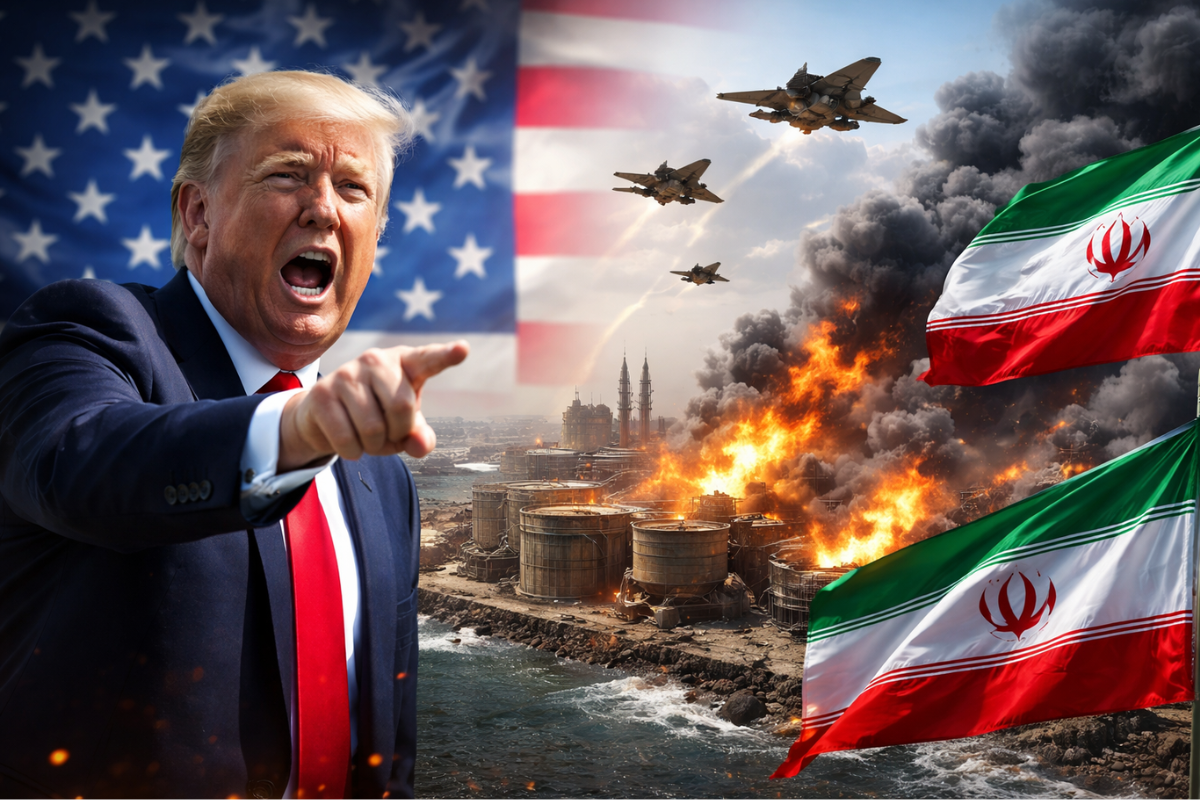
The headlines are screaming about a "civilization-ending" ultimatum and the imminent destruction of Iran’s energy lungs on Kharg Island. It makes for great television and even better clickbait. But if you are looking at the Kharg Island terminal as the spark for World War III, you are looking at the wrong map. You are falling for the theater of "maximum pressure" while ignoring the cold, hard physics of global energy markets and the strategic reality of the Strait of Hormuz.
The common narrative suggests that a strike on Kharg Island would cripple Iran and force a total surrender. This assumes the Iranian regime operates like a Western corporation where a loss of primary revenue leads to bankruptcy and liquidation. It doesn't. In the Middle East, survival is the only KPI that matters, and a cornered dog doesn't bark—it bites the jugular.
The Kharg Island Trap
Kharg Island handles roughly 90% of Iran’s crude exports. To the amateur strategist, it looks like a "delete" button for the Iranian economy. Hit the jetties, blow the storage tanks, and the money stops flowing. Simple, right?
Wrong.
The moment smoke rises from Kharg, the price of Brent crude doesn't just "rise." It teleports. We aren't talking about a five-dollar bump. We are talking about the immediate pricing-in of a total blockade of the Strait of Hormuz. Iran’s military doctrine has spent decades preparing for exactly this: asymmetrical responses. They don't need to win a naval battle against a US Carrier Strike Group. They only need to sink a few tankers or sow enough naval mines to make insurance premiums for the remaining fleet higher than the value of the cargo.
If you think the US electorate, already battered by years of inflation, will tolerate $10-per-gallon gasoline because of a "civilization" ultimatum, you haven't been paying attention to domestic politics. The "lazy consensus" says the US holds all the cards. The reality is that the US economy is held hostage by the very volatility it threatens to unleash.
The Myth of the Civilization Ending Ultimatum
Let’s talk about the rhetoric. "An entire civilization could be ended tonight." This is classic psychological warfare designed for a domestic audience, not a tactical reality. Civilizations don't end because of a few Tomahawk missiles. They end when their resource chains collapse.
If a full-scale kinetic conflict breaks out, the "civilization" most at risk isn't the one in the crosshairs—it’s the globalized, just-in-time supply chain that depends on a stable Middle East.
What the Competitor Missed
- China’s Shadow: Iran isn't an island. It is a gas station for the East. Beijing has spent years building "ghost fleets" and alternative payment systems to bypass Western sanctions. A strike on Kharg is an indirect strike on Chinese energy security. You aren't just fighting Tehran; you are daring Beijing to accelerate the de-dollarization of the oil trade.
- Refinery Realities: Even if Kharg is leveled, Iran has spent years pivoting toward domestic refining. They have become more resilient to crude export shocks than they were a decade ago.
- The Insurance Spiral: Global shipping isn't governed by admirals; it’s governed by Lloyd’s of London. Once the Persian Gulf becomes a "no-go" zone, the global economy hits a brick wall.
The Math of Asymmetric Warfare
In my years tracking regional volatility, I've seen analysts consistently underestimate the "cost-to-kill" ratio. A multimillion-dollar missile can be countered by a few thousand dollars' worth of drone tech or sea mines.
Imagine a scenario where the US successfully wipes out the Kharg infrastructure. Within six hours, Hezbollah, the Houthis, and various PMFs (Popular Mobilization Forces) activate. This isn't a localized skirmish. It’s a regional wildfire. The US would be forced into a "Whack-A-Mole" strategy across four different fronts simultaneously. That isn't a victory; it's a quagmire that makes the last twenty years look like a rehearsal.
Energy as a Weapon of Mass Destruction
We need to redefine what a WMD is. It isn't just a nuclear warhead. In the 2020s, a 50% spike in global energy costs is a weapon of mass destruction. It topples governments, triggers food riots in developing nations, and freezes industrial production in Europe.
The "bold" ultimatum being touted isn't a sign of strength; it’s a sign of a lack of options. If the goal is a stable, pro-Western Middle East, blowing up the region's largest oil terminal is the fastest way to ensure you get the exact opposite.
Stop Asking if the US Can Win
The question isn't whether the US military can destroy Iranian targets. Of course it can. The kinetic superiority is undisputed. The real question is: Can the US afford the aftermath?
The "People Also Ask" sections on Google are filled with queries like "Will there be a draft?" or "How high will gas prices go?" These questions reveal the underlying anxiety that the "insiders" ignore. The public senses the fragility.
Hard Truths for the "Hawks"
- Sanctions have reached a point of diminishing returns. You cannot "double-sanction" a country that has already built a parallel economy.
- Regime change is a fantasy. Decades of history show that external attacks unify a population against the "aggressor," regardless of how they feel about their own leaders.
- The "Israel Factor". Any strike on Iran immediately puts every Israeli city in the crosshairs of tens of thousands of rockets. There is no version of this war where the "iron dome" isn't eventually overwhelmed by sheer volume.
The Fresh Perspective: The Silent De-escalation
Despite the fiery tweets and the "today could be the end" rhetoric, look at the movements of the actual assets. Look at the back-channel communications. Smart money isn't betting on total war. Smart money is betting on a "managed escalation."
The goal of the ultimatum isn't to start a war; it’s to create a "fear premium" that forces concessions. But this is a dangerous game of chicken. If you drive a car at a wall long enough, eventually, the brakes fail.
The Actionable Reality
If you are a business leader or an investor, ignore the "civilization" talk. Watch the tanker tracking data. Watch the insurance premiums in the Gulf. Watch the CNY/IRR exchange rate. These are the true indicators of conflict, not the teleprompter scripts of politicians.
The biggest misconception is that war is an event. In the modern era, war is a permanent state of economic and cyber friction. If a "hot" war starts at Kharg Island, it won't be because someone decided to end a civilization. It will be because someone did the math wrong.
Don't wait for the "official" announcement. The disruption has already begun. The cost of everything you buy is already priced against the possibility of a mistake in the Strait of Hormuz.
Buy the volatility. Sell the rhetoric.