In Manhattan, a North Korean diplomat accepted a personal letter from President Donald Trump outside Pyongyang’s mission to the United Nations. Days later, during a UN session, that same diplomat walked up to an American representative and tossed the envelope right back in front of them, completely unopened.
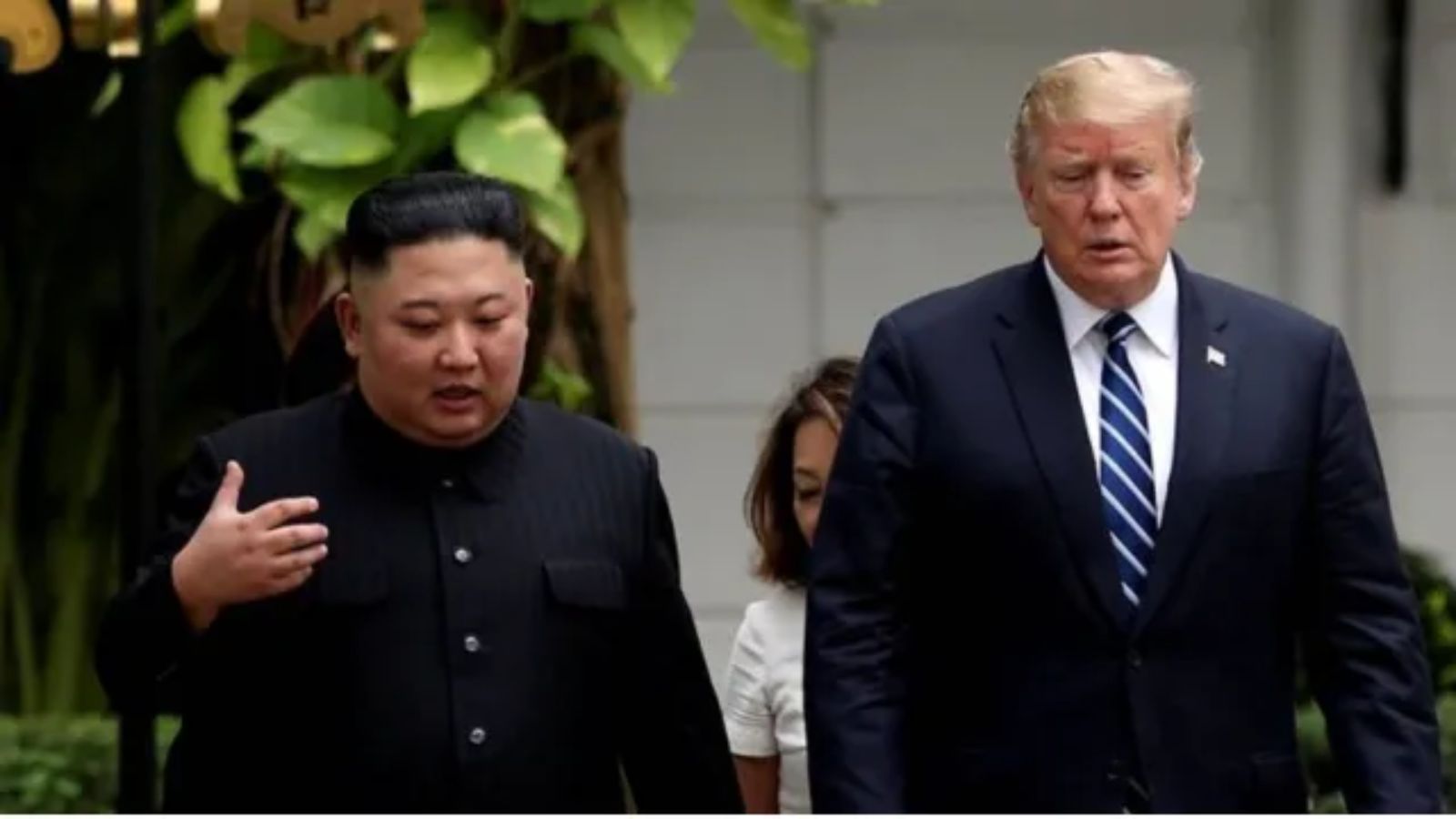
That single diplomatic humiliation—first reported by The Wall Street Journal in November 2026—punctuates nearly two years of unanswered phone calls and ignored backchannels from the White House. Seven years after their choreographed handshakes in Singapore, Hanoi, and the Korean Demilitarized Zone, the much-touted personal chemistry between Trump and Kim Jong Un has evaporated.
Most surface-level news reports treat this snub as a surprising twist in a quirky political bromance. They miss the structural reality. Kim Jong Un is not ignoring Donald Trump out of spite or hesitation. He is ignoring him because the geopolitical balance of power on the Korean Peninsula has fundamentally inverted since 2019. Pyongyang no longer needs Washington’s permission to survive, and the White House is attempting to play an old diplomatic hand with cards that have lost their value.
The Manhattan Sidewalk Ambush
To understand how far Washington’s influence in Pyongyang has fallen, look at the mechanics of the failed outreach. Throughout 2025, Trump attempted to reach Kim using established communication lines and traditional diplomatic channels. The lines stayed dead. Nobody in Pyongyang picked up, and nobody called back.
Frustrated by the silence, White House officials resorted to physical delivery. Because the United States and North Korea have no formal diplomatic relations, the "New York channel"—the informal line of communication between U.S. officials and North Korea’s UN mission in Manhattan—has historically served as the default mailbox. In early 2025, American diplomats repeatedly tried to pass correspondence through the mission, only to be rebuffed.
When Trump penned a fresh letter, White House planners orchestrated a street-level interception. Officials waited outside the Manhattan mission until a North Korean diplomat walked past, then stepped in and physically placed the letter into his hands.
In the theatrical world of authoritarian statecraft, returning a head of state’s correspondence unopened is not an administrative oversight. It is a calculated public insult. By tossing the envelope back at a U.S. official inside the United Nations, Pyongyang signaled that Trump’s famous "love letters" from his first term carry zero currency today.
Quiet Concessions Behind Closed Doors
Publicly, the White House maintains a familiar line. An administration official told The Wall Street Journal that no formal effort was underway to broker a summit and insisted Washington remains committed to North Korea’s complete denuclearization.
Privately, the calculus inside the West Wing shifted dramatically. According to people familiar with the internal discussions, U.S. officials seriously weighed dropping their longstanding demand that Pyongyang dismantle its nuclear arsenal as a precondition for talks. To lure Kim back to the negotiating table, Washington explored a sweeping package of diplomatic incentives:
- A formal end to the Korean War: The 1950–53 conflict halted under an armistice, leaving the two Koreas technically at war for more than seven decades. U.S. officials discussed issuing a political declaration to formally close the war as an opening step.
- Liaison offices: Washington considered establishing permanent diplomatic outposts in each other's capitals, laying the groundwork for full diplomatic recognition.
- An arms-control freeze: Rather than demanding total disarmament, the administration weighed an interim statement that would stop short of officially recognizing North Korea as a nuclear state while asking Kim merely to cap future nuclear and missile testing.
Even with Washington willing to shelve denuclearization, the two sides hit a wall. During Trump’s recent Asia swing—which included stops in Manila for the ASEAN and Quad summits and Shenzhen for APEC—backchannel discussions explored a potential sideline encounter. Pyongyang laid down preconditions that even a concession-minded White House could not swallow. Trump later told NBC News that his schedule was simply too packed for a meeting to work, adding that the personal relationship remained intact and a sit-down would happen at "some point."
The diplomatic record tells a very different story.
Why Pyongyang Holds the Cards Now
In 2018 and 2019, Kim Jong Un boarded his armored train to Singapore and Hanoi because he was cornered. Maximum-pressure sanctions orchestrated by Washington, backed by Beijing and Moscow at the UN Security Council, had choked off North Korea’s hard currency. Kim needed sanctions relief, and Donald Trump was the only American president willing to bypass the foreign policy establishment to offer it personally.
Seven years later, the economic and military chokehold is gone.
The Russian Lifeline
Vladimir Putin’s invasion of Ukraine handed Kim Jong Un an economic windfall that no American sanctions package can easily undo. According to 2026 U.S. intelligence assessments, massive munitions sales to Russia have flooded Pyongyang with foreign-currency revenue, fuel, and food supplies. North Korea has transformed from an isolated pariah into a vital defense contractor for Moscow. Why beg Washington to lift UN sanctions when Russia is actively ignoring them and paying cash on delivery?
A Tripled Nuclear Arsenal
When Trump and Kim walked away from the collapsed Hanoi summit in February 2019, intelligence analysts estimated North Korea possessed roughly 20 to 30 nuclear warheads. By late 2026, that stockpile has grown to an estimated 60 warheads, paired with intercontinental ballistic missiles capable of striking the American mainland. Kim no longer views his nuclear program as a bargaining chip to trade away for economic aid. He views it as an irreversible fact of geopolitical life.
Illicit Cyber Revenue
Alongside Russian arms deals and expanded cross-border trade, state-backed hacking syndicates continue to funnel hundreds of millions of dollars in stolen cryptocurrency directly into the regime's coffers. Kim has built a sanctions-proof financial ecosystem that insulates his elite from Western pressure.
The Fatal Flaw in Personalized Diplomacy
Trump’s outreach exposes a recurring blind spot in how American administrations approach authoritarian regimes. The strategy rests on the assumption that geopolitical deadlocks are primarily interpersonal problems—that two strongmen in a room can override decades of institutional hostility through sheer force of personality.
That theory worked in 2018 only because both leaders wanted the same immediate deliverable: cameras. Trump wanted historic television footage proving he had solved a crisis his predecessors could not touch. Kim wanted global legitimacy, standing shoulder-to-shoulder with an American president beneath twin national flags to prove to his domestic audience that North Korea had arrived as a peer power.
Once the novelty of the photo-op wore off in Hanoi, the underlying incompatibility surfaced. Trump wanted tangible nuclear dismantlement before lifting sanctions. Kim wanted sanctions lifted first while keeping his core nuclear infrastructure intact.
Today, Kim does not need the photo-op. Having hosted Vladimir Putin in Pyongyang and coordinated closely with Xi Jinping—a dynamic Trump himself acknowledged after discussing the Korean Peninsula with both leaders in Shenzhen—Kim already enjoys great-power validation. Meeting Trump without securing formal U.S. recognition of North Korea as a legitimate nuclear-armed state would offer Kim zero strategic upside while risking embarrassment if talks collapsed again.
The Recognition Trap
This brings Washington to an unavoidable strategic impasse. Kim’s central demand is crystal clear: he wants the United States to drop denuclearization permanently and accept North Korea into the club of nuclear powers.
For any U.S. president, crossing that threshold carries severe consequences across East Asia. Formal or de facto recognition of a nuclear North Korea would shatter the global non-proliferation regime. Worse, it would ignite immediate pressure in Seoul and Tokyo to develop their own domestic nuclear arsenals, triggering a regional arms race that Washington has spent seventy years trying to prevent.
Secretary of State Marco Rubio recently noted that Kim is not an expansionist conqueror and "just wants to survive." That assessment may be accurate, yet survival in Pyongyang is now defined entirely by nuclear permanence. By floating half-measures—like a Korean War end-of-war declaration or a testing freeze without dismantlement—the White House signaled eagerness to talk while refusing to pay Kim’s actual asking price.
In high-stakes diplomacy, telegraphing eagerness from a position of shrinking leverage invites contempt. Pyongyang read Washington’s backchannel proposals not as generous concessions, but as proof that the United States has run out of coercive options.
What an Unopened Envelope Really Means
Diplomatic history offers plenty of examples of ignored overtures, from Richard Nixon’s early, tentative probes toward Beijing to Barack Obama’s secret letters to Iran’s Supreme Leader. In those cases, quiet persistence eventually cracked open a door because the target nation desperately needed an exit ramp from economic isolation.
North Korea is not looking for an exit ramp. Pyongyang has found an alternate highway through Moscow and Beijing, paved with artillery shells, ballistic missiles, and stolen digital currency.
Until Washington develops a strategy that imposes real costs on the Moscow-Pyongyang axis or fundamentally alters the military balance in Northeast Asia, personal notes slipped to diplomats on Manhattan sidewalks will keep ending up on the floor.
Watch Firstpost's report on Kim Jong Un ghosting Trump for a concise breakdown of how Pyongyang's expanding arsenal and Moscow ties have erased Kim's incentive to negotiate.