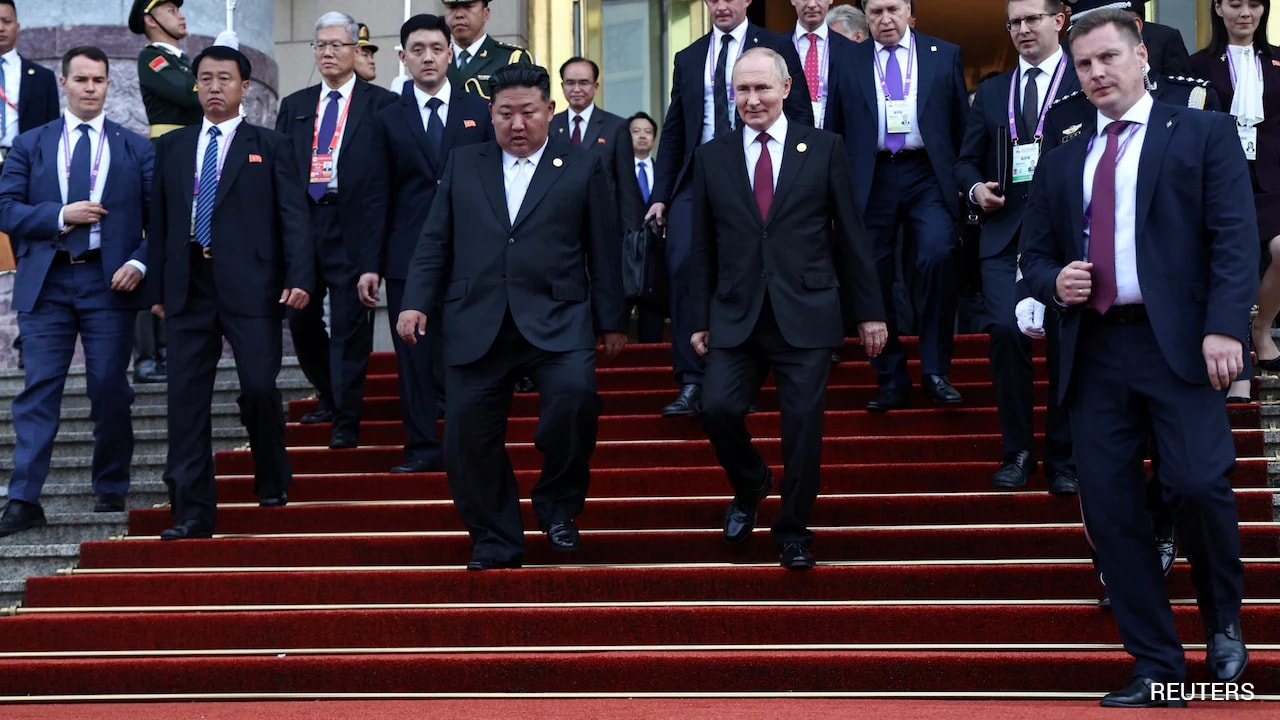
When Kim Jong Un calls Vladimir Putin his "dearest friend," nobody should mistake it for standard diplomatic flattery. It's a calculated signal to Washington, Seoul, and the rest of the world. In a recent birthday letter to the Russian leader, the North Korean head of state pledged invariable support and labeled Moscow's invasion of Ukraine a "sacred war of justice".
If you think this is just empty rhetoric from isolated autocrats, you aren't paying attention to what's happening on the ground. This partnership has evolved from polite handshakes into a hard military and economic axis that is actively rewriting global security rules. For a different perspective, consider: this related article.
Beyond Diplomatic Niceties
State media releases from Pyongyang usually read like tired scripts from the last century. But this relationship broke past symbolic telegrams a long time ago. Ever since both leaders signed a mutual defense pact in June 2024, the cooperation has moved past political solidarity into tangible battlefield integration.
Intelligence estimates place thousands of North Korean troops in Russian deployment zones, backed by massive transfers of artillery shells and ballistic missiles. In exchange, Moscow is funneling economic aid, aerospace technology, and critical battlefield experience back to Pyongyang. When Kim praises Putin's leadership, he is celebrating an active partnership that keeps his own regime afloat and modernizes his military capabilities. Similar analysis on the subject has been published by The Washington Post.
Why Washington And Seoul Are Sweating
Western capitals spent decades trying to starve North Korea of cash, technology, and legitimacy through strict international sanctions. That containment strategy is effectively dead.
By tying his fortunes directly to Moscow, Kim has found a superpower patron with a veto in the United Nations Security Council and an insatiable appetite for conventional munitions. South Korean and American defense officials watch these developments with growing alarm because the tactical lessons North Korean soldiers learn in European trenches will eventually filter back to the heavily fortified Demilitarized Zone.
You can't dismiss this as regional saber-rattling anymore. The geopolitical architecture of East Asia and Eastern Europe have merged into a single theater where sanctioned states back each other up without hesitation.
What Comes Next For The Axis
The personal bond between Kim and Putin works because both men face deep political isolation from Western democracies. They have nothing left to lose in terms of Western approval, which gives them a terrifying freedom of movement.
As long as the war in Ukraine drags on, Moscow needs Pyongyang's shells and soldiers. As long as global pressure keeps squeezing North Korea's economy, Pyongyang needs Moscow's oil, grain, and tech secrets. Expect this alliance to deepen further, completely bypassing traditional diplomatic guardrails and forcing the rest of the world to deal with a much more dangerous, unpredictable security landscape.
Check out this analysis on the North Korea-Russia alliance for a closer look at how these two nations are reshaping modern geopolitics.