The shift in American foreign policy toward Iran has transitioned from traditional containment to a doctrine of systemic industrial liquidation. The current administration’s strategy moves beyond the psychological pressure of "maximum pressure" 1.0, focusing instead on the physical dissolution of the Islamic Republic’s remaining critical infrastructure. By targeting high-value nodes—specifically bridges, power generation plants, and logistics hubs—the United States is executing a strategy designed to decouple the Iranian state from its ability to maintain internal order and project external power. This is not a standard bombing campaign; it is an exercise in engineering-led regime degradation.
The Triad of Infrastructure Fragility
To understand the impact of recent and proposed strikes, one must analyze the Iranian state as a network of three interdependent systems. The "blitzing" of bridges and plants is a calculated attempt to induce a cascading failure across these domains.
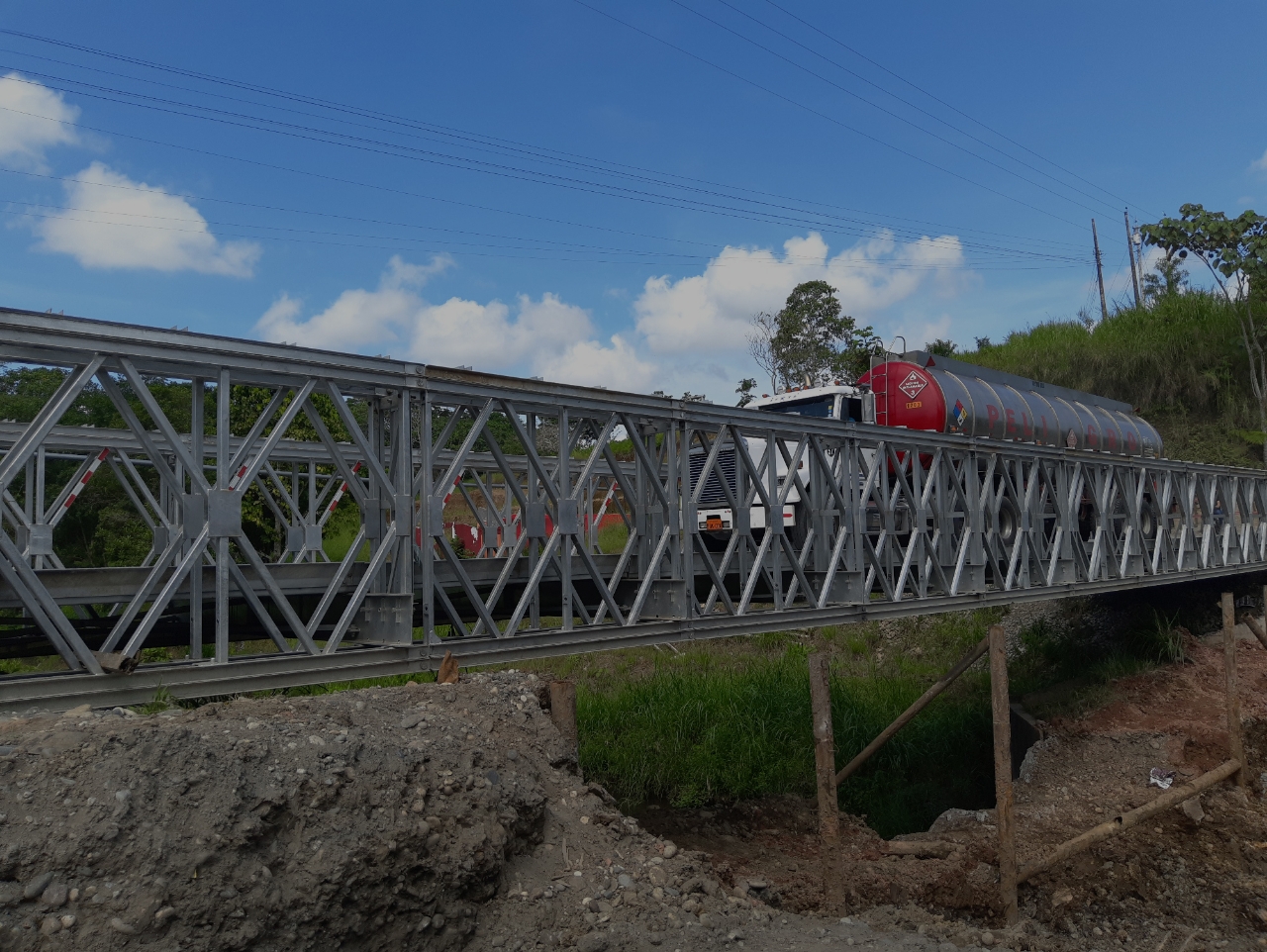
- The Logistical Arteries: Iran’s geography is dominated by rugged terrain and vast distances. Bridges are not merely transit points; they are "force multipliers" for internal security. Destroying a primary bridge in the Khuzestan province or near the Strait of Hormuz does more than stop trade; it isolates the IRGC’s (Islamic Revolutionary Guard Corps) ability to move heavy equipment to suppress domestic unrest or reinforce coastal defenses.
- The Energy Baseload: Targeted strikes on "key plants"—primarily thermal power stations and natural gas processing facilities—target the regime’s social contract. Modern authoritarianism relies on a consistent energy supply to maintain urban centers. Removing megawatts from the national grid creates a deficit that cannot be mitigated by fuel imports, as the distribution hardware itself is the target.
- The Industrial Core: By focusing on the "what’s left" of the industrial base, the strategy seeks to reset the Iranian economy to a pre-industrial state. This prevents the indigenous manufacturing of spare parts for their aging military hardware and drone programs, creating a technological ceiling that the regime cannot break through.
The Cost Function of Kinetic Degradation
The logic of "destroying what’s left" is rooted in the asymmetric cost of reconstruction versus destruction. While a cruise missile or precision-guided munition may cost several million dollars, the replacement cost of a specialized hydroelectric turbine or a multi-span strategic bridge is measured in hundreds of millions of dollars and years of lead time.
The Iranian economy is currently incapable of financing a rapid reconstruction phase. With frozen assets and restricted access to global credit markets, every bridge dropped is a permanent loss. This creates a "recovery deficit" where the rate of infrastructure decay exceeds the state’s fiscal capacity to repair. The administration’s vow to "keep blitzing" implies a continuous cycle of degradation that ensures the Iranian state remains in a permanent state of emergency management, rather than strategic planning.
Structural Bottlenecks in Iranian Repair Capabilities
- Sanctions on Dual-Use Components: Many parts required for power plant repair are high-precision German or Japanese components. Existing sanctions make the legal acquisition of these parts impossible, forcing the regime to rely on black-market channels that provide inconsistent quality and high premiums.
- Brain Drain: The technical expertise required to manage complex infrastructure projects has largely fled the country. Targeting the physical plants also targets the remaining human capital, who are forced to operate in high-risk environments with dwindling resources.
- Geographic Isolation: Unlike a compact nation, Iran's infrastructure is spread across 1.6 million square kilometers. The logistics of moving large-scale construction equipment across a compromised road network creates a feedback loop: the state cannot fix the bridges because the bridges are out.
Logic of the Precision Blitz
The term "blitzing" often evokes images of indiscriminate carpet bombing, but the operational reality of this strategy is likely surgical. The goal is to maximize the "outage duration" for every strike.
Strategic planners identify "Single Points of Failure" (SPOF) within the Iranian industrial map. For instance, striking the control room of a power plant rather than the cooling towers. The cooling tower is a simple concrete structure; the control room contains the proprietary logic and specialized electronics that are the most difficult to replace. Similarly, hitting the central pier of a bridge rather than the road deck ensures the entire structure must be demolished and rebuilt from the foundation up, rather than simply patched.
The psychological dimension of this strategy is the "certainty of recurrence." By stating the campaign hasn't even fully started, the administration signals to foreign investors and remaining trade partners (specifically China and India) that any investment in Iranian infrastructure is a high-risk liability. This preemptively kills the "China-Iran 25-Year Cooperation Program" by making the underlying assets indefensible.
The Mechanism of Internal Decoupling
A primary objective of targeting "key plants" is the forced decoupling of the Iranian population from the central government. In a centralized economy, the state provides electricity, water, and fuel as a method of control. When the state can no longer provide these basics due to infrastructure collapse, the legitimacy of the central authority evaporates.
We must distinguish between "economic pain" and "structural paralysis." Economic pain (sanctions) is slow and often allows the regime to adapt by creating "resistance economies." Structural paralysis (kinetic strikes on plants) is immediate and cannot be bypassed through smuggling or currency manipulation. You cannot smuggle 500 megawatts of electricity across a border in a suitcase.
The Strategic Risk of Over-Saturation
While the destruction of infrastructure provides immediate tactical advantages, it introduces a significant variable: the "Failed State Trap." There is a threshold where a state becomes so degraded that it can no longer maintain its borders or its nuclear material security.
The administration’s strategy assumes the IRGC will prioritize internal survival over external escalation. However, the logic of "destroying what's left" leaves the Iranian leadership with a "nothing left to lose" calculus. In game theory, this is the transition from a "rational actor" model to a "desperation" model. If the regime perceives its total industrial liquidation is inevitable, the incentive to maintain regional stability or abide by non-proliferation norms vanishes.
The second risk is the "Humanitarian Feedback Loop." Infrastructure collapse leads to mass migration. A power-less, water-less Iran would likely trigger a refugee crisis that would destabilize the very regional partners (Turkey, Iraq, and the GCC) that the U.S. is attempting to protect. The strategy must, therefore, be calibrated to destroy the state's control of infrastructure without triggering a total societal collapse that pulls the entire region into a vacuum.
The Shift from Proxy Wars to Direct Asset Liquidation
For decades, the U.S.-Iran conflict was fought via proxies in Lebanon, Yemen, and Iraq. The current shift toward "blitzing" Iranian soil represents a fundamental change in the rules of engagement. This is a move toward "Direct Asset Liquidation."
Instead of fighting the IRGC’s "fingers" (Hezbollah or the Houthis), the administration is targeting the "nervous system" (the Iranian power grid and transit network). This forces the regime to pull resources back to the metropole. Every rial spent on a temporary bridge in Tehran is a rial not sent to a proxy in Damascus. This internalizes the cost of the regime's foreign policy in a way that sanctions alone never could.
Comparative Analysis: Sanctions vs. Kinetic Strikes
| Variable | Sanctions (Economic) | Blitzing (Kinetic) |
|---|---|---|
| Speed of Impact | Months/Years | Minutes/Hours |
| Bypass Potential | High (Smuggling/Crypto) | Zero (Physical destruction) |
| Visibility | Low/Bureaucratic | High/Public |
| Reconstruction | Requires policy change | Requires massive capital/time |
| Targeting | Broad (Population-wide) | Surgical (State-centric) |
Forecast: The Path to Industrial Surrender
The escalation ladder is no longer about reaching a new nuclear deal; it is about the "Permanent De-industrialization of the Iranian Threat." The administration is likely betting that the Iranian leadership will reach a "breaking point" where the preservation of the state's physical existence outweighs its ideological goals.
The final phase of this strategy involves the systematic targeting of the "Dual-Use Petrochemical Complex." By destroying the plants that convert raw crude into refined products and chemicals, the U.S. removes Iran's primary source of hard currency. At that point, the country becomes a land-locked, agrarian society with a massive, angry, urbanized population.
The strategic play for regional observers and global markets is clear: prepare for the total removal of Iran from the global industrial supply chain. The "Blitz" is not a temporary tactic; it is the final implementation of a policy that views the Iranian industrial state as a historical anomaly that must be corrected. The window for a negotiated settlement is closing, replaced by a mandate of physical dismantling.
Investors should look toward Saudi and Emirati infrastructure assets as the primary beneficiaries of this regional vacuum, while monitoring the "Refugee Buffer Zone" in eastern Turkey as the first sign of societal spillover. The goal is no longer to change the regime's behavior, but to remove its capacity to behave at all.