The press missed the point. Again.
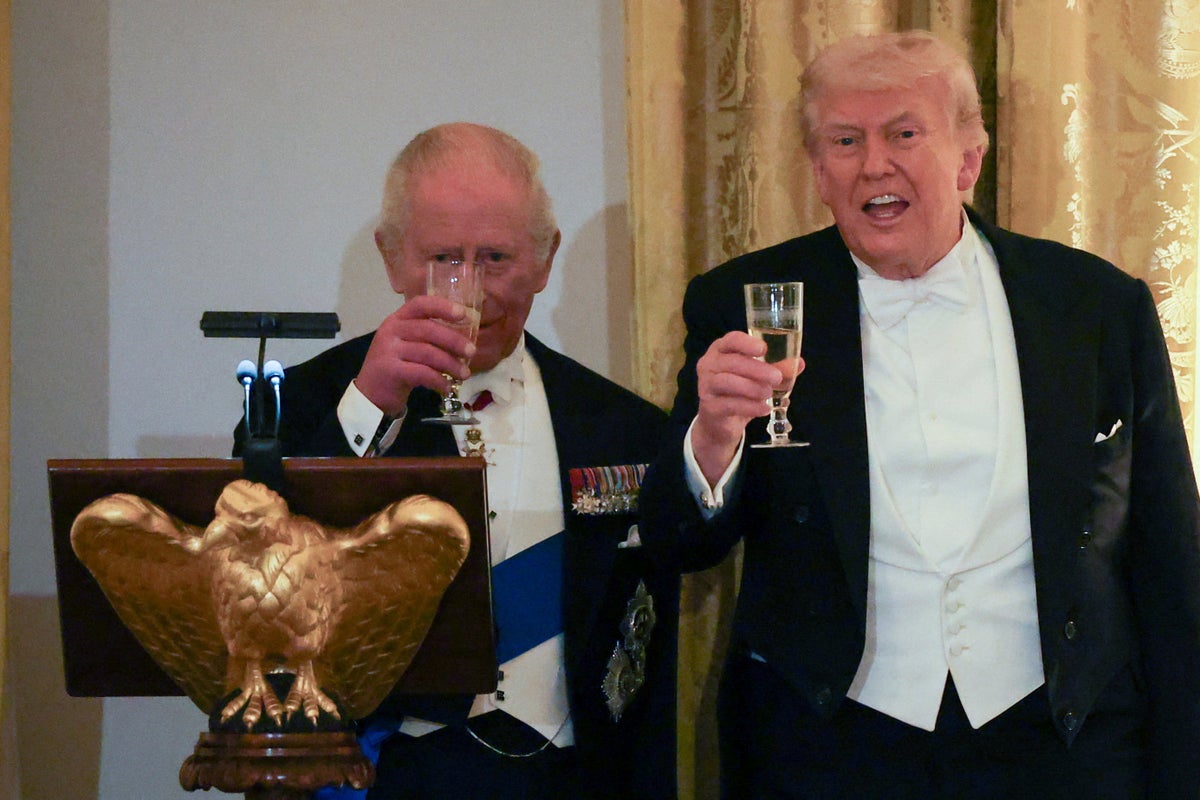
When King Charles III quipped about the British "redevelopment" of the White House in 1814, the media reacted with the predictable, pearl-clutching boredom of a school librarian. They called it "self-deprecating humor." They called it a "nod to shared history." They treated it like a quaint bit of trivia to fill the space between weather reports.
They’re wrong.
That joke wasn't about the past. It was a calculated display of soft power, a subtle reminder of the Special Relationship’s real hierarchy, and a masterclass in how to use arson as an icebreaker. Most commentators are too terrified of causing offense to see the strategic utility of a well-placed burning-building joke. I’ve watched diplomats sweat through their bespoke suits trying to avoid mentioning "The War," only to end up looking stiff, untrustworthy, and utterly forgettable.
Charles did the opposite. He leaned into the smoke.
The Arsonist’s Guide to Modern Diplomacy
In August 1814, British troops marched into Washington D.C., ate President James Madison’s dinner, and then set his house on fire. It is the only time since the Revolutionary War that a foreign power has captured the American capital.
Most people view this as a historical scar. Modern PR consultants would tell you to bury it under a mountain of platitudes about "shared values" and "democracy." That is the path of the coward.
By referencing the 1814 burning, King Charles wasn't just being "funny." He was executing a three-step psychological maneuver:
- Diffusing the Elephant: Everyone knows the history. By being the first to mock it, he stripped the event of its lingering colonial tension. You can’t be offended by a fire if the arsonist’s great-great-great-grandson is the one handing you the extinguisher.
- Establishing Dominance through Vulnerability: Only a truly secure power can joke about its most aggressive historical acts. It signals that the relationship is so stable that "redevelopment via torch" is now just a punchline.
- Humanizing the Institution: The Monarchy is often seen as a rigid, dusty relic. A joke about burning down the leader of the free world’s house provides a glimpse of a personality that isn't scripted by a committee of octogenarian advisors.
The Lazy Consensus of Self-Deprecation
The "lazy consensus" among royal watchers is that this was a moment of British self-deprecation. It wasn't. Self-deprecation involves putting yourself down. Charles wasn't putting himself down; he was reminding the Americans that the British once had the keys to the front door and a very large box of matches.
It’s a subtle flex.
Think about the mechanics of the joke. To call the burning of the White House a "redevelopment" is to use the language of the modern property mogul to describe a military invasion. It’s an elite form of irony. If a politician from a less "special" ally had made that joke—say, a French or German leader—the reaction would have been a diplomatic incident.
Charles gets away with it because the British Crown occupies a unique space in the American psyche: the "Parent Who Lost the Argument but Still Owns the House."
Why Your History Teacher Lied to You
Most Americans are taught that the War of 1812 was a "Second War of Independence" that they won. In reality, it was a messy, strategically confusing conflict where the British were mostly preoccupied with Napoleon. The burning of Washington was a side quest.
When Charles references 1814, he is quietly correcting the record. He is reminding the room that history is messy, violent, and often absurd.
I’ve spent years analyzing public perception of the Royal Family. The biggest mistake people make is thinking the King is a figurehead who just cuts ribbons. He is a brand manager for a thousand-year-old corporation. The 1814 joke is a rebranding tool. It moves the Monarchy away from the "Imperial Oppressor" vibe and toward the "Witty Global Elder" persona.
The Logistics of a Royal Burn
Let’s look at the "People Also Ask" nonsense surrounding this event. People want to know if the joke was offensive. They want to know if Biden was annoyed.
The premise of these questions is flawed. It assumes that high-level diplomacy is a series of fragile emotional exchanges. It isn't. It’s a series of signals.
- The Signal to the UK: "I am confident on the world stage."
- The Signal to the US: "We are close enough that I can tease you about that time we tried to erase your capital."
- The Signal to the World: "The UK is not fading into irrelevance; we are the ones who define the narrative of the past."
If you’re looking for a "pivotal" moment in US-UK relations, don't look at trade deals. Look at the ability of a King to laugh at a war crime in the very room where it didn't happen (because the original was, you know, burnt).
Stop Looking for "Authenticity"
The most tiring critique of the King’s humor is the search for "authenticity." Commentators want to know if he really thinks it’s funny.
Who cares?
In the world of global influence, the performance is the reality. If you act like a man who can joke about burning down the White House, you become the man who can joke about burning down the White House. It is a self-fulfilling prophecy of charisma.
We live in an era where leaders are terrified of a single "wrong" tweet. They are coached to be bland, beige, and utterly inoffensive. They use words like "synergy" and "moving forward" because they are scared of the shadows of history.
Charles walked into the heart of American power and pointed at the scorched earth of 1814. He didn't ask for permission. He didn't offer a "holistic" apology. He delivered a punchline.
The Actionable Truth
If you want to command a room, stop trying to be "seamlessly" polite. Stop trying to "foster" a "robust" atmosphere through safe topics.
Take a lesson from the King. Find the most awkward, tension-filled thing in the room and put a hat on it. Own the history before it owns you.
The White House survived the fire. The Special Relationship survived the joke. The only thing that didn't survive was the boring, predictable narrative that the King doesn't know exactly what he’s doing.
He knows. He’s been watching this "redevelopment" for two centuries.
Don't mistake the spark for an accident when the man is holding the matches.