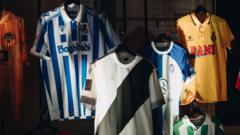
La Liga is pivoting to the past to save its future. This weekend, every club in Spain’s top flight will take the pitch wearing kits inspired by their historical archives, a move designed to trigger a massive wave of nostalgia-driven merchandise sales. While the league frames this as a "tribute to heritage," the reality is much colder. This is a calculated, high-stakes attempt to bridge the massive revenue gap between Spanish football and the English Premier League. By forcing a league-wide "Retro Week," La Liga is testing whether it can turn history into liquid capital.
The timing is not accidental. As broadcasting rights plateau and traditional sponsorship deals hit a ceiling, European football leagues are scrambling for "direct-to-consumer" revenue. They don't just want you to watch the game; they want you to buy a $110 polyester shirt that reminds you of 1984.
The Revenue Gap Problem
The financial divide in European football is widening. The Premier League’s most recent domestic TV deal dwarfs La Liga’s, leaving Spanish clubs—aside from the giants in Madrid and Barcelona—struggling to compete for top-tier talent. To survive, the league has to find money in the corners of the room that were previously ignored.
Merchandise used to be a secondary thought. Now, it is a lifeline. By standardizing a "Retro Week," La Liga President Javier Tebas is attempting to create a recurring commercial event, much like the NBA’s "City Edition" jerseys or the NFL’s "Color Rush." It is about manufacturing a reason to buy a third, fourth, or fifth shirt in a single season. If a fan already has this year’s home kit, the club must provide something else that feels essential. History, it turns out, is the easiest thing to sell.
Why Nostalgia Works Better Than Innovation
Modern kit designs are often polarizing. They are subject to the whims of brand designers at Nike, Adidas, and Puma who frequently prioritize "bold" or "disruptive" aesthetics that alienate traditionalists. This creates friction at the point of sale.
Nostalgia removes that friction. A kit from the 1990s or 1970s carries an emotional weight that a neon-patterned experimental jersey never will. It connects a father to his son; it reminds a middle-aged supporter of a time when the game felt "purer." For the clubs, this is a goldmine. The research and development costs for a retro kit are virtually zero—the design already exists. The marketing copy writes itself. It is the most efficient product a football club can produce.
The CVC Factor
The urgency behind these commercial stunts is tied directly to the "Boost La Liga" project, a deal with private equity firm CVC Capital Partners. In exchange for an immediate cash injection of roughly €2 billion, the majority of La Liga clubs agreed to hand over a percentage of their broadcasting rights for the next 50 years.
This deal came with a catch: the money couldn't just be spent on transfer fees and player wages. It had to be spent on "structural growth." This means upgrading stadiums, improving digital infrastructure, and—most importantly—finding new ways to monetize the global fan base. "Retro Week" is a direct result of this pressure. Clubs are now under a contractual obligation to prove they are growing their commercial reach. If they don't sell more shirts, the CVC deal starts to look like a very expensive payday with no long-term upside.
The Logistics of a League Wide Rebrand
Coordinating twenty different clubs and half a dozen different kit manufacturers is a nightmare of logistics. Each brand has its own production cycle and supply chain constraints. For this weekend to happen, the league had to negotiate with the likes of Adidas, Nike, Castore, and Joma nearly eighteen months in advance.
The manufacturing process for these shirts often differs from the "performance" kits worn during the rest of the season. Retro kits frequently use heavier fabrics or embroidered crests to mimic the feel of the original era. This adds a layer of complexity to the equipment managers' jobs. They aren't just dealing with a new shirt; they are dealing with a different fit and weight that players aren't used to.
Some players are notoriously superstitious. Changing the weight of a shirt or the texture of the fabric mid-season can cause friction in the dressing room. However, the commercial departments always win these arguments. In the modern game, the kit is no longer just equipment; it is a billboard that a player happens to wear while working.
The Risks of Commercializing the Sacred
There is a danger in going to the well too often. When everything is a "special edition," nothing is special. We have seen this fatigue set in with the NBA, where teams now have so many different jerseys that fans often don't know which colors their team is supposed to be wearing on any given night.
La Liga is walking a thin line. If they make "Retro Week" an annual event, the novelty will evaporate. Supporters will eventually realize they are being sold the same history every twelve months. Furthermore, there is the issue of authenticity. Many of the kits being "celebrated" this weekend stripped away the logos of the original sponsors or the specific nuances of the original manufacturer because of current licensing conflicts. What is being sold is a sterilized, corporate-approved version of the past. It is history with the rough edges sanded off.
The Global Strategy
This isn't just about the fans in Seville, Valencia, or Bilbao. It is about the fans in New York, Tokyo, and Riyadh. La Liga knows that its domestic market is saturated. There are only so many people in Spain who can buy a football shirt.
The growth is abroad. Retro designs have a unique "lifestyle" appeal that modern kits lack. You can wear a 1992 replica jersey to a bar or a music festival without looking like you just stepped off a training pitch. By leaning into the retro aesthetic, La Liga is attempting to move its merchandise out of the "sports gear" category and into the "streetwear" category. This expands the potential customer base from "football fans" to "anyone who wants to look cool."
A Fragmented Market
While Real Madrid and Barcelona can sell a million shirts regardless of the design, the smaller clubs struggle. For a team like Getafe or Alavés, "Retro Week" is a rare opportunity to get international eyes on their brand. If they can produce a kit that goes viral on social media because of its "cool" factor, they can generate more revenue in a weekend than they might in a typical month of standard sales.
However, the power dynamic remains skewed. The big brands like Adidas and Nike prioritize their "Elite" clubs. The smaller teams, often signed with local manufacturers, don't get the same global distribution. This creates a two-tier system even within a "unified" league initiative. The rich get richer, and the smaller clubs hope for a scrap of the nostalgia pie.
The Death of the Traditional Kit Cycle
We are witnessing the end of the traditional "Home and Away" kit cycle. The industry is moving toward a model of constant drops. Much like the fashion industry, football clubs are adopting a "fast fashion" mindset. They need a constant stream of new products to keep the algorithm engaged and the fans clicking "add to cart."
"Retro Week" is the ultimate proof of concept for this model. It proves that you can ignore the current season's branding entirely and still find a way to extract money from the supporters. It turns the league's history into a library of IP that can be licensed, repackaged, and sold whenever the quarterly reports look a bit thin.
The irony is that the more the league looks backward, the more it reveals its anxiety about what lies ahead. If the product on the pitch—the actual football—was enough to sustain the business model, they wouldn't need to dress the players up in 1980s cosplay. They are selling the past because they aren't entirely sure how to sell the present.
Authenticity vs. Revenue
The most successful retro kits are the ones that feel authentic. But authenticity is expensive. Recreating the specific weave of an old Hummel or Meyba shirt requires specialized machinery that most modern factories don't use. To keep margins high, most of these "retro" shirts are actually just modern templates with old patterns printed on them.
Fans are beginning to notice. On social media, kit collectors and "shirt nerds" are quick to point out when a collar is wrong or when a badge is heat-pressed instead of stitched. For a project built on the idea of "respecting heritage," these shortcuts feel cynical. You cannot claim to honor the history of a club while simultaneously cutting corners on the product that represents that history.
The Next Frontier
Expect this to escalate. This weekend is just a pilot program. If the sales figures meet expectations, we will see "Retro Week" expanded into "Retro Month." We will see clubs playing in black-and-white broadcast filters for the first ten minutes of a game. We will see digital "retro" skins sold in video games to coincide with the on-pitch event.
The commercialization of memory is a powerful tool, and La Liga is just starting to figure out how to use it. They are betting that your love for who your team used to be is stronger than your frustration with who they are now.
Stop looking at the scoreboard and start looking at the tags on the jerseys. The real game isn't being played for points; it's being played for a larger share of your discretionary income. If you want to support your club, you don't just cheer anymore. You buy back a piece of your own childhood at a 400% markup.