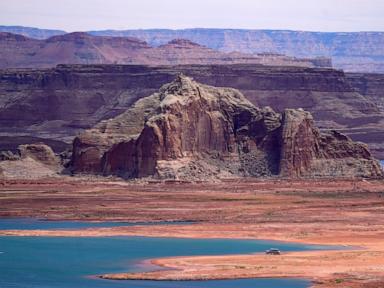
The Colorado River is a mess of broken promises and drying mud. Right now, federal officials are cheering because water levels at Lake Powell are set to rise. It looks like a win on the surface. If you’ve seen the "bathtub ring" around the canyon walls lately, any extra blue seems like a miracle. But don't get comfortable. This isn't a gift from nature. It’s a calculated, high-stakes trade that shifts the pain of the Western water crisis from one basin to another.
We’re seeing a massive release from upper reservoirs like Blue Mesa and Flaming Gorge to keep Lake Powell’s turbines spinning. It’s a band-aid on a gunshot wound. While the headlines focus on the rising docks at Page, Arizona, the people in the Upper Basin states—Colorado, Wyoming, and Utah—are watching their own local security evaporate.
The Math Behind the Mirage
Lake Powell and Lake Mead are the two largest man-made reservoirs in the United States. They’re essentially the checking accounts for the West's water supply. For years, we've been overspending. The Bureau of Reclamation recently announced that Powell will see a significant bump in its water elevation this year. This is vital because if the water drops below 3,490 feet, the Glen Canyon Dam stops producing power. That would cut electricity to millions of people and send energy prices into the stratosphere.
The problem is where this water comes from. It isn't just coming from a lucky snowpack. Much of it is being shuttled down from the Upper Basin reservoirs. This "emergency release" strategy is becoming the new normal. By dragging water down to Powell, the government is essentially emptying the smaller savings accounts to keep the big one from going bankrupt. It’s a shell game. You can’t create water out of thin air, no matter how many bureaucrats sign off on the paperwork.
The 1922 Colorado River Compact promised a certain amount of water to the Lower Basin—California, Arizona, and Nevada. The reality is that the river doesn't produce that much water anymore. Climate change and "aridification" have permanently shrunk the river. We're fighting over a pie that's getting smaller every single year.
Why the Lower Basin Keeps Winning
If you live in Los Angeles or Phoenix, you might not feel the pinch yet. That’s because the current system favors the Lower Basin's seniority and political muscle. California, in particular, has high-priority rights that are almost impossible to touch without a Supreme Court brawl.
When the Bureau of Reclamation moves water into Lake Powell, they're protecting the Lower Basin's delivery system. If Powell fails, Mead follows. If Mead follows, the taps in Vegas go dry. This creates a desperate incentive to keep Powell afloat at any cost.
The Ecological Toll We Don't Talk About
Moving water isn't just about levels on a chart. It changes the temperature of the river. It messes with the silt. The Grand Canyon, which sits right between these two giants, relies on a specific flow of water to maintain its beaches and habitats. When we treat the river like a plumbing project, the biology suffers. Humpback chub and other native fish aren't fans of these sudden, massive shifts in water volume and temperature. We’re sacrificing the health of the river to maintain the illusion of a desert paradise in cities that probably shouldn't have grown so large in the first place.
The Upper Basin Is Getting Scammed
Farmers in Western Colorado and Wyoming are the ones losing out. When water is pulled from reservoirs like Flaming Gorge to save Lake Powell, the local communities lose their recreational economy and their drought insurance. Boat ramps in Wyoming are sitting in the dirt so that people in Arizona can keep their air conditioning on.
There's a growing sense of resentment. The Upper Basin states argue they aren't even using their full legal entitlement, yet they're the ones forced to make "voluntary" cuts to bail out the Lower Basin's overconsumption. It's a classic case of the loudest voice getting the most water.
The legal framework is outdated. The "Law of the River" was written during one of the wettest periods in the last thousand years. The people who signed it thought the Colorado River had about 17.5 million acre-feet of water to give. In reality, it’s closer to 12 or 13 million. We're living on a credit card with a limit we hit ten years ago.
No More Easy Answers
The surge into Lake Powell is temporary. One good winter doesn't fix twenty years of drought. To actually solve this, we have to stop talking about "augmentation"—a fancy word for stealing water from somewhere else—and start talking about "demand management." That’s a polite way of saying we need to stop growing things like alfalfa in the middle of a desert.
Agriculture uses about 80% of the Colorado River's water. A huge chunk of that goes to thirsty crops that are exported overseas. We’re literally shipping our water to China and Saudi Arabia in the form of hay. It makes no sense. Until we address the agricultural elephant in the room, moving water between reservoirs is just moving deck chairs on the Titanic.
Small Scale Solutions Aren't Enough
You’ve probably heard about low-flow toilets and tearing out lawns. Those are great. They help. But they're a drop in the bucket compared to the massive scale of the river's deficit. Even if every person in Las Vegas stopped showering today, it wouldn't save Lake Powell. The scale of the problem is industrial and agricultural.
We need a new Compact. One that recognizes the river as it exists today, not as it existed in 1922. This means permanent, painful cuts for everyone. California will have to give up its "untouchable" status. Arizona will have to rethink its rapid suburban expansion. And the federal government needs to stop acting like a temporary surge of water is a victory.
What You Should Do Now
If you live in the Southwest, your water bill is going up. That's a certainty. Here is how you should actually be preparing for the reality of a shrinking Colorado River.
Stop thinking about this as a "drought." A drought is temporary. This is a permanent shift in climate. If you're buying property, check the water rights. Don't assume the tap will always flow just because a developer told you so.
Support local policies that prioritize "compact" development over sprawling suburbs. The more pipe we lay, the more water we lose to evaporation and leaks. Demand transparency from your local water board about where their supply actually comes from. If they’re relying on "surges" into Lake Powell, your water security is a gamble, not a guarantee.
The water in Lake Powell is a ghost. It’s there today, but it belongs to someone else tomorrow. We have to start acting like it.


