The leather in the executive boardroom always smells the same. Old money, expensive polish, and the quiet, metallic tang of fear.
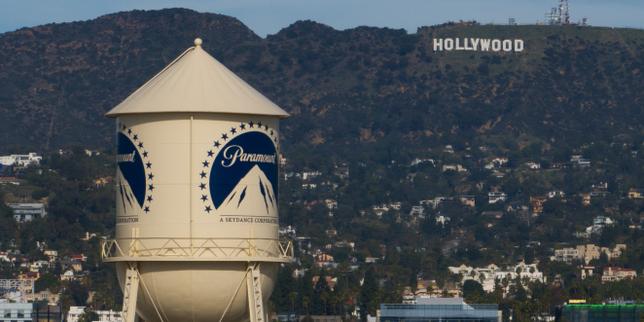
Outside those tinted glass windows, the world is moving fast. Smartphones glow in the dark on midnight trains. Algorithms dictate what a teenager in Chicago or a retiree in Manchester watches before sleep. The old studio gate—the iron wrought-iron symbol of a golden age where moguls ruled empires from Burbank—feels less like a fortress now and more like a museum. Learn more on a similar subject: this related article.
Into this room steps a toy maker.
His name is Ynon Kreiz. For years, the world knew him as the man who brought Barbie back to life, turning a piece of molded plastic into a cultural lightning rod and a billion-dollar cinematic event. Now, he finds himself sharing the masthead at Paramount, named co-CEO alongside the shifting tides of corporate ambition. It is a strange marriage of plastic and celluloid, of toy aisles and silver screens, born out of desperation and a desperate hunger for survival. Additional journalism by Financial Times delves into comparable views on this issue.
Because Paramount is bleeding.
To understand why a toy executive is being handed the keys to a historic Hollywood kingdom, you have to look at the balance sheets that keep executives awake until four in the morning. Traditional television is dying a death of a thousand cuts. Cord-cutters are dropping cable packages the way autumn sheds dead leaves. Streaming services, once promised as the land of milk and honey, have turned into a brutal trench warfare of subscriber acquisition costs and multi-billion-dollar content holes.
Everyone is losing money, and everyone is trying to merge before the music stops.
Enter the ghost of Warner Bros. The rumors have swirled like dust devils across trade publications for months. A merger. A consolidation. Two bruised giants trying to lock arms so neither drowns in the digital tide.
Imagine sitting in a dim office on the lot, watching the rain beat against the window, wondering if your department will exist next Tuesday. That is the human reality behind the press releases. While Wall Street analysts talk in cold abstractions about synergy, market share, and leverage, real people are holding boxes in hallways, clearing out desks filled with framed photographs of film premieres and wrapped-up scripts.
The corporate machinery moves with chilling indifference. Names are announced. Titles are reshuffled. Mattel's chief is now piloting a ship that has weathered a century of storms, yet looks utterly unprepared for the squall ahead.
Why Mattel? Why a toy maker?
Because Hollywood forgot how to tell stories that sell things outside of a streaming subscription. For a decade, studios treated intellectual property like digital wallpaper—upload it to a server, hope someone watches it for twenty minutes, and collect a fraction of a cent in residual value. They forgot the tangible magic of physical connection. They forgot that a brand is not just a logo on a screen; it is a world you can hold in your hand, wear on your shirt, or build with plastic bricks.
Kreiz understands the toy box. He knows that modern entertainment is not about movies anymore. It is about ecosystems.
When Barbie crossed the billion-dollar threshold, it wasn't because of a brilliant three-act structure alone. It was because the film operated as a massive, feature-length cultural anchor for a physical universe of merchandise, experiences, and emotional resonance. The movie drove the toys; the toys drove the conversation; the conversation drove the culture.
Paramount desperately needs that alchemy. With massive debt loads and a streaming platform fighting for air against deep-pocketed tech monoliths, the studio cannot simply rely on greenlighting another expensive sequel and hoping for the best. They need properties that bleed into daily life. They need a blueprint for survival that transcends the living room television.
Yet, this marriage comes with profound risks.
Film sets are temperamental places. They are fueled by creative ego, artistic risk, and erratic genius. Toy factories are driven by supply chains, safety regulations, retail shelf space, and predictable margins. When you cross-pollinate a movie studio with a toy corporation, you run the risk of turning art into an assembly line.
Consider what happens when every script is vetted not for its emotional truth, but for its potential to sell a lunchbox or an action figure. The rough edges get sanded down. The moral complexities get scrubbed clean. You get safe, shiny, frictionless content designed to offend no one and inspire nothing.
Is that what we want from our storytelling?
History suggests a pendulum swing. Whenever Hollywood becomes too corporate, too obsessed with metrics and merchandise, an explosion of independent, raw, dangerous cinema inevitably breaks through the cracks. Think of the 1970s, born out of studio bankruptcy and executive panic. Desperation breeds risk. And right now, the major studios are desperate enough to try anything.
The deal to absorb or align with Warner Bros—whatever final corporate shape it ultimately takes—represents the ultimate gamble. It is an acknowledgment that the old studio system, as it existed for a century, is finished. The economics no longer support standalone giants running massive physical lots and sprawling distribution networks just to feed a digital app.
We are entering the era of the mega-conglomerate, where media, retail, toys, and tech bleed together until you can no longer tell where the advertisement ends and the art begins.
Back in the boardroom, the coffee has gone cold. The paperwork sits in neat, terrifying stacks. Somewhere on a soundstage, cameras roll on a scene that cost more than a small town's annual budget. Down the hall, accountants calculate churn rates and subscriber metrics.
And out in the world, a child opens a cardboard box, pulls out a plastic figure, and starts inventing a universe of their own, entirely indifferent to the stock price of a dying media empire.
That is the paradox at the heart of it all. The boardroom can merge, acquire, restructure, and rebrand until the end of time. But the magic was never in the contracts. It was always in the spark.
Whether these new architects can preserve that spark while feeding the monstrous machine of modern capitalism remains the only question that truly matters. The credits haven't rolled yet. The screen is dark.
And the projector is humming.