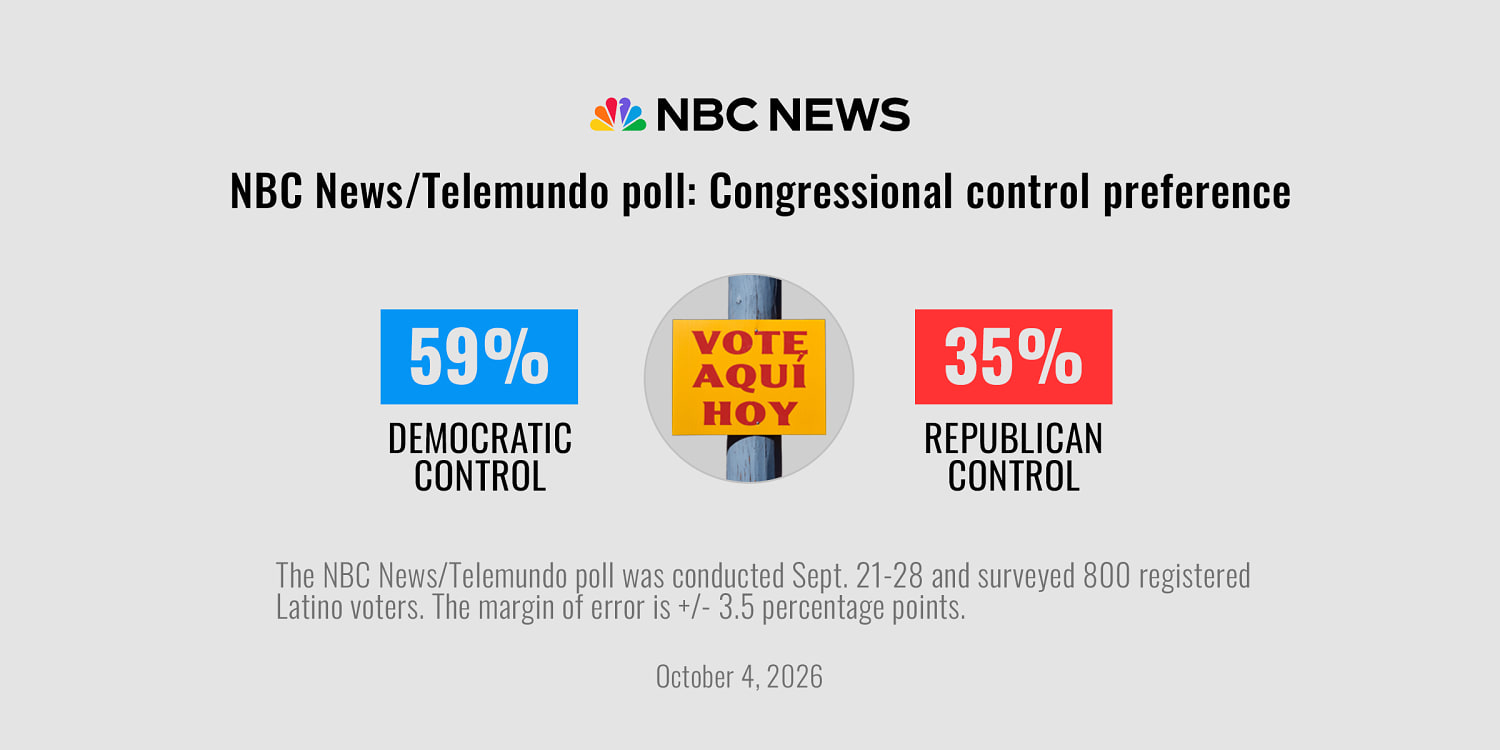
Recent national polling shows a sharp reversal in what Republican strategists once celebrated as a permanent political realignment, with Latino voters swinging back away from Donald Trump and the GOP. After making measurable gains among Hispanic men and working-class voters during the 2020 and 2024 presidential cycles, conservative coalitions are now bleeding support over unfulfilled economic promises, aggressive immigration rhetoric, and a fundamental misunderstanding of how the American electorate actually behaves.
The numbers do not lie. Polls are snapshots, not prophecies, yet the downward trend across battleground states points to deep buyer's remorse among a demographic that treated the Republican Party as a temporary vehicle for economic relief rather than an ideological home.
To understand why this swing is happening right now, you have to look past the cable news punditry and examine how political machines actually operate on the ground. For years, Democratic operatives treated the Latino vote as a monolithic fortress, assuming shared heritage guaranteed permanent loyalty at the ballot box. That arrogance created an opening. Republicans stepped into the vacuum, running sophisticated Spanish-language media campaigns and pitching themselves as the party of small business, faith, and low inflation. It worked—for a minute. What the GOP leadership failed to grasp is that the voters they attracted were not converting to movement conservatism. They were registering a protest against high grocery bills and stagnant wages.
The Myth of the Permanent Realignment
Washington loves a clean narrative. When exit polls in 2020 and 2024 showed double-digit Republican improvements in places like Miami-Dade County, the Rio Grande Valley, and urban industrial centers, political consultants immediately declared a historic realignment. They wrote white papers about it. They went on television to announce that the Democratic coalition was dead and buried.
That analysis ignored basic political mechanics. Swing voters swing. They do not sign lifetime contracts with either party, especially when their primary motivation is pocketbook frustration.
When an electorate shifts toward an opposition party during periods of high inflation, they are hiring a contractor to fix a leaking roof. If the contractor spends the next two years arguing about the color of the shutters while water still drips onto the living room floor, the homeowner fires them. That is the exact dynamic playing out across Hispanic households today. Voters backed Republican candidates expecting immediate relief on housing costs, interest rates, and everyday consumer goods. Instead, they watched partisan infighting in Congress, tariff proposals that economists warn will raise prices on imported goods, and a legislative agenda that prioritized cultural grievances over kitchen-table economics.
Economics Over Ideology
Ask a working-class voter in Phoenix, Las Vegas, or Allentown what drives their vote, and you will rarely hear a lecture on constitutional originalism or progressive theory. You will hear about the price of eggs, the cost of auto insurance, and whether their kids can afford a starter home.
Pocketbook pragmatism is the defining trait of the modern Hispanic electorate. Because this demographic skews younger than the national average, a massive percentage of Latino voters are first-time homebuyers, young parents, and early-career workers trying to build wealth from scratch. They are disproportionately exposed to high interest rates and rent inflation.
During the Biden administration, Republicans successfully pinned the pain of post-pandemic inflation on Democratic spending. Voters listened. They gave the GOP a shot. Now, with Republicans holding the levers of power and pushing policies like broad-based tariffs—which act as a direct consumption tax on lower- and middle-income families—that economic goodwill is evaporating.
Consider a hypothetical example to see how this hits a family budget. Imagine a dual-income household in Nevada earning seventy-five thousand dollars a year. They voted Republican because gas and groceries ate up their savings. Suddenly, new tariffs drive up the cost of everyday household goods, building materials, and imported produce, while promised tax cuts overwhelmingly favor corporate balance sheets rather than hourly wage earners. That family does not care about party loyalty. They look at their bank statement at the end of the month, realize nothing got cheaper, and start looking for the exit.
The Small Business Squeeze
Republicans heavily courted Latino entrepreneurs, who start small businesses at a faster rate than almost any other group in the United States. The pitch was simple: lower taxes and less red tape.
Yet running a small construction firm, a restaurant, or a logistics company requires stable supply chains, predictable labor markets, and affordable credit. Sweeping tariff threats disrupt supply chains overnight. Aggressive labor crackdowns threaten to hollow out the exact workforce these businesses rely on to keep their doors open. When small business owners realize that partisan rhetoric translates into higher overhead and labor shortages, their enthusiasm for the GOP cools rapidly.
The Rhetoric Trap on Immigration
For a brief window, Republican strategists convinced themselves that immigration was a winning issue for them among assimilated Hispanic voters. There was a grain of truth to that theory. Long-time residents and second- or third-generation citizens in border communities often share deep frustrations over chaotic border enforcement, strained municipal budgets, and cartel violence.
Republicans mistook a desire for border order as an endorsement of mass deportation and dehumanizing rhetoric. That was a catastrophic miscalculation.
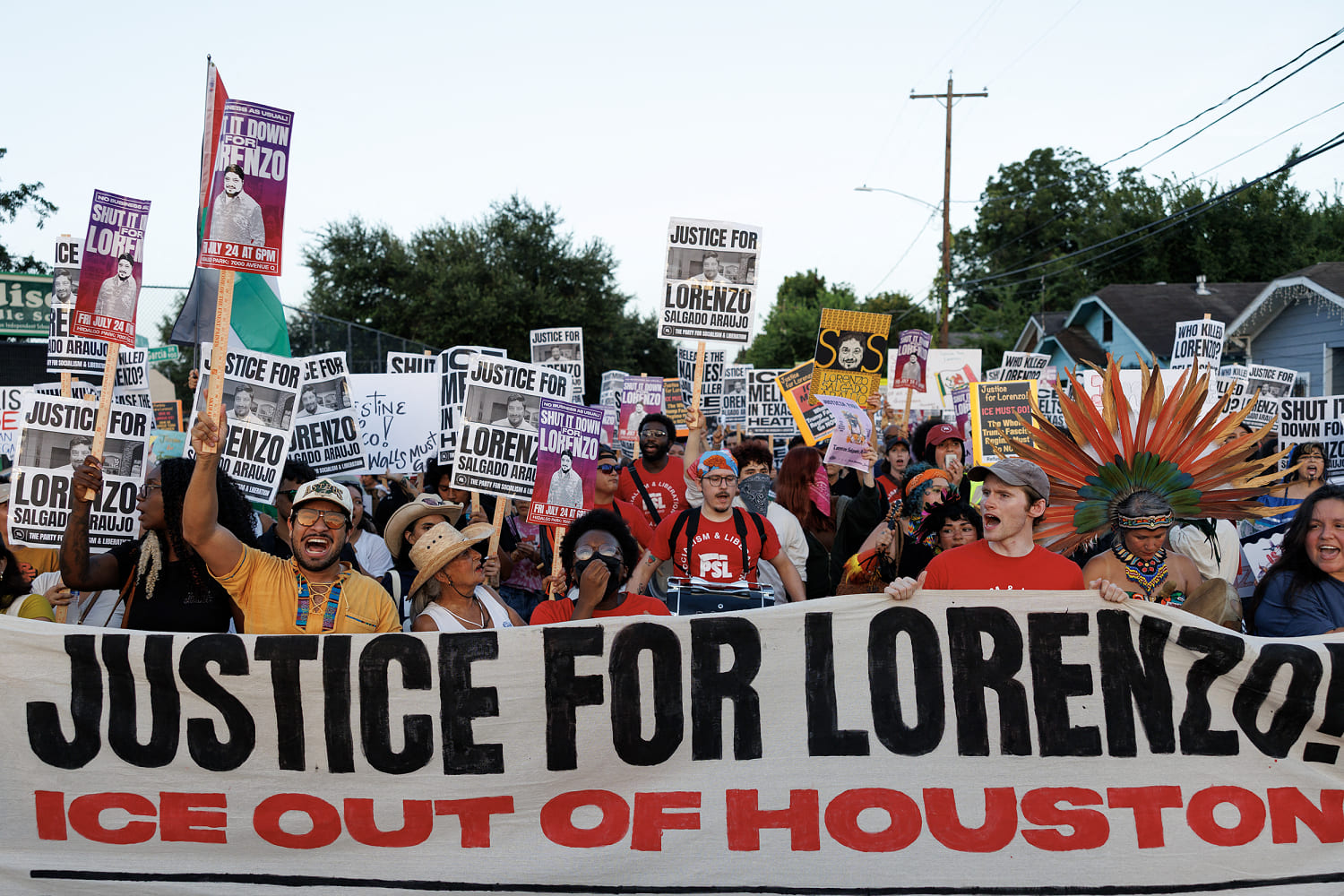
There is a massive difference between wanting secure borders and supporting indiscriminate raids that target mixed-status families, long-term undocumented workers, and entire neighborhoods. Almost every Latino voter in America—whether their family arrived three months ago or three generations ago—knows someone who is undocumented, holds temporary protected status, or is stuck in the labyrinth of the legal immigration system.
When political rhetoric shifts from targeting violent criminals to painting entire immigrant communities as an invading force, it triggers an immediate defensive reflex. Voters hear the subtext. Even U.S.-born citizens worry about racial profiling, workplace sweeps, and the social stigma attached to their last names. The moment the GOP abandoned targeted border security in favor of blanket hostility, they reminded millions of swing voters why they distrusted the party in the first place.
Generational and Geographic Fault Lines
Treating "Latino voters" as a single voting bloc has always been lazy journalism and terrible political strategy. A Cuban exile in South Florida, a Mexican-American oil worker in West Texas, and a Puerto Rican nurse in Central Florida have entirely different histories, regional economies, and political priorities.
What makes the current polling swing so alarming for Republicans is that it is not isolated to one subgroup. The erosion is happening simultaneously across multiple battlegrounds, driven by distinct local failures.
- The Sun Belt Shift: In states like Arizona and Nevada, voters are hyper-focused on housing affordability, water rights, and service-sector wages. Republican resistance to minimum wage increases and federal housing assistance has alienated younger service workers who briefly flirted with conservative populism.
- The Rust Belt Reality: In Pennsylvania and Wisconsin, Puerto Rican and Dominican voters hold immense sway in mid-sized industrial cities. Insulting rhetoric aimed at Puerto Rico during campaign rallies did not stay confined to cable news clips; it circulated through family group chats and church networks, leaving a lasting stain that local GOP organizers have failed to scrub away.
- The Florida Exception Is Fading: While Florida remains a conservative stronghold, even there, cracks are appearing. Rising property insurance rates, a soaring cost of living, and shifts in foreign policy toward Latin America have cooled the feverish enthusiasm that once defined Miami-Dade's rightward march.
Why Democratic Celebration Is Premature
If Democratic strategists are popping champagne over these new poll numbers, they are making the exact same mistake they made a decade ago. A swing away from Republicans is not automatically a permanent swing toward Democrats.
Right now, the data shows a surge in voters identifying as independent or undecided, rather than a mass rush to register as Democrats. Many Hispanic voters feel politically homeless. They are disillusioned by Republican overreach and broken economic promises, yet they remain skeptical of a Democratic Party that often talks down to them, uses alienating academic jargon, and struggles to deliver visible infrastructure and cost-of-living improvements in the cities it governs.
Voter turnout, not party switching, is the real danger for both sides. When working-class voters feel betrayed by the party they just backed, and uninspired by the opposition, they do not necessarily flip their vote. Often, they simply stay home. A depressed turnout among Latino men in key swing districts can sink a presidential or congressional campaign just as effectively as an outright defection.
The Mechanics of Voter Alienation
Political parties routinely lose swing coalitions because they listen to their loudest activists instead of their quietest voters. The loudest voices in the conservative media ecosystem demand ideological purity, culture war spectacles, and hardline immigration crackdowns. Those positions generate clicks, cable news ratings, and small-dollar fundraising from deep-red states.
They are absolute poison in purple districts.
Swing voters do not watch political commentary for four hours a night. They absorb politics through osmosis—a headline on their phone, a conversation at a job site, a rumor at a family barbecue, or the receipt at the supermarket checkout. When the signal breaking through the noise is constant chaos, rising prices, and rhetoric that makes their families feel unwelcome, the brand damage is swift and unforgiving.
The Failure of Ground-Game Infrastructure
You cannot build a lasting political coalition on national television appearances and viral social media clips alone. True realignment requires permanent community infrastructure: local offices open year-round, bilingual organizers who actually live in the neighborhoods they canvass, and tangible constituent services.
Republicans opened a handful of flashy community centers during election cycles, cut ribbons for the cameras, and quietly shuttered many of them once the ballots were counted. Voters noticed. People recognize transactional politics when they see it. When a party only shows up every two or four years asking for a vote, while ignoring local schools, healthcare access, and wage theft in the interim, loyalty evaporates the moment the political winds shift.
What the Data Actually Tells Us About 2026 and Beyond
Looking at the trajectory of the electorate, the lesson is brutally simple. Demographic destiny is a myth. Neither party owns the Latino vote, and neither party ever will.
The Hispanic electorate is rapidly becoming the ultimate bellwether of American politics. Because it is young, heavily working-class, culturally diverse, and unattached to rigid partisan traditions, it reacts faster and more decisively to real-world governing failures than older, more entrenched voting blocs. When the economy hums and governance feels steady, incumbents get rewarded. When inflation bites, chaos reigns, and rhetoric turns toxic, the punishment at the polls is swift.
Republicans had a historic opportunity to build a durable, multi-ethnic working-class coalition. They had the ear of millions of skeptical voters who were willing to look past decades of partisan baggage in exchange for competence and economic stability. Instead, they mistook a temporary loan of trust for permanent ownership, overplayed their hand on immigration, and failed to deliver relief on the cost of living.
Voters do not forget when you waste their trust, and right now, millions of them are taking their ballots back.