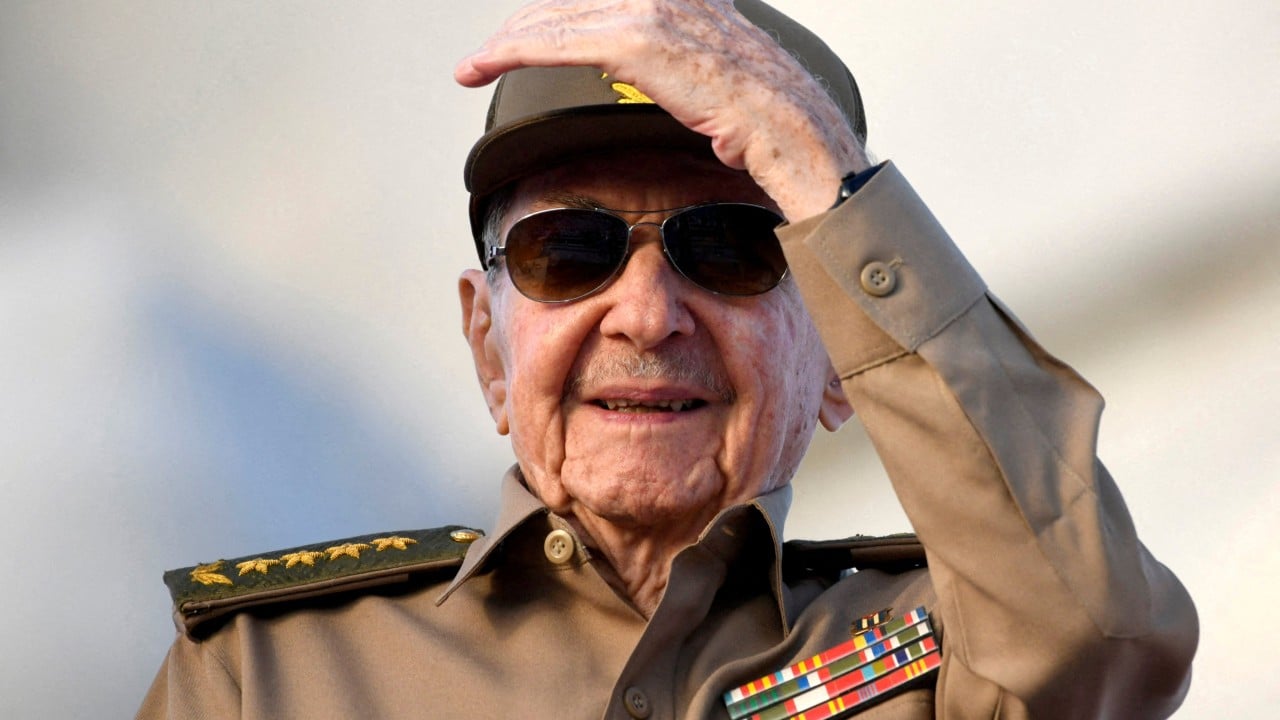
The United States Department of Justice unsealed a federal criminal indictment in Miami, Florida, charging 94-year-old former Cuban President Raúl Castro with conspiracy to kill US nationals, four counts of murder, and two counts of destruction of aircraft. The charges stem directly from the February 24, 1996, shootdown of two civilian planes operated by the exile humanitarian group Brothers to the Rescue. While conventional geopolitical analysis interprets this indictment as a symbolic legal maneuver or an isolated punitive strike, a structural assessment reveals it as the operational keystone of an integrated coercive strategy designed to force regime capitulation in Havana.
By utilizing domestic criminal law as a tool of extraterritorial power projection, the current US administration is executing a repeatable foreign policy model. This doctrine treats adversarial heads of state not as sovereign diplomats, but as criminal defendants. Understanding the strategic intent behind this indictment requires mapping the precise mechanisms of economic, military, and legal coercion currently deployed against the Cuban state.
The Coercive Triad Framework
The indictment of Raúl Castro does not operate in a vacuum. It functions as the legal vector within a three-part structural framework designed to maximize stress on the Cuban government's command-and-control systems.
                  [ Legal Lever ]
             Raúl Castro Indictment
             (Sovereign Degradation)
                       / \
                      /   \
                     /     \
                    /       \
 [ Economic Lever ] --------- [ Military/Diplomatic Lever ]
 Energy Blockade               Venezuela Precedent &
 (Systemic Starvation)         Guantanamo Deterrence
1. The Kinetic Precedent and the Cost Function of Defiance
The primary variable shaping Havana’s strategic calculations is the January 3 military operation in Caracas, which resulted in the capture and subsequent New York arraignment of Venezuelan President Nicolás Maduro. By demonstrating that the United States is willing and able to execute tactical incursions to enforce federal indictments, the administration has fundamentally altered the risk profile for foreign leadership.
The legal charges against Castro establish the explicit domestic statutory authority required to justify similar kinetic options under the guise of high-seas law enforcement or fugitive apprehension. The sovereign immunity defense is systematically dismantled when a state actor is categorized as an indicted criminal under US jurisdiction.
2. The Mechanics of Economic Starvation
Simultaneously, the administration has implemented a strict energy blockade, threatening secondary tariffs and sanctions on any maritime transport or sovereign entity exporting petroleum to the island. Because Cuba relies heavily on external fuel imports to maintain its electrical grid, this intervention has altered the internal stability of the state. The economic cost function manifests via:
- A near-total collapse of domestic manufacturing and commercial distribution due to rolling blackouts.
- Spontaneous urban protests in Havana, which drain internal security resources and force the Ministry of the Interior to reallocate assets away from counter-intelligence and border defense.
- The elimination of subsidized Venezuelan oil, a direct consequence of the political transition in Caracas to an interim government cooperating with Washington.
3. The Dual-Track Backchannel
The unsealing of the indictment on Cuban National Day at Miami's Freedom Tower serves a specific psychological and diplomatic purpose. While the public-facing track uses maximum pressure, a secondary backchannel operates via Raúl Guillermo Rodríguez Castro, the grandson and chief of security for the older Castro.
High-level meetings, including a verified session with CIA Director John Ratcliffe in Havana, indicate that the administration is leveraging the threat of prosecution to force structural concessions. The indictment provides the ultimate point of leverage in these discussions: total legal exposure for the historic leadership versus a negotiated structural transition.
The 1996 Shootdown: Jurisdictional and Evidentiary Foundations
The legal architecture of the indictment relies on a specific application of federal jurisdiction over crimes committed against US citizens abroad. The central dispute from the 1996 incident dictates the legal boundaries of the current case.
| Variable | United States / International Findings | Cuban State Position |
|---|---|---|
| Airspace Coordinates | International waters (Florida Straits) | Proximity to or violation of territorial Cuban airspace |
| Target Classification | Unarmed civilian humanitarian aircraft | Hostile provocateurs violating sovereign airspace |
| Command Authority | Direct authorization from Defense Minister Raúl Castro | Defensive operational response by localized military commands |
The International Civil Aviation Organization (ICAO) investigation originally concluded that the Brothers to the Rescue aircraft were shot down by Cuban MiG-29 fighters while operating in international airspace. By charging Castro with conspiracy to kill US nationals under Title 18 of the US Code, federal prosecutors avoid the complexities of sovereign immunity.
The indictment argues that because the command structure originated from a non-defensive, premeditated plan to destroy unarmed civilian aircraft over international waters, the actions constitute extrajudicial murder rather than a protected act of state.
Systemic Risks and The Siege Narrative Bottleneck
While the tactical deployment of an indictment exerts short-term pressure, it creates significant systemic bottlenecks that could undermine the administration's long-term objectives.
The first limitation is the consolidation of domestic political hardliners. Within the Cuban political hierarchy, Raúl Castro remains the ultimate source of revolutionary legitimacy. Indicting the final living architect of the 1959 revolution risks validating the long-standing defensive narrative of the Cuban Communist Party. Instead of fracturing the ruling elite, an external legal threat frequently forces internal factions to unify, presenting the crisis to the domestic population as an existential threat to Cuban sovereignty.
This dynamic creates a secondary bottleneck in the backchannel negotiations. If the Cuban leadership perceives that compliance leads to the same outcome as defiance—namely, deposition and extradition to a US federal court—the incentive to negotiate disappears.
Furthermore, recent intelligence reports indicating that Havana has explored asymmetric warfare capabilities—specifically drone configurations capable of targeting the US naval base at Guantanamo Bay or maritime assets in Key West—suggest that the regime may choose external escalation over internal concession if it feels cornered.
Tactical Execution
The administration's next tactical moves will determine whether this indictment achieves a structural transition or settles into a permanent diplomatic stalemate. To maximize the probability of regime capitulation without triggering an open military conflict in the Caribbean, the strategy must shift from pure pressure to controlled conditional relief.
- Establish Explicit Off-Ramps: The backchannel communications handled by the CIA and the State Department must clearly define the parameters of legal immunity. The administration should offer a conditional suspension of individual prosecutions and a phased lifting of the energy blockade in direct exchange for verifiable domestic reforms. These must include the legalization of independent political parties, the release of political prisoners, and a binding timeline for multi-party elections.
- Enforce Strict Secondary Tariff Mechanisms: To maintain the integrity of the energy blockade, the Department of the Treasury must aggressively penalize secondary maritime shippers. By targeting the insurance networks and registry states of oil tankers attempting to breach the embargo, the US can completely dry up Cuba's remaining fuel reserves, making the status quo untenable for the military elite.
- Isolate the Military Command from Bureaucratic Elements: Diplomatic messaging should explicitly differentiate between the historic revolutionary leadership (the Castro family network) and the younger, technocratic state bureaucrats running the daily ministries. By signaling that a post-Castro government will be integrated into Western trade networks rather than systematically purged, Washington can incentivize internal political defections, accelerating a structural transition from within the state apparatus.