A woman sits on a wooden bench in a hallway that smells of floor wax and old paper. She isn’t a legal scholar. She hasn’t read the thick stacks of petitions filed in the Supreme Court. She only knows the rhythm of her own breathing and the sharp, terrifying reality of a choice she never thought she’d have to make. Outside the courtroom, the heat of April in Delhi is a physical weight, but inside, the air is thin with the cold precision of constitutional debate.
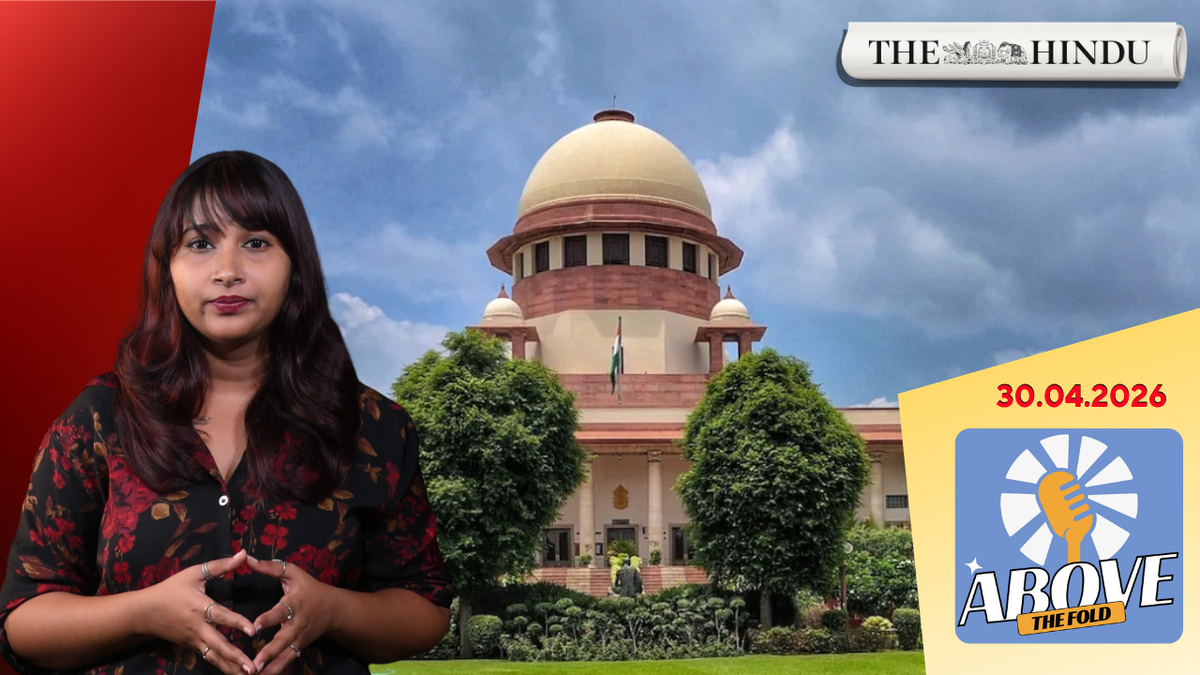
On April 30, 2026, the highest court in the land looked at the Government of India and said what many have known for decades: the law is lagging behind the pulse of human life.
The judges didn't just issue a memo. They issued a challenge. They told the Centre to amend the Medical Termination of Pregnancy (MTP) Act, specifically targeting the rigid, often cruel distinctions that decide who gets to choose their future and who is forced to wait for a judge’s permission. This isn't about ink on parchment. It is about the gap between a biological clock and a legal one.
The Twenty-Four Week Wall
For a long time, the law drew a line at twenty-four weeks. If you were "eligible"—a word that carries its own heavy baggage of judgment—you could seek a termination up to that point. But biology doesn't care about legislative calendars. Complications arise. Life circumstances shatter. A scan at twenty-five weeks can reveal a truth that wasn't visible at twenty-three.
In the current framework, once that twenty-four-week mark passes, the woman’s agency evaporates. She ceases to be a person with a choice and becomes a petitioner. She has to beg a medical board. She has to wait for a court order. While the legal machinery grinds slowly, the pregnancy does not stop. Every day spent in a courtroom is a day where the physical and emotional stakes get higher.
The Supreme Court’s recent intervention stems from a fundamental realization: a woman’s right to reproductive health is an extension of her right to life itself. You cannot separate the two. When the court directs the Centre to amend the law, they are asking for a bridge to be built over this chasm of time.
Hypothetical Silences
Consider a woman we’ll call Anjali. This is a hypothetical scenario, but it is one played out in hospital corridors every single week. Anjali is twenty-six weeks pregnant when a late-stage ultrasound reveals a severe fetal anomaly, one that ensures the child would not survive more than a few hours after birth. Under the strict letter of the old law, Anjali’s doctor’s hands are tied.
The doctor knows the procedure is necessary for Anjali’s mental and physical health. Anjali knows she cannot bear the trauma of a full-term pregnancy ending in a funeral. Yet, they must wait. They must find a lawyer. They must hope a judge agrees that her suffering is "exceptional" enough to bypass the statute.
The Supreme Court is tired of Anjalis having to wait.
The bench observed that the current law creates a tiered system of rights. It treats different categories of women differently based on marital status or the specific "type" of trauma they’ve endured. The court’s directive is a push toward a more inclusive, medical-first approach. It’s an admission that a doctor’s office is a better place for these decisions than a courtroom.
The Weight of "Exceptional"
When we talk about amending laws, we often get lost in the jargon of "clauses" and "sub-sections." But the real problem lies elsewhere. It lies in the word "exceptional."
By forcing women to prove their situation is an exception to the rule, the law treats the fundamental right to bodily autonomy as a privilege that must be earned through tragedy. The Supreme Court is signaling a shift away from this. They are asking the Centre to create a framework where medical opinion holds more weight than arbitrary timelines.
This isn't just about expanding the weeks. It’s about removing the stigma that is baked into the legal language. When the court tells the government to amend the law, they are essentially saying that the law should trust women. It should trust their doctors. It should recognize that no one arrives at the decision to terminate a late-stage pregnancy lightly. It is almost always a decision born of necessity, grief, or survival.
The Invisible Stakes
The stakes aren't just legal; they are deeply personal. There is a specific kind of exhaustion that comes from being told your body is a matter of public debate.
The Centre now faces the task of drafting language that catches up to 2026. This means looking at the MTP Act not as a set of restrictions, but as a safeguard for health. The court highlighted that the distinction between "married" and "unmarried" women, which was partially addressed in previous rulings, still leaves gaps in how the law is applied on the ground.
Doctors in rural clinics or even major metropolitan hospitals often hesitate. They fear the "gray areas." They fear that a misinterpretation of a rigid law could lead to losing their license or facing criminal charges. This fear trickles down to the patient. It results in delays, higher costs, and increased medical risks.
By demanding a clear amendment, the Supreme Court is trying to burn away that fog of uncertainty. They want a law that is robust enough to protect the provider and compassionate enough to protect the patient.
The Rhythm of Reform
Change in a country as vast as India never happens in a straight line. It moves in fits and starts. It moves through the courage of individual women who refused to accept a "no" from a lower court and took their fight all the way to New Delhi.
The Supreme Court’s stance is a reflection of a changing social fabric. We are moving toward a reality where the "tapestry"—if I were a different kind of writer, I might use that word, but let’s call it what it is—the messy, complicated reality of Indian life is finally being seen by the men and women in black robes.
They are seeing the woman who was abandoned by her partner at twenty-five weeks. They are seeing the family that discovered a life-threatening complication far too late. They are seeing the teenager who was too terrified to speak until it was almost too late.
The law is finally listening to the silence of those hallways.
The Centre’s next move will define how we value the dignity of the individual versus the rigidity of the state. It is a moment of profound potential. If the law is amended as the court suggests, it will be a victory for everyone who believes that a person’s most private medical decisions should not be a matter of public record or judicial whim.
The woman on the wooden bench stands up. Her case is called. But if the court’s directive is followed, the women who come after her might not have to sit on that bench at all. They might be able to stay in the doctor’s office, held by medical expertise rather than legal scrutiny.
The gavel falls, not as an end, but as a beginning. The air in the courtroom remains cold, but outside, the sun is still rising, and the demand for a more humane world is getting louder.