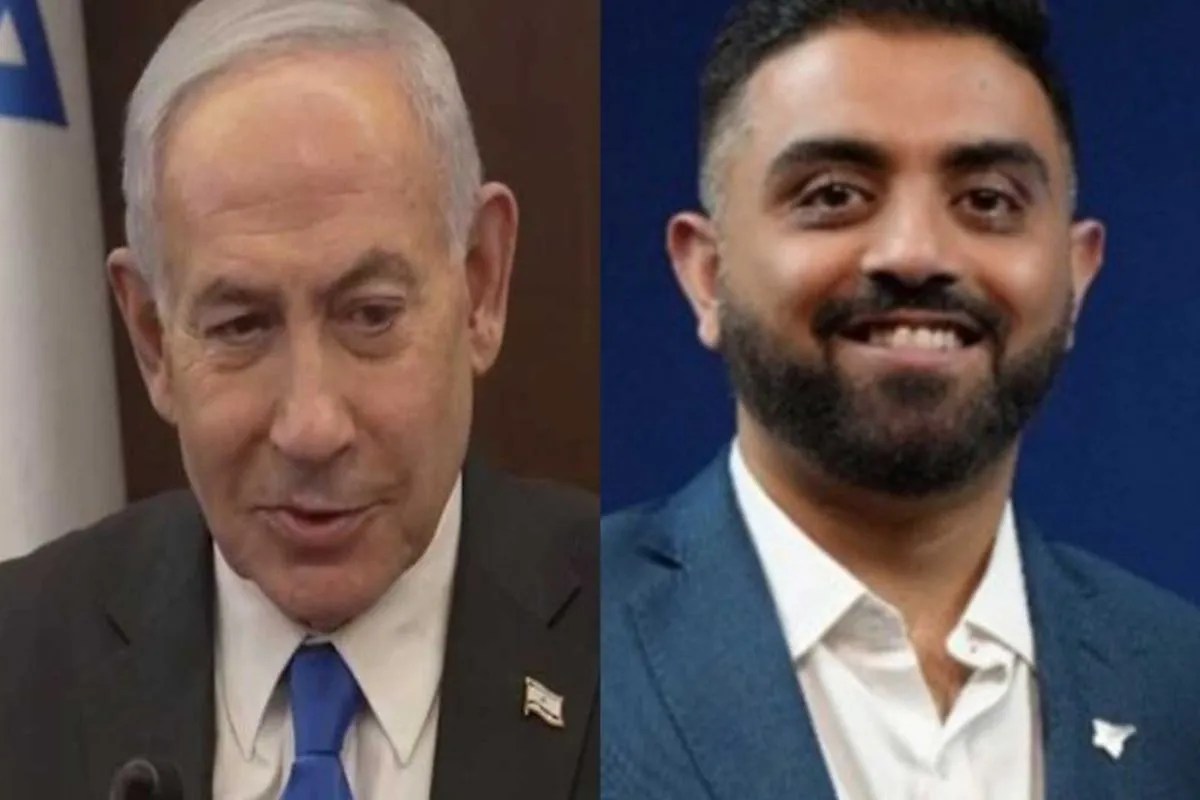
The screen flickered in a quiet room, bridging thousands of miles of geopolitical tension with a simple, human gesture. Across the digital expanse, Benjamin Netanyahu looked directly at Captain Machhar, his words carrying an unusual warmth that cut through the sterile formality of statecraft. You are a hero to the entire world, the Israeli Prime Minister told him, extending an invitation that would soon echo across international headlines: a call to visit Israel alongside Indian Prime Minister Narendra Modi.
For most, it sounds like standard diplomatic choreography. Handshakes, cameras, carefully chosen praise. But behind the broadcast lies a deeper narrative about how ordinary people find themselves pulled into the currents of global events, carrying the invisible weight of international alliances on shoulders that never asked for such gravity.
Consider what happens when a local figure becomes a symbol.
We live in an era obsessed with scale. We measure influence in algorithmic impressions, viral spikes, and policy memos drafted in windowless conference rooms. Yet history rarely pivots because of a spreadsheet. It turns because an individual makes a choice, stands in a specific place, or embodies a moment that millions of others recognize as their own.
Captain Machhar did not wake up expecting to be part of a high-level diplomatic dialogue between two nations navigating complex modern alliances. Yet there he was, on the receiving end of a personal call from Jerusalem, bridged by the enduring diplomatic realignment between New Delhi and Israel—a relationship that has quietly evolved over the past decade from quiet defense cooperation into a deep, cultural and technological partnership.
When Prime Minister Modi visited Israel in 2017, he didn't just break decades of diplomatic precedent; he reframed how two distinct democracies view one another. That relationship isn't maintained solely by prime ministers or ambassadors. It breathes through people. It lives in agricultural technicians sharing drip-irrigation secrets in arid soil, in software engineers collaborating across time zones, and, occasionally, in individuals who capture the public imagination through acts of quiet distinction.
When Netanyahu extended that invitation, he wasn't just speaking to one man. He was nodding to a bridge.
Think about the sheer weight of being singled out by a world leader. Most of us go through life insulated by anonymity. Our mistakes stay small; our triumphs are whispered among friends. But when the spotlight shifts suddenly, casting a harsh, unyielding glare on a private life, everything changes. The coffee tastes different. The morning commute feels heavier. The phone becomes a persistent, vibrating reminder that the world is watching.
Yet, in that conversation, there was a shared recognition of resilience. Israel understands what it means to stand under a microscope, to build a nation while surrounded by perpetual uncertainty. India understands what it means to carry the aspirations of over a billion souls, balancing ancient traditions with the breakneck speed of the twenty-first century.
When these worlds collide over a video call, the abstraction of foreign policy vanishes. It becomes personal. It becomes human.
The invitation to visit Israel alongside Modi adds another layer to this intricate tapestry. It transforms a private acknowledgment into a public narrative. It suggests that the future of international relations is no longer confined to treaties signed behind closed doors. It belongs to the shared cultural vernacular of mutual respect.
We often look at international news as a spectator sport. We watch leaders posture, analyze trade deficits, and parse every syllable of a press release for hidden meanings. We forget that behind every diplomatic breakthrough are human nervous systems reacting to pressure, hope, and unexpected honor.
Captain Machhar’s story reminds us that history is porous. Anyone, at any given moment, can become the fulcrum upon which a wider conversation turns.
The digital call eventually ended. The screens went dark. The room returned to its ordinary silence. But the reverberations remain, a quiet testament to the fact that connection is still our most powerful currency, transcending borders, politics, and the relentless noise of a divided world.