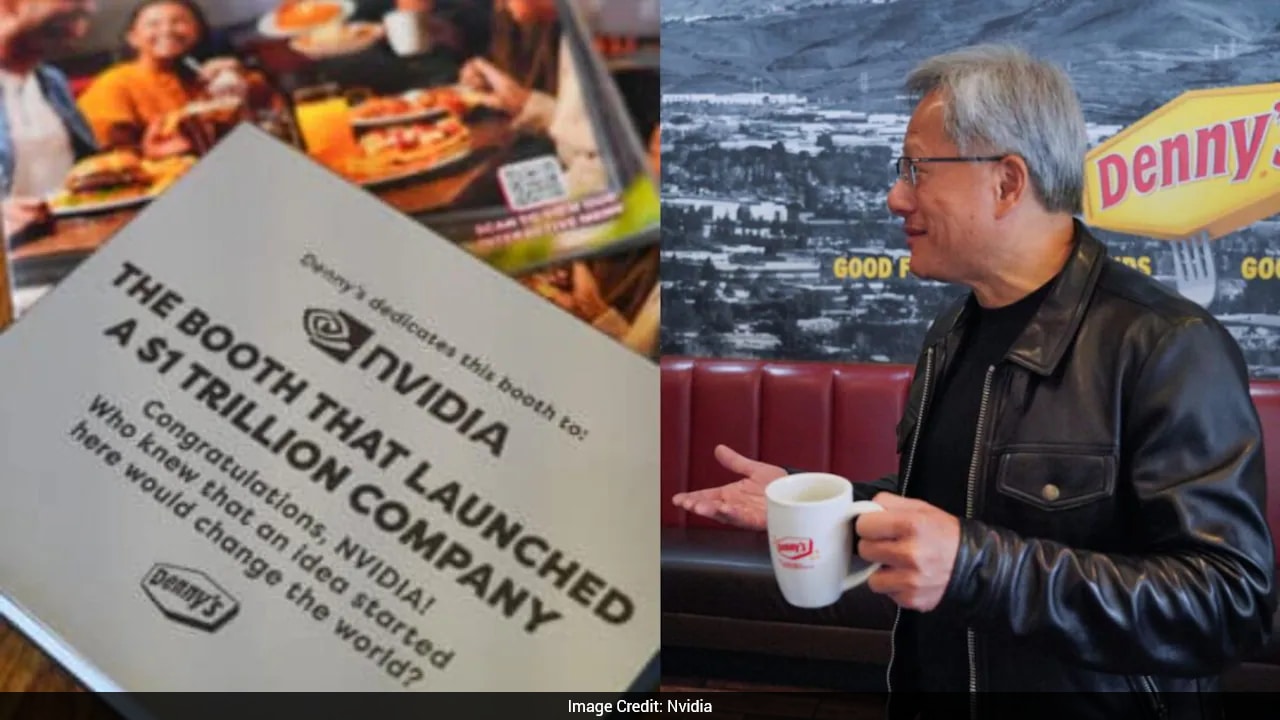
The black leather jacket always looked like a uniform meant to make a billionaire seem approachable.
For years, whenever Jensen Huang stepped onto a stage to unveil a new generation of silicon, the choreography felt familiar. The soft-spoken cadence. The self-deprecating jokes about washing dishes at Denny’s as a teenager. The gentle reminders that Nvidia was always, perpetually, just thirty days away from going out of business. To millions watching on livestreams and reading glowing profiles in financial magazines, the message was clear. Here was the anti-tech bro. While his peers in Silicon Valley bought superyachts, picked cage fights, or lectured Congress with thinly veiled disdain, the man running the most important hardware company on Earth projected an aura of quiet, almost monastic modesty.
Then a biographer pulled back the curtain, and the portrait shifted overnight.
According to investigative reporting and biographical accounts examining the inner workings of Nvidia—most notably insights surfaced by chroniclers like Tae Kim and Stephen Witt, who spent years interviewing current and former executives—that famous humility was less a personality trait and more a tactical instrument. Behind closed doors, the man who preached servitude to his engineers was described by those who knew him intimately as fiercely arrogant, relentlessly demanding, and possessing an ego monumental enough to bend the gravitational pull of an entire industry. Humility, as one biographer bluntly framed it, was an act.
Pause.
Think about how betrayed a reader feels when a carefully constructed hero myth cracks, and then ask a much harder question. Why did we ever believe a person could build a three-trillion-dollar monopoly out of pure bashfulness?
We love a tidy morality play in business journalism. We want our geniuses to be either cartoon villains or saintly underdogs, because nuance makes terrible headlines. When a competitor publishes a quick, dry news blurb summarizing a biographer’s claim that Jensen Huang was "quite arrogant" and his modesty was performative, it treats the revelation like celebrity gossip. A momentary scandal. A footnote in a quarterly earnings cycle.
That misses the entire point. The gap between Huang’s public modesty and his private ferocity is not a character flaw to be tut-tutted over morning coffee. It is the exact psychological engine that allowed a mid-tier graphics card maker from Santa Clara to outmaneuver Intel, humiliate AMD, and hold the global artificial intelligence boom in a chokehold.
The Anatomy of a Calculated Mask
To understand how a leader uses modesty as armor, picture a hypothetical young engineering director—let us call her Maya—walking into a fourth-floor conference room at Nvidia’s headquarters in 2016.
Maya has spent six months optimizing memory bandwidth for an experimental chip architecture that almost nobody outside the building cares about yet. The data is messy. Yield rates are lagging behind projections. In a typical corporate hierarchy, Maya would walk into that room armed with slide decks designed to obscure failure, padded with middle-management euphemisms, hoping to survive the meeting without losing headcount.
At Nvidia, however, the flat organizational structure means Maya reports almost directly to the founder, even with dozens of peers sharing the same reporting line. She sits down. Across the table sits a man wearing a simple black shirt, speaking quietly, asking questions that sound almost naive at first. Help me understand why the latency spikes here. What am I missing?
The tone is mild. The subtext is lethal.
Within four minutes, the gentle questioning turns into a surgical dismantling of every assumption Maya brought into the room. There is no cushion of corporate politeness. If an answer is sloppy, the criticism is delivered in front of peers with white-hot intensity, a phenomenon insiders have long referred to as being publicly corrected until the weak logic dissolves entirely. Yet the moment the meeting ends, the same executive might step out into an auditorium, smile warmly at a crowd of developers, and credit every breakthrough to the brilliance of his team while claiming he merely sweeps the floors.
This hypothetical scenario mirrors hundreds of documented accounts from inside Nvidia’s walls. The duality is jarring only if you assume modesty and arrogance are opposites. In high-stakes corporate warfare, they are often partners.
Arrogance—an unshakeable, almost irrational conviction that your vision of the future is right when every analyst on Wall Street says you are burning cash—is what kept Huang pouring billions of dollars into CUDA software in the mid-2000s. At the time, shareholders hated it. Video game enthusiasts didn't care about general-purpose computing on graphics processors. Financial reporters questioned whether Nvidia had lost its discipline. Only a leader with colossal self-belief ignores the market for a decade because he is certain the world will eventually bend to his architecture.
Why, then, wear the mask of humility in public?
Because raw arrogance triggers immune responses. When a founder acts like an emperor in front of regulators, customers, and rivals, everyone unites to tear him down. Regulators sharpen antitrust knives. Partners look for alternative suppliers out of sheer spite. By adopting the posture of the grateful, perpetually anxious underdog—the immigrant kid who still remembers scrubbing booths at a roadside diner—Huang disarmed his critics while his company quietly absorbed nearly ninety percent of the market for AI training chips.
Thirty Days From Ruin
I remember sitting in a cramped press briefing years ago, watching an executive from a rival semiconductor firm try to explain why his company’s roadmap was superior to Nvidia’s. He had charts. He had benchmark tables. He had three vice presidents nodding vigorously behind him. Nobody in the room believed him, including, by the look in his eyes, the executive himself.
Later that week, I watched footage of Huang delivering a keynote. He didn't look like an executive defending market share. He looked like a preacher conducting a revival, holding up a heavy circuit board as if it were a sacred relic, repeating his signature mantra that the company was always thirty days from going out of business.
The phrase is brilliant theater.
Consider what happens next when a leader convinces a workforce of thirty thousand highly paid, fiercely intelligent engineers that extinction is always one month away. Nobody coasts. Nobody builds political fiefdoms to protect a comfortable budget. Fear of irrelevance becomes oxygen. If you are truly thirty days from bankruptcy, you do not have time for polite meetings or bruised feelings. You accept public dressing-downs in conference rooms because you believe the house is on fire and the guy yelling at you is the only person who knows where the exit is.
Biographers examining Huang’s leadership style have pointed out the irony of a multi-trillion-dollar titan claiming perpetual fragility. From the outside, it looks absurd—like a heavyweight champion claiming he might lose his next fight to a stiff breeze. Inside the building, however, the myth served a brutally practical purpose. It justified relentless urgency.
Think of it like a master watchmaker operating inside a glass storefront. To passersby on the street, the watchmaker looks serene, hunched patiently over tiny gears, nodding politely whenever someone taps on the glass. Inside the workshop, away from the street noise, every apprentice knows that a single misaligned spring means the entire mechanism gets smashed with a hammer and rebuilt from scratch before dawn. The calm face at the window keeps customers trusting the shop; the perfectionist fury behind the workbench ensures the watch actually keeps time.
The Myth of the Benevolent Founder
Our collective surprise at learning that Jensen Huang’s humility was strategic says far more about modern business culture than it does about him.
Over the past twenty years, Silicon Valley has sold the public a steady stream of founder mythology. First came the ruthless pirate archetype—the Steve Jobs era, where cruelty was excused as artistic temperament and black turtlenecks signaled uncompromising genius. When society grew tired of toxic workplace headlines and tyrannical bosses, the pendulum swung hard toward vulnerability. Suddenly, every chief executive had to be a servant leader. Bookshelves filled with manuals on empathetic management, psychological safety, and leading from behind.
Tech leaders adapted immediately. They stopped bragging about crushing competitors and started talking about "empowering communities" and "listening and learning."
In that cultural climate, an outspoken, chest-thumping tycoon would have been crucified by the media before Nvidia ever reached a trillion-dollar valuation. So Huang leaned into the persona that fit the era. He talked about failing early, learning from mistakes, and staying humble. Journalists ate it up because it confirmed a comforting fantasy: that you could dominate global capitalism without becoming a monster, that niceness and ruthlessness didn't have to collide.
Yet history rarely rewards pure meekness at the apex of monopolistic industries. Look across the timeline of technological dominance—from John D. Rockefeller quietly buying up refineries while living modestly in Cleveland, to Bill Gates cultivating a geeky, sweater-vested image while Microsoft’s legal team waged scorched-earth warfare against Netscape. The outward uniform of modesty has long been the preferred camouflage of the apex predator.
Rockefeller taught Sunday school and handed out dimes to children on the street while bankrupting competitors who refused to sell him their pipelines. Did Rockefeller believe he was a humble servant of Providence? Almost certainly. Did his competitors experience him as a humble man? Hardly.
Human beings are remarkably skilled at compartmentalizing their own contradictions. It is entirely possible that Huang genuinely believes in his own vulnerability—that the trauma of growing up as a young immigrant sent to a strict boarding school in Kentucky, where he cleaned toilets and endured bullying before finding footing at Denny’s, left an indelible imprint of insecurity that no stock price can ever fully erase. Trauma and arrogance are not strangers; in fact, deep insecurity is the most common fuel for towering ego. When you spend your youth feeling powerless, you spend your adulthood making sure nobody ever holds leverage over you again.
What Happens When the Curtain Drops
There is a specific kind of tension that settles over an organization when its leader’s private temperament becomes public knowledge.
For years, working at Nvidia carried a distinct prestige, tempered by an unspoken understanding among engineers: you would get rich through stock grants, you would work on the hardest technical problems on the planet, and you would endure a level of pressure that broke most people within twenty-four months. Attrition rates at the company have notoriously remained far lower than Silicon Valley averages—not because the environment was gentle, but because golden handcuffs combined with genuine technical triumph create a powerful narcotic.
Still, admitting that the public persona is an act carries risks.
First, it changes how partners negotiate. When cloud giants like Microsoft, Google, and Amazon buy billions of dollars in graphics processors while secretly racing to design their own custom chips to escape Nvidia’s pricing power, they watch Huang’s every move. As long as he played the affable, collaborative partner—the guy signing autographs on leather jackets at tech conferences in Taiwan—it was harder for customers to rally industry-wide resentment against him. When biographers document a leader who views dominance as a birthright and treats modesty as theater, partners stop seeing a helpful supplier and start seeing an adversary who needs to be contained.
Second, it complicates succession. Organizations built around a singular, hyper-dominant personality rarely transition smoothly. When a company’s entire nervous system is wired to respond to one person’s intuition, public critiques, and theatrical urgency, what happens when that person steps back? You cannot bottle charisma, and you certainly cannot teach a successor how to be authentically arrogant while appearing persuasively humble.
I find myself conflicted whenever I watch footage of Huang now. Part of me respects the sheer discipline required to maintain a public persona for three decades without breaking character on stage. Maintaining composure under the glare of global media while managing supply chains worth hundreds of billions of dollars takes extraordinary self-control. Another part of me recognizes the quiet cost paid by the people inside those fourth-floor conference rooms—the engineers who absorbed the private fury so the public could enjoy the gentle smile.
We tend to confuse likability with leadership, and we confuse a soft voice with a soft hand.
The Jacket Remains
Imagine an investor, a young engineer, or a competitor reading that biographical headline today and feeling startled. Why? Because we still want our titans to be simple. We want the man in the leather jacket to either be a saint who stumbled into trillions through sheer kindness, or a fraud whose empire is built on lies.
Neither story is true.
The truth is far messier, and far more instructive. Nvidia did not conquer the computing world despite Jensen Huang’s ego; it conquered the computing world because he possessed enough arrogance to bet the entire company on artificial intelligence a decade before anyone else saw it coming, and enough self-awareness to disguise that arrogance in plain sight until it was too late for anyone to stop him.
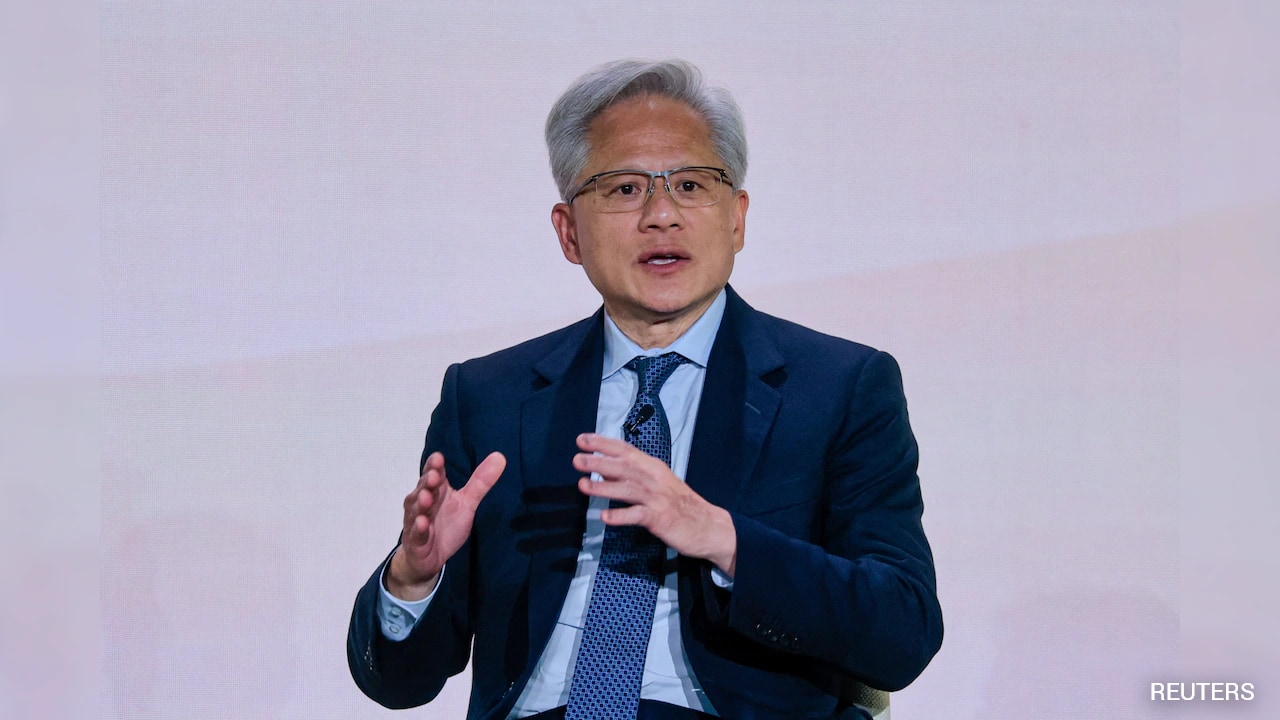
Next time the lights dim at a major technology keynote, watch closely when the figure in the black leather jacket walks out to center stage. Listen to the quiet voice. Watch the slight, self-effacing shrug as the crowd applauds a staggering new benchmark in computing power. Look at the posture of a man who still talks as though bankruptcy is lurking right behind the curtain.
Then look past the stage lights, at the silent server farms humming across continents, burning megawatts of electricity on chips that only one company knows how to build, priced at margins that would make an old-world oil baron blush—and try to tell yourself the modesty was ever real.