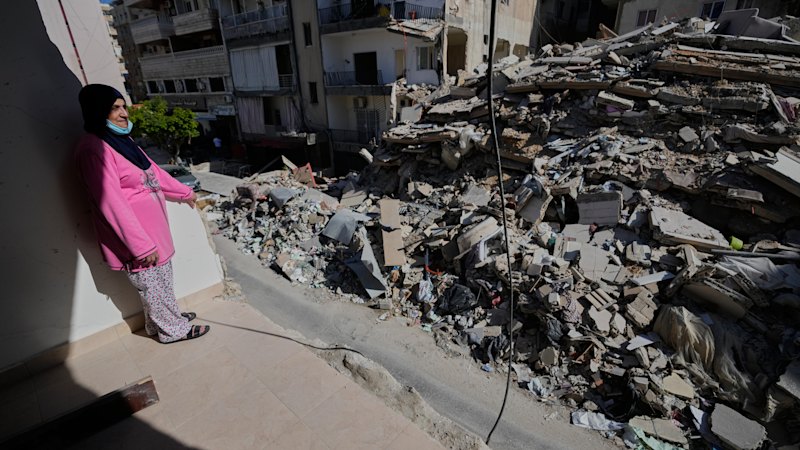
The international press loves a tragedy. It’s an easy sell. You see the headlines: Lebanon is "crumbling," the ceasefire is "fragile," and the economy is in a "death spiral." These narratives are not just tired; they are intellectually lazy. They frame Lebanon as a passive victim of external shocks and internal rot.
They are wrong.
Lebanon isn't failing by accident. It is functioning exactly as it was designed to. The "crisis" isn't a bug; it is the central feature of a sophisticated, multi-decade strategy of controlled instability. If you want to understand why the missiles keep falling despite signed papers in Beirut and Tel Aviv, you have to stop looking at the wreckage and start looking at the ledger.
The Ceasefire Fallacy
Mainstream analysts treat a ceasefire like a binary switch: On or Off. They argue that because skirmishes continue or missiles occasionally fly, the agreement has "failed." This misses the point of Levantine diplomacy entirely.
In this region, a ceasefire isn't peace. It’s a recalibration of the cost of doing business. Both sides know that total victory is impossible and total defeat is too expensive. The current friction isn't a sign of weakness; it’s a stress test. Each violation is a data point used to negotiate the next quiet period.
The "crisis" mentioned in every wire report serves a specific purpose for the ruling class. Instability is the ultimate shield against accountability. When the bombs are falling—or might fall—nobody asks where the $100 billion in missing bank deposits went. Fear is the greatest auditor-repellent ever invented.
The Myth of the Failing State
You’ve heard the term "failed state" applied to Lebanon so often it’s become a cliché. I’ve sat in rooms with IMF consultants and World Bank directors who speak about Lebanon like it’s a puzzle they can’t solve because the pieces are broken.
The pieces aren't broken. They are just being used for a different game.
Lebanon is a highly efficient machine for wealth extraction. The "state" doesn't provide electricity? Great. That opened up a multi-billion dollar private generator market controlled by local kingpins. The "state" can't manage the trash? Excellent. That means lucrative contracts for waste management companies with the right political backing.
When an outsider sees a "service gap," an insider sees a "revenue stream." To call this a failure of the state is to misunderstand what the Lebanese state actually is. It is not a provider of public goods; it is a clearinghouse for sectarian interests. From that perspective, it’s remarkably stable. It has survived a civil war, multiple invasions, a massive port explosion, and a currency collapse. Any "normal" government would have been overthrown five times over. This system stays.
Why Aid is Part of the Problem
Stop asking for more international aid. Aid is the adrenaline shot that keeps a terminal patient from actually changing their lifestyle.
For decades, the Lebanese central bank, Banque du Liban, operated what many have called a state-sponsored Ponzi scheme. They paid high interest rates on dollars to attract deposits, then used those dollars to fund a bloated government and maintain a fixed exchange rate. When the music stopped in 2019, the world expected a revolution.
Instead, we got a "managed collapse."
The international community keeps offering lifelines conditioned on "reform." The Lebanese elite knows something the donors don't: the West cannot afford a total collapse. The fear of a massive refugee wave hitting the Mediterranean or a total vacuum being filled by regional proxies means the "bailout" is always a looming possibility. Lebanon’s leaders are playing a high-stakes game of chicken with the global financial system, and so far, they are winning.
The Misunderstood Resilience
Critics point to the 90% drop in the value of the Lebanese Lira as proof of total catastrophe. In a vacuum, yes. But look at the ground reality. The economy has rapidly "dollarized." While the poor are being crushed—and let's be clear, the human cost is horrific—the commercial class has pivoted.
I’ve seen businesses in Beirut thrive during the "worst" of the crisis because they operate entirely outside the formal banking system. They use hawala networks, crypto, and physical cash. This is a shadow economy that is more "robust" (to use a word I hate, but here it fits the technical definition) than the regulated economies of Western Europe. It is un-taxable, un-traceable, and highly adaptive.
The "missiles falling" narrative suggests that economic activity stops when the sirens go off. It doesn't. It just shifts. The real story isn't the destruction; it’s the terrifying efficiency of the reconstruction.
The Status Quo is the Goal
The competitor article suggests that Lebanon is "mounting a crisis despite the ceasefire."
Correct the premise: Lebanon is maintaining the crisis to ensure the ceasefire remains the only topic of conversation.
If there were real peace, there would be time for a census. If there were a census, the sectarian power-sharing agreement would be exposed as mathematically obsolete. If the power-sharing agreement died, the warlords-turned-politicians would lose their legal immunity.
Therefore, the tension must remain. A little bit of conflict is the perfect preservative for an aging political class. It justifies the existence of militias, it justifies the emergency powers, and it justifies the lack of transparency.
The Actionable Truth for Investors and Observers
If you are waiting for a "return to normalcy" in Lebanon, you are waiting for a ghost. There is no "before" to go back to.
- Stop Betting on Institutions: Don't wait for the Lebanese parliament to elect a president or pass a budget. These are ceremonial acts. Real power lies in the informal networks. If you want to move capital or influence, you work through the nodes, not the hubs.
- Volatility is the Asset: In a world of low-interest, predictable markets, Lebanon offers a brutal, high-reward environment for those who can stomach the risk. The people making money there aren't looking at GDP charts; they are looking at logistics and supply chains.
- Ignore the Ceasefire Headlines: A ceasefire is a tactical pause, not a strategic shift. Assume the underlying conflict is permanent. Build your models around perpetual low-level friction.
The world views Lebanon’s situation as a tragedy that needs fixing. The people running Lebanon view it as a system that needs maintaining. Until you accept that the "crisis" is the intended outcome, you will continue to be surprised by its longevity.
Stop looking for the light at the end of the tunnel. In Lebanon, the tunnel is where the business happens.



