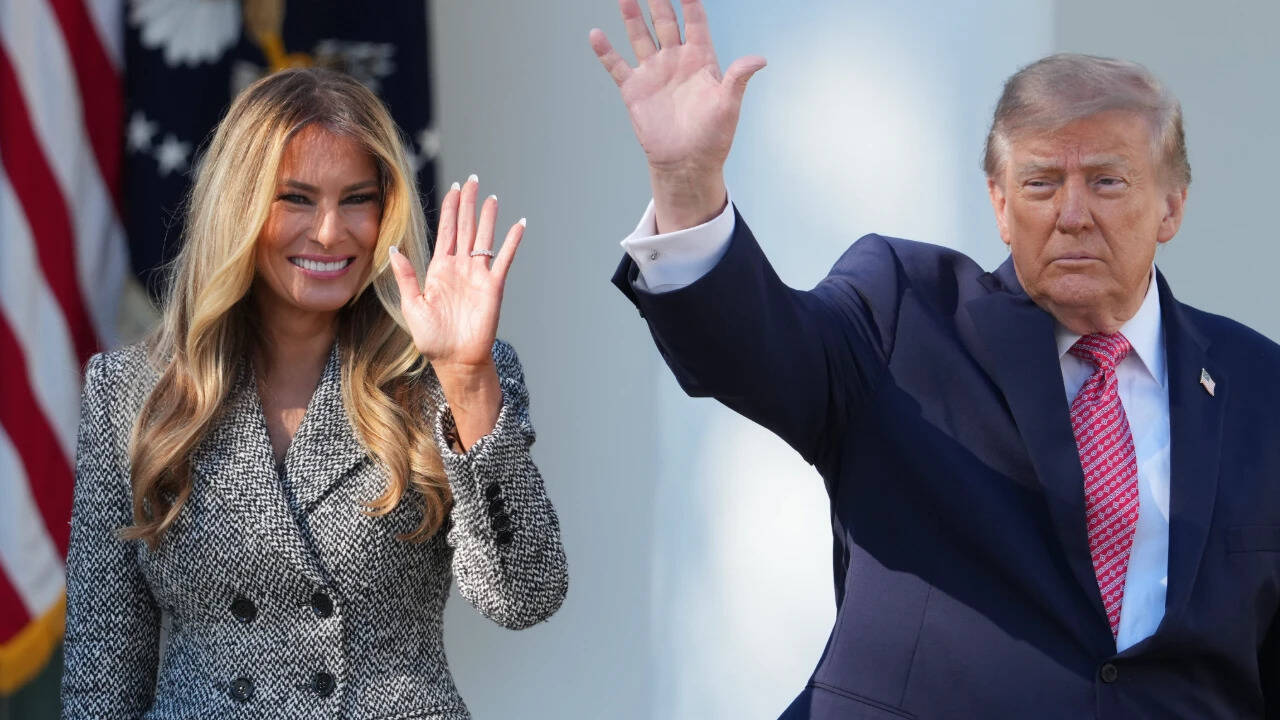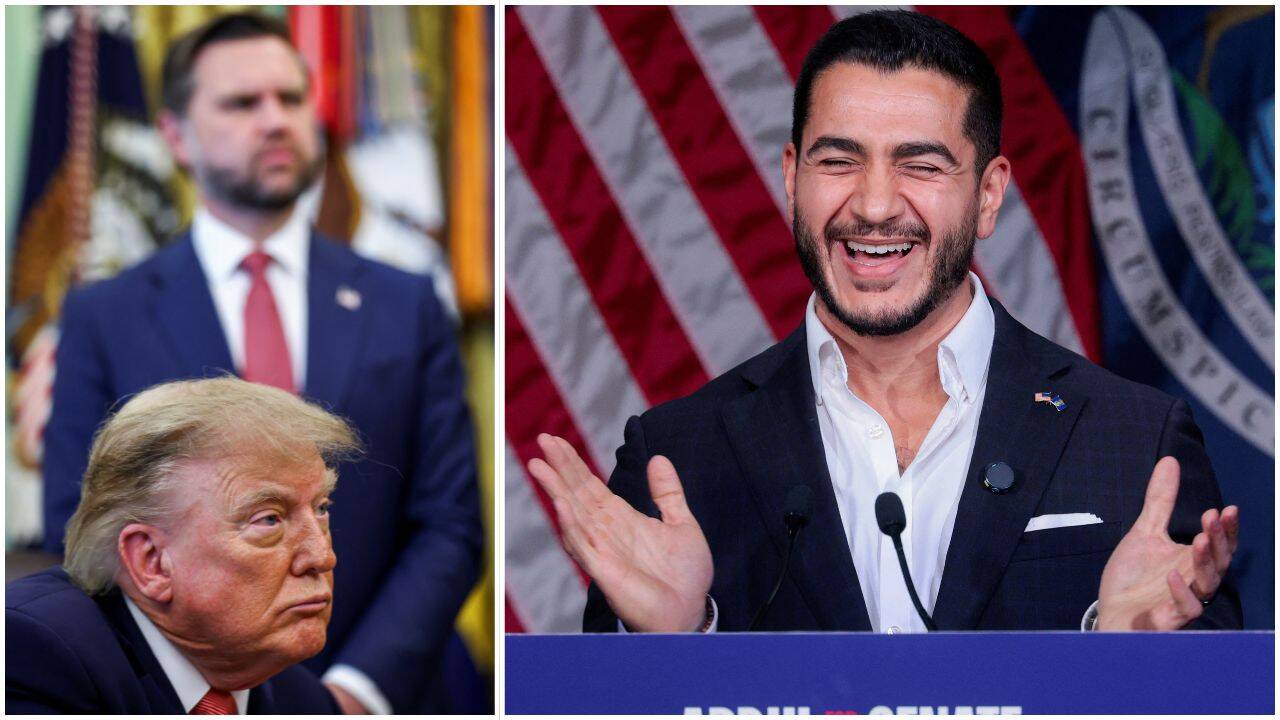
Political victory speeches typically rely on conciliatory platitudes to lower the temperature after a bruising campaign, yet Abdul El-Sayed’s November 4, 2026, address in Detroit executed a calculated counter-offensive. By addressing Vice President JD Vance as "habibi" and instructing President Donald Trump to call him "Senator," El-Sayed transformed a standard celebratory ritual into an exercise in linguistic jiu-jitsu. Rather than defending his identity against months of attacks, the first Muslim elected to the U.S. Senate weaponized the exact cultural signifiers used against him to invert the power dynamic on a national broadcast.
Standard political commentary treats these remarks as mere viral clapbacks or lighthearted ribbing. That superficial reading misses the underlying strategic architecture. In high-stakes communications, how a victor frames an opponent immediately after ballots are counted sets the baseline for institutional legitimacy. El-Sayed’s speech operated as a structured dismantling of an opponent’s narrative frame, executed through three distinct rhetorical mechanisms: semantic inversion, institutional subordination, and regional tribal realignment. Don't forget to check out our recent coverage on this related article.
The Architecture of Semantic Inversion
Throughout the 2026 Michigan Senate race against Republican Mike Rogers, opposition messaging—amplified directly by Trump and Vance—centered on identity-based alienation. Trump repeatedly mispronounced or emphasized El-Sayed’s full name, Abdulrahman Mohamed El-Sayed, while labeling him a "jihadist" and suggesting he would require extra security screening to enter the Capitol. Vance escalated the rhetoric during campaign stops, characterizing the former Detroit public health director as "very, very evil" and warning he would lead rioters to burn down the city.
When a political target responds to identity-based attacks with earnest defense, they validate the premise that their background requires justification. In behavioral economics and political framing theory, negating a frame activates that exact frame in the listener's mind. El-Sayed bypassed this trap entirely by deploying semantic inversion—taking the linguistic markers of his Egyptian-American heritage and redeploying them from a position of unassailable electoral authority. If you want more about the context of this, Reuters provides an excellent summary.
Opening his remarks with his full legal name, "Abdulrahman Mohamed El-Sayed," served as an immediate assertion of legitimacy. He then systematically introduced three Arabic terms into the mainstream American political lexicon within minutes:
- Inshallah (God willing) to Alhamdulillah (praise be to God): El-Sayed framed the trajectory of his campaign as a completed linguistic transition from aspiration to realization. By positioning his victory within the idiomatic structure of his faith, he normalized religious expression in a way that mirrored traditional American civil religion, stripping the opposition's "othering" strategy of its shock value.
- Habibi (my dear / buddy / pal): Directing an Arabic term of endearment at Vance—a politician who had spent months casting El-Sayed as an existential threat—created acute cognitive dissonance. In Levantine and Egyptian vernacular, habibi functions similarly to "pal" or "bro" in casual conversation, carrying an undertone of affectionate condescension when directed at an adversary.
- The 11-Letter First Name: Referring to himself as "a doctor with an 11-letter first name" reframed an asset that strategists once considered a ballot-line liability into a badge of populist authenticity against entrenched political capital.
This approach neutralized the attack vector without granting it credibility. By refusing to litigate the accusations of extremism, El-Sayed forced the media cycle to focus on the cultural confidence of the winner rather than the anxieties stoked by the losers.
Institutional Subordination and Constitutional Irony
The core punchline of El-Sayed’s address relied on procedural mechanics to establish dominance over the executive branch. Addressing the Vice President directly, El-Sayed noted the "delicious irony" that Vance is "constitutionally obligated to swear me in in January". Immediately afterward, he pivoted to Trump, stating that because the President had struggled with his name, he could simply call him "Senator" once the oath was administered.
To evaluate the effectiveness of this rhetoric, analysts must separate theatrical framing from constitutional reality. Under Article I, Section 3 of the U.S. Constitution, the Vice President serves as President of the Senate. By Senate custom and standing rules, the Vice President administers the oath of office to incoming senators at the start of a new Congress on January 3.
However, El-Sayed’s assertion of a strict "constitutional obligation" on Vance personally is a rhetorical exaggeration. Under 2 U.S.C. § 25, if the Vice President is absent or unable to attend, the President pro tempore of the Senate—or any other senator designated by the chamber—is legally authorized to administer the oath. Vance could technically avoid the ceremony by delegating the duty.
Despite this procedural nuance, the framing succeeded because it created an unavoidable lose-lose scenario for the Vice President:
- Scenario A (Vance administers the oath): Vance must stand on the Senate dais, shake El-Sayed’s hand, and formally induct the man he called "very, very evil" into the upper chamber in front of national cameras. The visual cements El-Sayed’s institutional equality.
- Scenario B (Vance skips the ceremony): Any absence by the Vice President on January 3 will be interpreted by political media as a retreat triggered by El-Sayed’s victory speech, validating the narrative that Vance was intimidated by the prospect of swearing in a Muslim Democrat.
Similarly, instructing Trump to use the title "Senator" leverages the rigid hierarchy of Washington protocol. Regardless of executive branch hostility, a U.S. Senator holds independent constitutional authority over judicial confirmations, cabinet appointments, and legislative filibusters. The title is not an honorific granted by the White House; it is a permanent institutional check earned through state-level sovereignty.
Regional Tribal Realignment
A critical vulnerability in progressive messaging is appearing overly academic or detached from local cultural touchstones. El-Sayed mitigated this risk immediately after the habibi remark by pivoting to the most potent tribal identifier in the Midwest: college football.
Highlighting his status as a University of Michigan alumnus against Vance’s background as an Ohio State University graduate, El-Sayed declared, "Wolverine one, Buckeye zero".
This single sentence performed heavy structural lifting across three distinct voter demographics in Michigan:
- De-escalating Cultural Friction: Transitioning seamlessly from an Arabic endearment to a Big Ten football score anchored El-Sayed’s identity firmly within the Midwestern mainstream. It signaled to swing voters in Macomb and Oakland counties that his cultural heritage and his local Michigan roots were entirely compatible.
- Exploiting Geographic Outsider Status: Vance, an Ohio native, spent significant political capital campaigning in Michigan for Rogers. In Michigan political psychology, an Ohioan lecturing Detroiters about their city’s safety or political choices triggers deep-seated regional resistance. Invoking the Michigan–Ohio State rivalry subtly cast Vance as a meddling outsider from a rival state.
- Softening the Adversarial Edge: Sports rivalries provide a socially sanctioned framework for trash talk. Framing the electoral defeat as a scoreboard metric allowed El-Sayed to mock the Vice President aggressively while maintaining an affable, celebratory demeanor that immunized him against accusations of partisanship or bitterness.
The Operational Cost of Confrontational Victory Framing
While El-Sayed’s speech maximized earned media and consolidated support among his base—particularly Arab American and Muslim voters in Dearborn and Detroit who felt alienated during previous election cycles—high-contrast victory rhetoric carries measurable operational trade-offs.
In the U.S. Senate, legislative efficacy for a freshman member in the minority or a narrowly divided chamber depends heavily on transactional relationships with the executive branch and opposing leadership. Publicly humiliating the President and Vice President within hours of winning an election restricts future negotiating bandwidth.
Evidence of this friction emerged within two weeks of the speech. By November 19, 2026, reports surfaced regarding a potential face-to-face meeting between Vance and El-Sayed prior to the January swearing-in. Rather than proceeding quietly, the preliminary outreach devolved into a public dispute over who initiated contact—with El-Sayed telling MS NOW that Vance’s office reached out first, and the Vice President’s team countering that they were responding to an inquiry from El-Sayed’s camp. Days later, the meeting collapsed entirely amid renewed public posturing.
This sequence illustrates the primary limitation of asymmetric rhetorical warfare: the tactics required to win the narrative war on election night create structural drag when transitioning to governance. When both sides lock into performative antagonism, basic diplomatic backchannels become toxic to their respective bases, making routine constituent advocacy—such as securing federal infrastructure grants or automotive manufacturing subsidies for Michigan—significantly harder to execute behind closed doors.
The Strategic Play for incoming Senate Leadership
El-Sayed has successfully established his national profile as an unapologetic progressive counter-puncher, rendering traditional Washington assimilation unnecessary for his political survival. However, sustaining leverage through 2028 requires shifting from linguistic defense to institutional offense.
Rather than engaging in further performative sparring over pre-inauguration meetings with the Vice President’s office, El-Sayed’s operational priority between now and January 3 must be securing seats on committees with direct jurisdiction over executive branch oversight and Michigan’s industrial base—specifically the Senate Committee on Health, Education, Labor, and Pensions (HELP) and the Commerce Committee. By channeling his high-visibility media platform into televised committee questioning of Trump administration nominees rather than verbal volleys with Vance, El-Sayed can convert his viral election-night momentum into durable legislative friction that forces the White House to negotiate on policy rather than semantics.