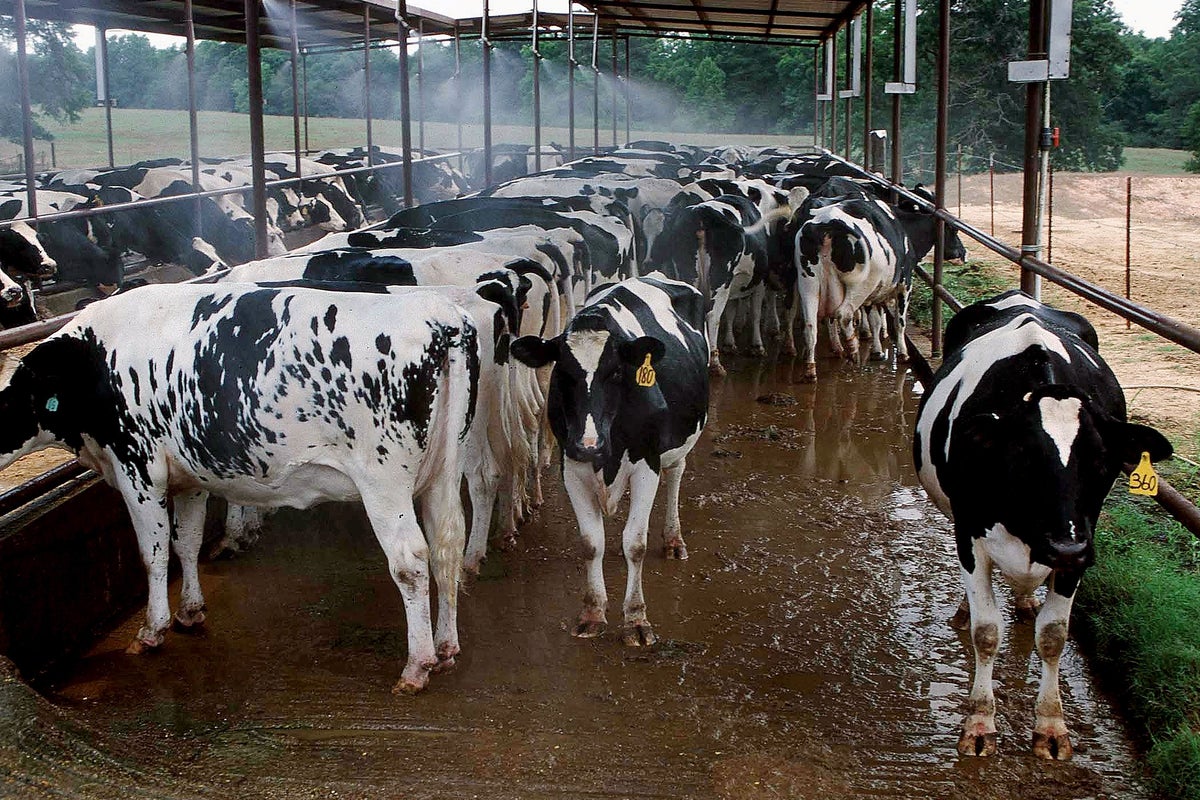
The theft of 60 cattle from a single Ohio farm overnight represents a sophisticated logistical operation rather than a crime of opportunity. At an average market weight of 1,200 pounds per head, this incident involved the illicit mobilization of 72,000 pounds of biological assets within a narrow six-to-eight-hour window. This scale of theft requires a specialized supply chain, commercial-grade transport infrastructure, and immediate access to grey-market processing or interstate distribution networks. Understanding this event requires a structural breakdown of the agricultural black market, the failure of traditional traceability, and the incentive structures that make livestock high-value, high-liquidity targets for organized criminal entities.
The Operational Mechanics of Large Scale Cattle Extraction
The extraction of 60 head of cattle is a feat of heavy-logistics management. A standard 53-foot double-deck livestock trailer typically accommodates approximately 30 to 35 mature cows, depending on weight and density requirements for animal welfare. The removal of 60 animals indicates the deployment of at least two semi-trucks or several smaller gooseneck trailers operating in tandem. This suggests a coordinated team with significant experience in animal husbandry; cattle are flighty, heavy, and physically dangerous when stressed. For an alternative look, consider: this related article.
Operational success in this context depends on three variables:
- Site Permeability: The targeted farm likely lacked physical bottlenecks or real-time monitoring at the point of egress. Large-acreage operations often prioritize herd health over perimeter security, creating an environment where heavy machinery can operate undetected.
- Loading Efficiency: Moving 60 cows through a loading chute into a trailer requires roughly 10 to 15 minutes per load for an expert crew, totaling 40 to 60 minutes of high-exposure activity on-site.
- Transport Velocity: Once loaded, the "theft clock" begins. The goal is to cross state lines or reach a private holding facility before the morning chores reveal the loss, usually between 4:00 AM and 6:00 AM.
The Economic Incentive of Biological Assets
Livestock functions as a unique form of "mobile capital." Unlike heavy machinery or electronics, cattle are naturally decentralized, frequently lack GPS tracking, and possess a high value-to-traceability ratio. Based on current market prices for fed cattle, 60 head represent a gross asset value ranging from $110,000 to $150,000. Similar coverage on the subject has been provided by Financial Times.
The financial attractiveness of this crime is driven by the Anonymity of the Commodity. While registered purebreds may have unique tattoos or electronic identification (EID) tags, the majority of commercial cattle are identified by plastic ear tags that are easily removed. Once the primary tag is discarded, a cow becomes a generic commodity.
The Liquidity Bottleneck
The primary challenge for the thief is not the theft itself, but the conversion of the animal into cash. In the United States, the USDA and state departments of agriculture oversee livestock auctions, which serve as the primary liquidity event for producers. To bypass these checks, rustlers utilize three primary liquidation channels:
- Interstate Arbitrage: Moving cattle across state lines to auctions where brand inspection laws are less stringent. Ohio, unlike many Western states, does not have mandatory brand inspection laws for every cattle transfer, making it an ideal origin point for theft.
- Direct-to-Processor Grey Markets: Smaller, local slaughterhouses or "custom-exempt" processors may lack the rigorous provenance checks required of major federal plants.
- Private Treaty Sales: Selling the herd as a "dispersal" to an unsuspecting or complicit third party via private contract, often at a 20% to 30% discount to market value to ensure a rapid close.
Structural Vulnerabilities in the Agricultural Supply Chain
The Ohio incident exposes a systemic failure in the current livestock identification infrastructure. The agricultural industry operates on a high-trust model that hasn't adapted to the professionalization of rural crime.
The Identity Gap
Current identification methods fail because they are "extrinsic" rather than "intrinsic." Ear tags are external attachments. Until the industry shifts toward mandatory, tamper-resistant EID or retinal scanning, the burden of proof remains on the owner to identify a stolen animal rather than the seller to prove ownership.
Rural Response Latency
The geography of cattle farming creates an inherent response lag. Law enforcement agencies in rural Ohio often cover vast territories with minimal overnight staffing. A theft occurring at 11:00 PM may not be reported until 7:00 AM the following day. By that time, the transport vehicles could be 400 miles away, crossing multiple jurisdictional boundaries. This creates a "data vacuum" where the trail is cold before the investigation even begins.
The Cost Function of Livestock Protection
For the producer, the cost of securing 60 head of cattle must be weighed against the probability of theft. Security is a capital expenditure that does not directly increase the yield of the animal.
- Passive Deterrence: Fencing, locked gates, and lighting. These are easily bypassed by determined actors with bolt cutters and portable generators.
- Active Monitoring: Thermal imaging and motion-activated cameras at gate entries. These provide forensic evidence but rarely prevent the crime in progress due to the lack of real-time alert integration.
- Biometric/Electronic Tracking: GPS ear tags or rumen boluses (sensors that sit in the animal's stomach). While highly effective, the cost per unit (often $20-$50 per head) is prohibitive for commercial herds with thin margins.
The "Pillars of Farm Defense" are currently imbalanced. Most operations focus on Pillar 1 (Animal Health) and Pillar 2 (Input Management), while Pillar 3 (Asset Security) is neglected until a catastrophic loss occurs.
Forensic Limitations and Legal Barriers
Investigating livestock theft is hampered by the lack of a centralized national database for stolen animals. When 60 cows disappear, the description "black Angus" applies to millions of animals nationwide.
The legal framework is equally fragmented. Penalties for cattle rustling vary significantly. In some jurisdictions, it is treated as a high-level felony due to its impact on the food supply and the farmer's livelihood; in others, it is categorized as simple property theft. This inconsistency creates "jurisdictional havens" where thieves know they face lower risk of prosecution or lighter sentencing.
Furthermore, the "commingling" of stolen cattle into legitimate herds is a common tactic. Once a stolen cow is mixed with 200 others in a large feedlot, physical identification becomes nearly impossible without individual DNA testing—a process that is cost-prohibitive for investigative agencies.
Strategic Hardening of Agricultural Assets
To mitigate the risk of high-volume extraction, producers must shift from a "containment" mindset to an "interdiction" mindset.
- Hardening the Point of Egress: The loading area is the most critical vulnerability. Installing reinforced, heavy-duty bollards or "tiger teeth" one-way tire spikes at the entrance to the loading pen can prevent unauthorized trailers from backing into position.
- Geofencing via Rumen Boluses: Implementing a "sentinel" strategy where 5% of the herd is equipped with internal GPS boluses. These sensors provide the location of the herd and can trigger an immediate alert if the animals move outside a predefined perimeter or travel at "truck speeds" (over 25 mph).
- Fragmented Holding: Avoiding the concentration of high-value stock in pastures with direct road access. Increasing the "friction" required to move animals from the pasture to the loading area significantly increases the time-on-site for thieves, thereby increasing their risk of detection.
- Supply Chain Transparency: Encouraging auction houses to require proof of origin for any lot exceeding 10 head. Standardizing this requirement across state lines would eliminate the interstate arbitrage currently exploited by rustlers.
The theft in Ohio is a signal of a maturing criminal market that views biological assets as high-yield, low-risk targets. The agricultural sector must professionalize its security protocols to match the logistical sophistication of those seeking to exploit it.
The immediate strategic move for regional producers is a comprehensive audit of loading-zone access. Secure the loading chute with a high-tensile locking mechanism that requires heavy equipment to breach, and install cellular-linked trail cameras specifically focused on the license plate height of approaching vehicles. This shifts the operational risk back onto the perpetrator by removing the guarantee of a clean, rapid extraction.