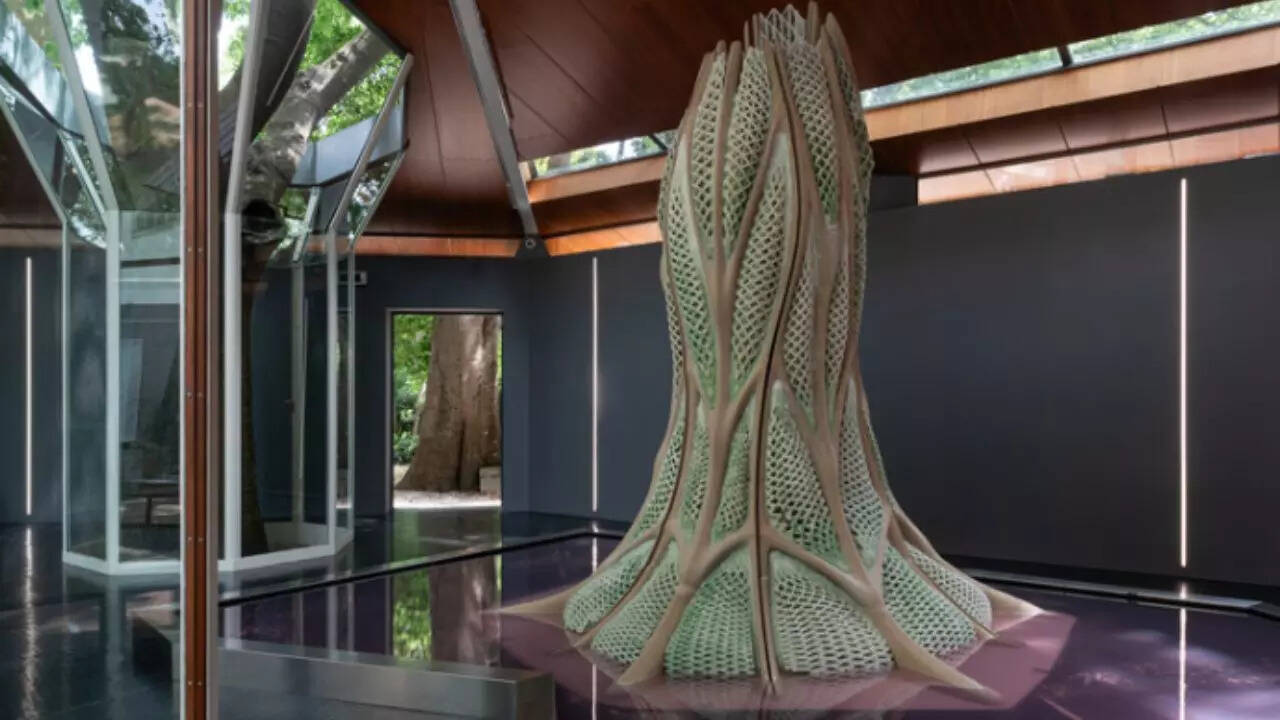
The press is currently swooning over "living walls" as if we’ve finally cracked the code to merging biology with the built environment. They call it a breakthrough. They evoke Stranger Things imagery to make it sound cool, edgy, and futuristic. They promise us buildings that breathe, heal, and grow.
It’s a lie. Or, at best, a very expensive hallucination.
I have spent fifteen years watching developers throw millions at "green tech" that serves as nothing more than a high-maintenance vanity project. These self-healing biological facades are the latest iteration of that grift. We aren't building the cities of the future; we are building vertical swamps that are structurally destined to fail.
The Self-Healing Myth vs. Entropy
The hype focuses on the idea of "self-healing" materials—concrete infused with Bacillus pseudofirmus or similar calcifying bacteria. The pitch is simple: water enters a crack, the bacteria wake up, eat some calcium lactate, and poop out limestone to plug the hole.
It sounds elegant. In a lab petri dish, it is. In the brutal reality of a skyscraper's exterior, it’s a disaster.
Structural integrity isn't just about filling gaps. It’s about the tension and compression of the entire matrix. When a "living wall" heals itself, it creates localized patches of material with entirely different density and thermal expansion coefficients than the original substrate.
Imagine a scenario where a structural beam develops a micro-crack. The bacteria "heal" it. Now you have a plug of fresh limestone sitting inside a weathered concrete slab. When the sun hits that wall and the temperature rises to 40°C, those two materials expand at different rates. The "healing" literally forces the crack to widen further down the line. We aren't fixing buildings; we are introducing biological stress points that ensure long-term catastrophic failure.
The Moisture Trap
Architects love to show you the "After" photo—the lush, green facade dripping with ferns and moss. They never show you the "Five Years Later" photo.
Living walls require constant irrigation. You are essentially strapping a massive, vertical sponge to a structural envelope that was designed to stay dry. The "lazy consensus" says that modern vapor barriers and waterproofing membranes can handle this. They can’t.
Water always wins.
By maintaining a constant state of high humidity against a building's skin, you are bypassing the primary function of an exterior wall: shedding water. You are creating a micro-climate that invites:
- Root penetration: Even "non-invasive" species will find a way into mortar joints when they sense moisture.
- Bio-corrosion: Plants and fungi secrete organic acids. These acids don't care about your "self-healing" bacteria; they eat calcium for breakfast.
- Hydrostatic pressure: Constant saturation leads to weight loads that most retrofitted structures weren't engineered to carry.
The Carbon Footprint of "Green" Virtue Signaling
The biggest joke is the claim that these walls are "eco-friendly."
If you want to sequester carbon, plant a forest. Don't build a complex, energy-intensive hydroponic rig on the side of a glass tower in Midtown. The embodied carbon of the pumps, the plastic modules, the synthetic fertilizers, and the sheer amount of water required to keep these plants alive in a non-native environment far outweighs any oxygen they produce.
I’ve seen "sustainable" buildings that use more electricity to run their living wall irrigation pumps than they save through natural cooling. It is architectural taxidermy. You are keeping a corpse looking alive through sheer mechanical force.
Why Biology is Not Software
The industry is obsessed with treating biology like code. They think they can "patch" a building like an operating system. This is a fundamental misunderstanding of biological systems.
Biology is messy, competitive, and prone to mutation. When you introduce living organisms into a sterile construction environment, you aren't just getting the "healing" properties. You are getting the entire package. You are getting mold. You are getting pests. You are getting unpredictable growth patterns that can clog drainage systems and fire suppression lines.
We don't need buildings that "live." We need buildings that endure.
The most sustainable building is the one that doesn't need to be demolished in thirty years because the "living" facade turned the structural rebar into a rusted mess.
The Reality of Maintenance Costs
Ask any facility manager who has inherited a living wall. It isn't a garden; it's a patient on life support.
- Pruning: You need specialized crews on rappelling gear to trim the "self-healing" facade so it doesn't block windows or air intakes.
- Sensor Failure: The millions of sensors required to monitor soil moisture and bacterial activity fail at an alarming rate in outdoor conditions.
- Species Die-off: One cold snap or one pump failure, and your "living" wall becomes a vertical tinderbox of dead, brown brush.
We are sold a vision of a lush utopia, but we are buying a high-stakes maintenance nightmare.
Stop Decorating Problems
If we actually cared about urban cooling and air quality, we would stop trying to make the walls breathe and start making the ground permeable again. We would prioritize street-level canopy over high-altitude moss patches.
The obsession with living walls is a distraction. It allows developers to keep building inefficient, glass-and-steel boxes while slapping a green "sticker" on the side to satisfy ESG requirements. It is the ultimate form of greenwashing because it’s literally green.
We are sacrificing the longevity of our infrastructure for the sake of a rendering that looks good on Instagram.
The "Stranger Things" comparison is actually more accurate than the boosters realize. In the show, the growth is an invasive, parasitic force that slowly rots the world it inhabits. If we keep ignoring the physics of moisture and the reality of entropy, that is exactly what our "living" cities will become.
Rip the plants off the walls and put them back in the dirt where they belong. Build your walls out of stone, steel, and high-performance composites that don't require a biologist to maintain.
Stop trying to make your house a pet. It’s supposed to be a shelter.
The next time a salesperson tries to sell you on a "self-healing" biological facade, ask them for the fifty-year structural warranty and the projected cost of the specialized plumbing maintenance. Then watch how fast the "living" wall starts to wither.