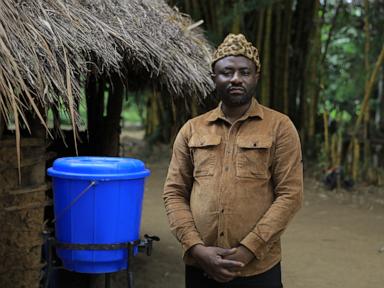
You can fly in all the epidemiologists, hazmat suits, and emergency funding the World Health Organization has in its budget, and an Ebola response will still hit a brick wall if the local village chief doesn't trust you.
That's the harsh reality of public health emergencies in the Democratic Republic of the Congo (DRC). When an outbreak strikes, outsider medical teams often look like invading forces to communities dealing with decades of conflict and neglect. Stigma, fear, and misinformation spread faster than the virus itself. In the middle of that chaos, traditional leaders—village chiefs, clan elders, and local authorities—often carry the heaviest burden. They have to convince terrified neighbors to abandon centuries-old burial customs and trust foreign doctors, even while the disease is actively wiping out their own families.
It sounds impossible. Honestly, most people wouldn't blame a leader for retreating into private grief when they've lost multiple relatives to a hemorrhagic fever with an average fatality rate hovering around 50%. Yet during Congo's major outbreaks—particularly the devastating 2018–2020 Kivu epidemic and subsequent flare-ups in Equateur and North Kivu—local chiefs repeatedly stepped into the fire to dismantle Ebola prejudice from the inside out.
The Real Reason Ebola Stigma Takes Hold in Congo
If you think Ebola resistance in the DRC is just about "lack of education," you're missing the entire picture. That's a lazy assumption made by people sitting thousands of miles away in air-conditioned offices.
In eastern Congo, communities in North Kivu and Ituri have endured armed conflict, militia violence, and political abandonment for over twenty years. When suddenly dozens of white SUVs roll into a village, staffed by outsiders speaking French or English instead of local languages like Kinande or Lingala, people ask a completely rational question. Where were you when armed groups were burning our homes? Why do you only care about us now that there's a virus that might cross an international border?
Suspicion isn't irrational there. It's a survival instinct.
Rumors fill the vacuum left by broken trust. During the Kivu outbreak, widespread beliefs circulated that Ebola was fabricated to steal blood, harvest organs, or disrupt national elections. Treatment centers—with their opaque tarps and workers dressed in full-body yellow personal protective equipment (PPE)—looked less like hospitals and more like places where loved ones went to disappear forever.
When a family member died inside an Ebola Treatment Unit (ETU), relatives weren't allowed to touch the body. Think about what that means culturally. In many Congolese communities, washing, dressing, and mourning the dead together isn't just a nice tradition—it's a spiritual obligation that ensures the deceased finds peace and protects the living from misfortune. Denial of a proper funeral feels like a profound violation. So families hid sick relatives in the forest. They conducted secret burials at night. And every single time they touched an infected body without protection, the virus jumped to a dozen more people.
Walking Through Grief While Fighting Public Denial
This is where the role of a village chief becomes completely irreplaceable. An international aid worker can explain viral transmission using charts and loudspeakers until they lose their voice. Nobody listens. When the village chief stands up—especially a chief whose own household has been gutted by the virus—the entire room goes quiet.
Consider the impossible position these leaders face. Ebola doesn't spare authority figures. In tight-knit rural villages, chiefs live among their extended families, share meals, and attend community gatherings. When the virus enters a village, it frequently tears straight through the chief's own compound first because people come to them for help when someone falls ill.
Imagine burying your brother, your aunt, or your child under strict biosecurity protocols—watching strangers in masks lower them into a grave without being allowed to hold their hand one last time—and then waking up the next morning to tell your neighbors that those same strangers are here to save them.
That takes a level of courage most of us can't even comprehend.
Yet across affected health zones like Beni, Butembo, and Mabalako, traditional chiefs became the primary bridge between frightened villagers and medical responders. Instead of hiding their family's diagnosis—which many people did to avoid social ostracization—courageous chiefs publicly acknowledged that Ebola had killed their relatives.
Why did that matter so much? Because public admission killed the biggest lie circulating in the villages: the claim that Ebola wasn't real.
When a respected elder says, "This disease took my own blood, and it is real," conspiracy theories collapse overnight. You can't argue that a foreign NGO invented the virus when the chief is mourning his own family in front of the entire community.
What Actually Worked on the Ground vs. What Failed
Public health organizations eventually learned—sometimes painfully slowly—that top-down messaging was making things worse. Early response strategies in eastern Congo relied heavily on militarized enforcement and aggressive contact tracing led by outsiders. Health workers were attacked. Treatment centers in Katwa and Butembo were burned down in 2019 because communities felt coerced rather than consulted.
The turning point came when agencies like UNICEF, the World Health Organization (WHO), and Médecins Sans Frontières (MSF) finally handed the microphone to local chiefs and community networks.
Safe and Dignified Burials
You can't just tell people to stop touching their dead and walk away. You have to offer an alternative that respects their humanity.
Working alongside village chiefs, response teams redesigned burial protocols into what became known as Safe and Dignified Burials (SDB). Instead of whisking bodies away in secret, Red Cross teams and local volunteers invited family members and traditional leaders to witness the process. Transparent body bags were introduced so relatives could see the face of their loved one one final time. Chiefs were consulted on how to incorporate traditional prayers, speeches, and symbolic rituals before the casket was sealed.
When the village chief stood beside the burial team and validated that the ritual respected ancestral dignity, community resistance plummeted.
Community-Led Contact Tracing
When strangers showed up at a house with clipboards asking who had been in contact with a sick patient, doors slammed shut. People feared arrest or forced quarantine.
When the village chief accompanied the health workers—or better yet, appointed trusted youth leaders from within the village to conduct the follow-ups—compliance shot up. Neighbors didn't feel like they were being interrogated by outsiders. They felt like they were protecting their own clan under the guidance of their chief.
Demystifying the Treatment Centers
Fear of the unknown kept sick people at home until it was too late to save them. Early medical care drastically improves survival rates for Ebola, especially with modern monoclonal antibody treatments like Inmazeb and Ebanga, which proved remarkably effective during the Kivu trials.
Local chiefs helped organize transparent tours of Ebola Treatment Centers before outbreaks hit nearby villages, and they championed survivors who walked out of those tents alive. Seeing a neighbor return healthy—and seeing the chief welcome that survivor back into the village without stigma—changed the psychological calculus for entire districts.
The Brutal Cost of Ebola Stigma on Survivors and Families
Even after the fever breaks and a patient tests negative twice, the battle isn't over. Prejudice against Ebola survivors and affected families in Congo can be devastating.
Survivors frequently return home to find their belongings burned out of fear of contamination. Landlords evict them. Shopkeepers refuse to touch their money. Spouses abandon them, and children lose friends at school. For a village chief whose relatives died of Ebola, that stigma threatens their very legitimacy as a leader. Some villagers whisper that the chief's family brought a curse upon the land, or worse, took bribes from foreign agencies to bring the disease into the area.
Overcoming that prejudice requires relentless, visible action. Chiefs who successfully fought the stigma did three specific things that set them apart:
- Publicly sharing meals and physical space with survivors. In Congolese culture, sharing food from a common dish is the ultimate sign of trust and acceptance. When a chief sat down to eat with a recovered patient in the center of the village, it sent an unmistakable message that the person was clean and safe.
- Enforcing local penalties against discrimination. Traditional chiefs hold real judicial and social authority over local disputes. Progressive chiefs explicitly forbade landlords and merchants from ostracizing affected families, treating Ebola discrimination as a violation of community solidarity.
- Turning grief into public testimony. Rather than grieving in isolation, chiefs used community gatherings—barazas—to explain exactly how their relatives contracted the virus, usually through caring for a sick family member without gloves or attending an unsafe funeral. Personalizing the transmission chain made prevention concrete rather than abstract.
What Global Health Agencies Still Get Wrong
You'd think after the 2014–2016 West Africa epidemic and the 2018–2020 Congo outbreaks, international institutions would have permanently learned the lesson that community trust is the primary medicine. They haven't. Every single time a new viral threat emerges, the default reflex of large bureaucracies is to throw money at logistics, surveillance tech, and top-down communication campaigns while treating local leaders as an afterthought.
Anthropologists who worked on the ground during the Congo outbreaks—including researchers from the Social Science in Humanitarian Action Platform (SSHAP)—documented this friction repeatedly. Millions of dollars were spent on high-level coordination hubs while local chiefs lacked basic mobile credit to call alert hotlines or transport stipends to visit remote hamlets in their own chiefdoms.
Worse, international responders often treat "culture" as an obstacle to be overcome rather than a resource to work with. Traditional leaders aren't barriers to modern medicine. They are the operating system of rural governance in Central Africa. If your public health software isn't compatible with the local operating system, it's going to crash. Every single time.
Lessons That Apply Far Beyond Congo
You don't need to be managing a hemorrhagic fever outbreak in North Kivu to see how deeply this applies to any public health crisis or community emergency. Whether it's vaccine hesitancy in North America, cholera prevention in Haiti, or pandemic messaging anywhere in the world, facts alone never defeat fear.
People don't trust data. People trust people they know.
When institutions lose credibility—whether through historical neglect, political polarization, or clumsy communication—outsider experts lose their power to persuade. The only voices capable of cutting through panic and misinformation are trusted insiders who share the community's identity, speak their language, and bear the exact same risks.
If you work in public health, crisis communication, humanitarian aid, or community organizing, stop designing campaigns from the outside in. Identify the local leaders who hold genuine moral authority before a crisis hits. Listen to their legitimate grievances instead of dismissing them as "misinformation." Equip them with resources, respect their cultural frameworks, and step back so they can lead their own people. Because when everything falls apart, a single courageous village chief standing in front of his neighbors carries more weight than a thousand press releases ever will.