High-altitude civil disobedience functions not as a mere public statement, but as a calculated asymmetric intervention designed to force a massive misallocation of state resources. The five-day occupation of the Frederick Douglass Memorial Bridge by Florida activist Zephaniah Coleman illustrates the mechanics of "Escalation Engineering." By positioning a single human asset in a critical infrastructure node, an individual can force a city’s emergency response apparatus into a defensive, high-cost holding pattern. This analysis deconstructs the operational variables of the protest, the failure of standard negotiation timelines, and the broader strategic implications for urban security and legislative pressure.
The Infrastructure Capture Model
The efficacy of a bridge protest relies on the intentional selection of a "choke point." The Frederick Douglass Memorial Bridge serves as a primary artery for Washington D.C., and its occupation transforms a transportation asset into a liability. The activist’s strategy utilized three specific mechanical advantages:
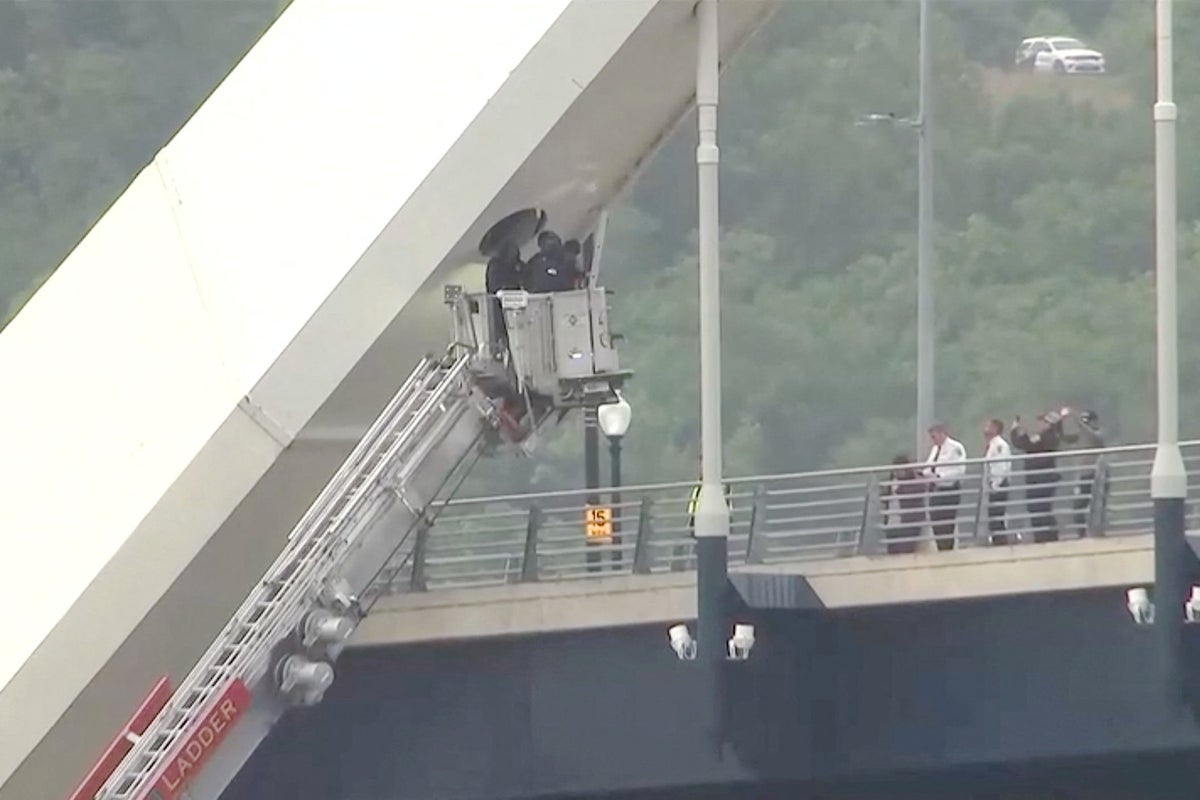
- Verticality as a Force Multiplier: By ascending the bridge’s arch, the protester creates a physical barrier that cannot be neutralized without risking a high-profile fatality. This forces the Metropolitan Police Department (MPD) and Fire and EMS services into a reactive stance, where the rules of engagement are dictated by the safety of the individual rather than the clearance of the roadway.
- Resource Saturation: A multi-day standoff requires 24-hour monitoring by specialized units, including crisis negotiators, Harbor Patrol, and technical rescue teams. The "Cost of Engagement" for the city increases linearly every hour, while the cost to the protester remains fixed—predicated only on physical endurance and basic supplies.
- Visual Dominance: The bridge’s profile ensures that the protest remains in the line of sight for both the public and federal legislators. This creates a feedback loop where social media visibility maintains the protester's morale, even as physical conditions deteriorate.
The Three Pillars of Sustained Disobedience
The five-day duration of the Coleman protest suggests a sophisticated understanding of the psychological and physiological requirements of a prolonged occupation. Most spontaneous protests fail within 24 hours due to a lack of preparation. This specific event was sustained by a specific tripod of necessities:
Physiological Management
Endurance in a high-altitude, exposed environment requires a strict calorie-to-weight ratio. Reports indicate the use of a bucket system for hoisting supplies, which suggests an external support network. Without a ground-based logistics team, a vertical protest is limited to the initial carry-load of the climber. The transition from a 48-hour protest to a five-day occupation marks the shift from an emotional outburst to a managed operation.
Media Synchronization
The protest was not an isolated physical act; it was a content engine. By utilizing mobile technology to broadcast live from the bridge, Coleman bypassed traditional media gatekeepers. This direct-to-audience pipeline ensures that the "Why" of the protest—in this case, demands for climate action and the declaration of a national climate emergency—isn't lost in the tactical reporting of the bridge closure.
Legal and Safety Buffers
The protester benefited from a "Safety Paradox." The more dangerous the position occupied, the more cautious the state must be in its removal tactics. The risk of a fall during a forced extraction creates a PR catastrophe for the police department. Consequently, the protester used the arch’s height not just for visibility, but as a protective shield against immediate arrest.
The Negotiator’s Dilemma: Time vs. Compliance
Police negotiators operate on the principle of "de-escalation through exhaustion." The standard protocol involves building rapport, identifying the individual's core grievance, and waiting for physical fatigue to override ideological commitment. However, the Coleman case exposes a flaw in this framework: when the protester’s goal is "duration as proof of conviction," time becomes the protester's ally, not the negotiator's.
The MPD’s decision to maintain a perimeter rather than engage in a high-risk climb reflects a risk-mitigation strategy. The bottleneck in this process is the "Equilibrium of Disruption." As long as the bridge can remain partially functional or the detour costs are deemed "acceptable" by the city, the police will prioritize a zero-fatality outcome over a rapid resolution. The standoff ended only when the protester chose to descend, signifying that the "Actionable Fatigue Threshold" was finally reached.
Quantifying the Opportunity Cost of Response
The mobilization of DC Fire and EMS, the Metropolitan Police, and the U.S. Coast Guard (for river security) represents a significant diversion of taxpayer funds. While exact figures for the Coleman protest are not public, historical data from similar urban standoffs suggests a burn rate of $15,000 to $40,000 per day in personnel hours and equipment deployment.
The secondary economic impact involves the "Commuter Friction Index." The Frederick Douglass Bridge facilitates a significant volume of daily traffic. Even a partial closure forces a redistribution of vehicles to the 11th Street Bridge and the Whitney Young Memorial Bridge. This creates a cascade of delays across the Southeast/Southwest Freeway system, resulting in lost productivity and increased fuel consumption. When an activist occupies a bridge for five days, they are essentially levying a "disruption tax" on the local population to gain the attention of federal policy makers.
The Mechanism of Political Leverage
The core objective of the protest was to pressure the Biden administration to declare a climate emergency under the National Emergencies Act. From a strategic consulting perspective, the protest functions as a "Signal Flare Strategy."
- Internal Pressure: The protest provides a focal point for allied advocacy groups to coordinate social media storms.
- External Friction: The physical blockage serves as a tangible reminder to legislators that the status quo is being actively challenged.
- The Credibility Gap: By enduring five days of exposure and sleep deprivation, the activist attempts to close the gap between "political rhetoric" and "personal sacrifice," aiming to shame or inspire officials into action.
However, the effectiveness of this leverage is limited by the "Saturation Point." In a high-noise political environment like Washington D.C., the novelty of a bridge protest wears off rapidly. By day three, the narrative often shifts from the protester's message to the logistics of their removal. This creates a "Diminishing Return on Attention," where additional days spent on the bridge yield progressively less media coverage and political pressure while increasing the likelihood of severe legal repercussions.
Structural Vulnerabilities in Infrastructure Security
The ability of a single individual to scale a major bridge and hold it for nearly a week reveals a critical vulnerability in the "Physical Security Layer" of urban infrastructure. Bridge designs that prioritize aesthetics—such as the sleek arches of the Frederick Douglass Memorial Bridge—often inadvertently provide accessible handholds and pathways for climbers.
To mitigate future occurrences without turning public spaces into fortresses, urban planners and security analysts must consider:
- Anti-Climb Integration: Retrofitting smooth-surface cowlings on the lower 20 feet of support arches.
- Sensory Deterrents: Implementing localized alarms or lighting systems that trigger upon unauthorized weight detection on structural cables.
- Rapid-Response Containment: Developing specialized netting or inflatable landing zones that reduce the "Safety Paradox," allowing officers to engage the protester sooner by lowering the risk of a fatal fall.
Tactical Realities of Post-Protest Legal Consequences
Upon descent, the activist faces a multi-front legal battle. The charges typically include:
- Failure to Obey a Lawful Order: The baseline charge for refusing to leave a restricted area.
- Interference with Public Administration: A more serious charge involving the intentional disruption of government functions (transportation and emergency services).
- Restitution for Emergency Services: The potential for civil suits or court-ordered payments to reimburse the city for the cost of the five-day deployment.
The legal system serves as the final "Cost Function" in the Escalation Engineering model. While the protest provides short-term visibility, the long-term sustainability of this tactic is hampered by the cumulative legal and financial burden placed on the individual.
Strategic Forecast for High-Impact Civil Disobedience
The success of the Coleman protest in terms of duration will likely lead to a "Mimicry Cycle." Other activist groups will observe the logistics—the supply buckets, the live-streaming, the selection of the bridge arch—and attempt to replicate or extend the timeline. We are moving into an era of "Durable Activism," where the goal is no longer a one-day march, but a multi-day occupation of critical nodes.
Future urban security strategies must move beyond simple perimeter control. The focus will shift toward "Dynamic Deterrence," utilizing a combination of structural barriers and early-detection technology to prevent the occupation of high-value infrastructure. For the activist, the challenge will be maintaining the purity of the message as the state adapts its response to minimize the resource drain.
The most effective counter-strategy for the state is not force, but the neutralization of the "Media Pipeline." If the city can block digital transmission from the protest site or strictly control the visual narrative, the protester's "Force Multiplier" is severed. Without the ability to broadcast their conviction, the physical hardship of the occupation loses its strategic value.