Food is sitting in trucks while stomachs remain empty. This isn't a "crisis of artificial malnutrition" as the headlines lazily scream; it is a systemic collapse of the last-mile delivery mechanism that no one wants to fix because blaming a single actor is politically cheaper than solving a logistical nightmare.
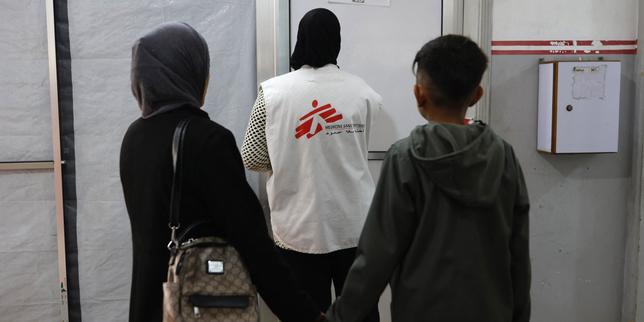
When organizations like Médecins Sans Frontières (MSF) use terms like "artificial," they imply a central valve that can simply be turned on. It is a seductive narrative. It suggests that a single policy shift or a signature on a piece of paper could end the caloric deficit in Gaza overnight. But anyone who has managed supply chains in high-friction environments knows that the "valve" theory is a fantasy. The reality is a grinding, multi-point failure of security, coordination, and internal distribution that would bankrupt any private logistics firm in forty-eight hours.
The Volume Fallacy
The press loves to count trucks. They treat the number of vehicles crossing a border as the sole metric of success. If 200 trucks enter, it’s a good day; if 50 enter, it’s a catastrophe. This is a junior-varsity way to analyze a famine.
In a theater of war, the border crossing is actually the easiest part of the journey. The real disaster begins three miles past the gate. You have a total breakdown of civil order, which means that aid is not "distributed"—it is "appropriated."
I have seen this play out in dozens of conflict zones. When you dump massive amounts of high-value commodities (food, medicine, fuel) into a vacuum where no police force exists, you aren't feeding the hungry. You are feeding the black market. The "malnutrition" observed by MSF is often not a result of a lack of calories entering the territory, but a result of those calories being hoarded by armed groups or sold at prices the average family cannot afford.
If we want to be honest, we have to admit that 500 trucks at the border mean nothing if the internal roads are controlled by gangs or if the "implementing partners" on the ground are too terrified to move the cargo.
The Calorie vs. Nutrient Trap
The competitor's piece focuses on the "artificiality" of the shortage. Let’s dismantle that. A shortage is only artificial if the supply exists and is being withheld for no tactical or security reason. In Gaza, the supply is often stalled because the delivery routes are active combat zones.
Furthermore, we are witnessing a classic "Calorie Trap." In emergency relief, agencies focus on bulk weight—flour, sugar, oil. These are easy to move and look great in a spreadsheet. But you can have a population with full bellies that is still dying of malnutrition.
- Micronutrient Washout: Chronic stress and poor water quality lead to malabsorption. You can pump someone full of carbohydrates, but if their gut biome is wrecked by untreated water, the nutrients never hit the bloodstream.
- The Cooking Paradox: Raw flour is useless without heat. In areas where fuel is scarce, a 50kg bag of flour is just a heavy pillow.
The humanitarian sector continues to ignore these granular realities because they are "messy." It is much easier to issue a press release accusing a state actor of "engineering" a crisis than it is to admit that the aid organizations themselves have no viable plan for cold-chain storage or secure neighborhood-level distribution.
Deconfliction is a Polite Word for Chaos
The "People Also Ask" sections on search engines often ask: "Why can't they just fly the food in?" or "Why is the aid blocked?"
The answer is "deconfliction"—a term that has become a bureaucratic death sentence. Deconfliction is the process where aid groups tell the military where they are going so they don't get shot. In theory, it’s a handshake. In practice, it’s a broken telephone.
The failure of deconfliction in Gaza isn't just a military failure; it is an information failure. You have NGOs using outdated GPS coordinates and military units operating on real-time intelligence that changes every twelve minutes. When a convoy gets stuck or hit, the NGOs cry "deliberate targeting" and the military cries "unauthorized movement."
The truth is usually the most boring option: incompetence on both sides. A lack of unified command and a refusal to share real-time data leads to "artificial" delays. If Amazon can track a package to your doorstep with meter-level accuracy, the fact that humanitarian convoys are still operating on 1990s-era radio protocols is an indictment of the entire industry.
The Myth of the "Man-Made" Monolith
Every crisis is man-made. Using the term as a pejorative against one side is a political tactic, not a medical diagnosis. When MSF claims the malnutrition is "artificial," they are stepping out of the clinic and into the parliament.
Consider the "Scenario of the Saturated Gate." Imagine a scenario where 1,000 trucks are cleared for entry tomorrow. Would the malnutrition end? No. The roads are cratered. The warehouses are non-existent. The local drivers are being hijacked. The "artificial" nature of the crisis is actually a structural reality of urban warfare.
By framing it as a simple act of "withholding," the international community avoids the hard work of building a protected, neutral logistics corridor. We are essentially asking for a miracle at the border while ignoring the rot in the interior.
Stop Counting Trucks, Start Measuring Absorption
If we want to actually solve this, we have to stop the obsession with "entry" and start looking at "absorption."
- Monetize the Aid: Instead of physical bags of grain that get hijacked, shift to digital transfers where possible. When people have buying power, the "artificial" scarcity created by the black market evaporates because the market stabilizes itself.
- Hardened Corridors: If the internal distribution is the bottleneck, the aid should be delivered via armored, neutral-party logistics—not soft-skinned civilian trucks that are targets for every desperate person or militant with a rifle.
- Water-First Strategy: Malnutrition is a water-borne illness as much as a food-borne one. Without a massive overhaul of the desalination and sewage infrastructure, every calorie we send in is being "washed out" by diarrhea and dehydration.
The MSF report is a classic example of a "virtue signal" masking a "structural failure." They are diagnosing the symptom and blaming the most convenient ghost. The malnutrition isn't "artificial"—it is the predictable, mathematical outcome of trying to run a medieval distribution system in a 21st-century war zone.
If the goal is to save lives, stop talking about "intentionality" and start talking about "infrastructure." Anything else is just noise for the evening news.
The trucks are there. The food is there. The "man-made" problem is that we have no way to get it from the gate to the plate, and we are too busy arguing about who to blame to build a better bridge.
Build the bridge or keep counting the dead. You can't do both.