Dirt gets into everything. It settles in the creases of your knuckles, stains the palms of your work gloves a permanent rust color, and cakes behind your teeth on a dry October afternoon when the wind comes tearing off the plains.
Most people look at a map of West Texas and see blank space. Yellowish parchment blocks marked with sparse county lines, punctuated by names that sound like old gunfights or dry creek beds. They see nothing. But a rancher looks at that same empty parchment and sees time. They see twenty years of drought, three generations of cattle, and a fence line that someone strung with cold fingers back when Grover Cleveland was in the White House. Meanwhile, you can find other developments here: Greenland Resource Hype Is a Trap That Will Bleed Capital Dry.
To understand how a patch of earth expands from a modest spread of 3,520 acres into a sprawling 29,071-acre empire before fetching a staggering $46.5 million, you have to stop looking at numbers on a spreadsheet. You have to stand out there where the sky feels heavy enough to crack your skull open, and listen to the wind talk.
The First Post
Acres are funny things. On paper, they look neat. Squares on a grid, inked by surveyors who measured the world with heavy iron chains and brass transits. On the ground, an acre is a mile of walking behind a stubborn bull, a hundred broken cedar posts, and a cattle guard that rattles every time a pickup bounces across it. To see the bigger picture, we recommend the excellent analysis by Harvard Business Review.
When the foundation of what would become the Y Bar O Ranch first took shape, nobody was thinking about forty-million-dollar price tags. They were thinking about water.
In that country, you don't own land; you own water rights and a license to worry. If a creek dries up in July, your cows don't care about your deed. They just stand by the dry tank and low until their throats sound like sandpaper. So, the early accumulation wasn’t about ego. It was about survival. You bought the forty acres next to you because the neighbor was quitting. You bought the quarter section down the draw because that’s where the artesian spring bubbled up through the limestone.
Bit by bit, the ranch grew. Not like a city with concrete pouring over the curbs, but like a tree sending roots down through hard pan, hunting for moisture.
Imagine riding a gelding across that country in the nineteen-sixties. The heat rises off caliche roads in shimmering waves that make distant windmills look like dancing spiders. Your thighs stick to the oiled leather of your saddle. Your canteen is warm and tastes faintly of tin and moss. You pass an old barbed-wire fence where the rust has eaten the barbs down to smooth brown needles. That fence represents someone’s ambition—or someone’s failure.
In the real estate business, they call it consolidation. In the cattle business, they call it staying alive. If you run a hundred head, a bad winter breaks you. If you run a thousand, you can absorb the blow of a freeze or a plague. Scale isn't just a corporate buzzword out here. Scale is armor.
The Quiet Math of Expansion
By the time the modern era rolled around, the Y Bar O wasn't just a collection of inherited pastures and handshakes over pickup tailgates. It had become a deliberate, calculated enterprise.
People who have never stepped foot on a working ranch often assume that land ownership is static. You buy it, you fence it, you sit on the porch and watch the grass grow. But land is an organism. It requires constant tending, constant feeding, constant sacrifice. To push a footprint from a few thousand acres to nearly thirty thousand requires a rare breed of operator. You need the patience of a stone mason and the ledger-sheet coldness of an investment banker.
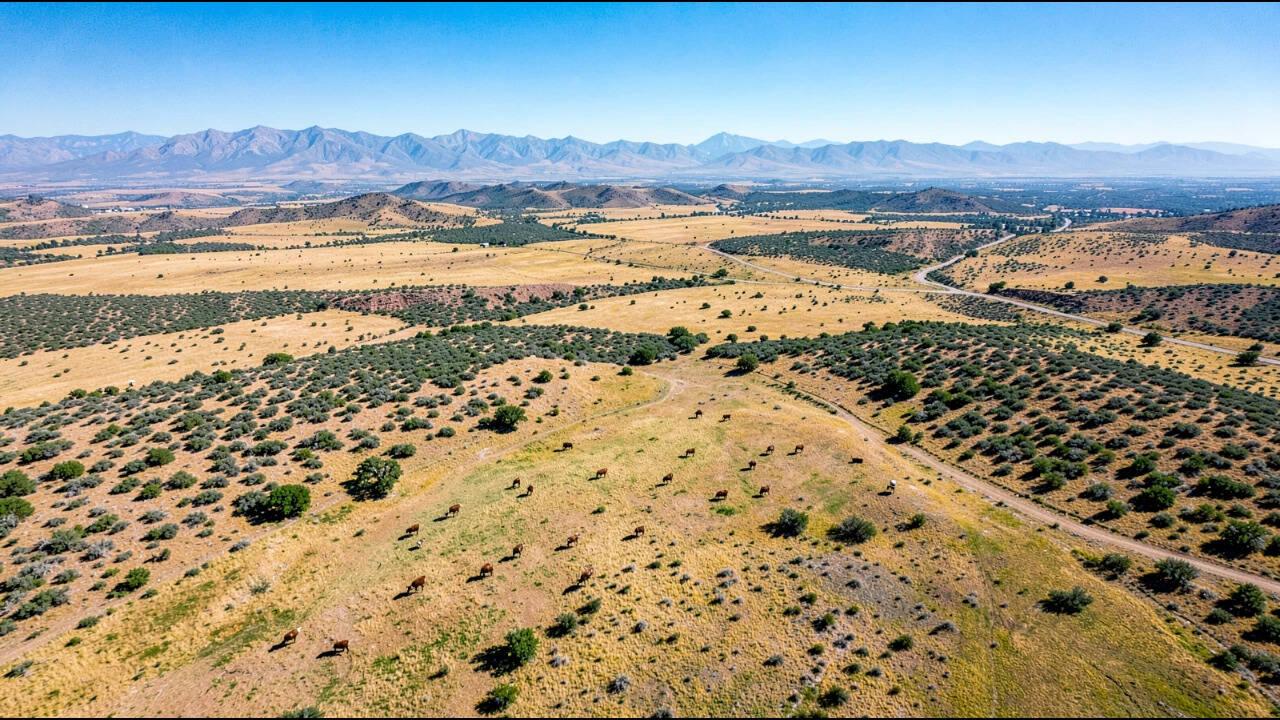
Let us be clear about what twenty-nine thousand acres actually means. That is not a backyard. That is an expanse so vast that you can watch a thunderstorm dump blinding sheets of rain on the north pasture while the south pasture sits under a brutal, blinding blue sky, baking in silence.
To pull that much acreage under a single brand takes decades of patience. It means waiting out old men who refuse to sell until their children move to Dallas and want nothing to do with the dust. It means buying out heirs who inherited probate headaches along with the cedar brakes. It means watching cattle prices plummet into the floorboards, wondering if the bank is going to call your note, and then buying the section next door anyway because you know cycles turn.
Everything in ranching runs on a terrifyingly long fuse. You plant a bull today, you see the calves next spring, you market the steers the year after, and you pray the market holds. Multiply that temporal vertigo by thirty thousand acres, and you begin to understand the sheer weight of management. You aren't just managing livestock; you are managing a living ecosystem that wants to turn back into mesquite scrub the moment you stop fighting it.
The Ledger and the Dust
Then came the sale.
$46,500,000.
Say it out loud. It sounds like phone numbers read by a drunk. To an outsider, that figure represents unimaginable wealth—a lottery win scaled up for folks in Stetsons. But walk with me through the logic of that number, strip away the Hollywood mythology of Texas oilmen, and look at the bare economic reality.
Land of that scale is priced by the carrying capacity. How many mother cows can graze without turning the pasture into a dust bowl? What is the status of the executive water rights? Are there mineral royalties whispering beneath the shale?
When a property like the Y Bar O trades hands at that price, it represents a changing of the guard that has been happening across the American West for a generation. The traditional rancher—the guy whose grandfather lost a thumb to a roping rope and whose grandmother baked bread in a wood-burning stove—is increasingly being replaced. Sometimes by syndicates. Sometimes by corporate funds looking for a hard asset that won't vanish when a stock market ticker flashes red. Sometimes by wealthy individuals who want a private kingdom where they can hunt white-tailed deer and escape the frantic noise of silicon boardrooms.
It is easy to look at that $46.5 million price tag and feel a pang of bitterness. You might think about the cowhand who spent forty years mending those fences for a modest weekly wage while someone else walked away with a generational fortune. And that feeling wouldn't be entirely wrong. There is a melancholy inherent in the commodification of dirt.
Yet, consider the alternative.
If the Y Bar O had been broken up—sliced into five-acre ranchettes with cute names like "Whispering Pines" where no pines grow—the deer would be gone. The wild turkeys would be pushed off their roosts by barking golden retrievers and backyard trampoline frames. The great sweep of open horizon would be chopped into little checkerboards of galvanized chain-link fencing and gravel driveways.
By keeping it whole, by wrapping twenty-nine thousand acres into a single transaction, the buyer—whatever their motives—preserved a fragment of old Texas. They bought a horizon that hasn't changed much since the Comanches rode across it.
The Final Gate
Drive past the entrance of the Y Bar O today, and the gate is likely locked with a heavy brass padlock. The cattle still graze down in the arroyos, indifferent to who holds the deed in some air-conditioned office in Houston or New York. A calf doesn't know the difference between a family dynasty and a private equity portfolio; it only knows where the greenest prickly pear cactus grows after a hard frost.
The dust settles back down on the caliche road after your truck passes. The windmills turn slowly in the afternoon updraft, squeaking a rhythmic, metallic song that has marked the passage of time for a century.
History out here isn't written in books. It is written in rust and wire, in the deep-set lines around an old man's eyes, and in the quiet, monumental price of a piece of earth that refuses to be forgotten.