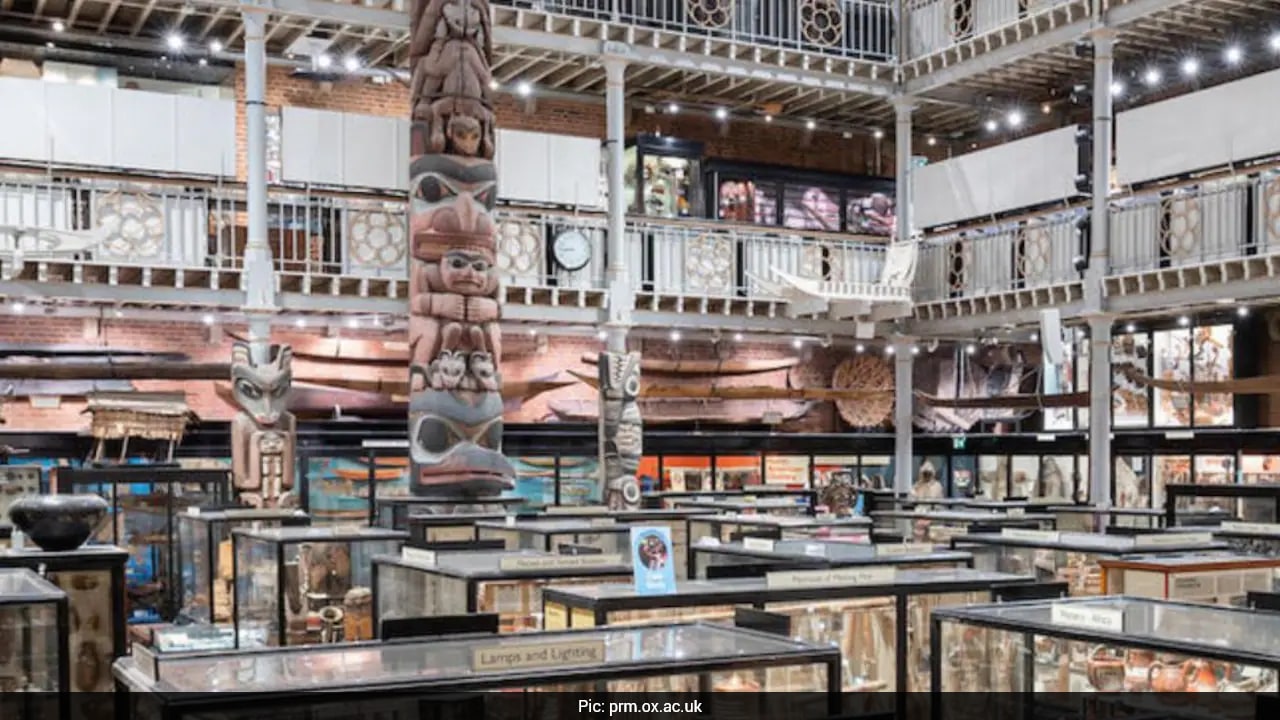
The University of Oxford Council has formally agreed to return the ancestral remains of 39 Naga individuals from the Pitt Rivers Museum back to northeast India. This milestone decision marks the conclusion of a rigorous six-year campaign spearheaded by the Forum for Naga Reconciliation (FNR) alongside the Recover, Restore and Decolonise (RRaD) initiative. For decades, these human remains—stripped from their homeland during the height of British colonial rule—sat cataloged as scientific specimens and museum curiosities. Now, the institutional machinery of Western academia is finally bending toward a profound cultural reckoning.
Bones do not speak for themselves. They require a living community to assign meaning, grief, and context to their silence. You might also find this connected coverage insightful: Inside the Strategic Fracture Threatening Israel From Within.
When British administrators, military officers, and anthropological collectors fanned out across the Naga Hills in the late nineteenth and early twentieth centuries, they operated under the convenient pretext of scientific inquiry. Human remains, cultural items, and sacred objects were seized under acute duress, wrapped in administrative paperwork, and shipped thousands of miles away to metropolitan repositories. At the Pitt Rivers Museum, these ancestors were stripped of identity, transformed into static exhibits or packed away in subterranean storage boxes.
The mechanics of this extraction were bureaucratic and thorough. Museums inherited inventories that sanitized theft under the guise of preservation. Western institutions long argued that these holdings functioned best inside world-class repositories, safe from regional instability and equipped with climate-controlled preservation technology. That paternalistic defense has eroded entirely. As highlighted in latest articles by The Washington Post, the implications are widespread.
Local leadership recognized that keeping ancestral bones locked away thousands of miles from their soil was an ongoing injury. Launched in 2021, the RRaD collective brought together historians, activists, and tribal elders to map out where their people's remains were scattered across foreign institutions. They discovered that the Pitt Rivers Museum alone held over two hundred Naga ancestral remains.
Negotiating with a collegiate institution like Oxford is rarely swift. It requires navigating layers of bureaucratic governance, legal constraints regarding trustee duties, and institutional inertia. Yet, pressure mounted. In 2020, the museum took a preliminary step by removing human remains—including trophy heads—from public display. That physical withdrawal signaled a shift in institutional conscience, paving the way for formal dialogue.
The formal request covered 40 sets of human remains. Following archival scrutiny, the university council approved 39 for repatriation, noting that one single specimen lacked definitive provenance linking it explicitly to the Naga community. That exclusion highlights the evidentiary hurdles built into repatriation frameworks, where communities must satisfy Western standards of proof for items taken from them by force.
This victory does not belong to standard diplomatic channels. It belongs to grassroots perseverance.
Repatriation is rarely a clean break. Dozens of other Naga remains still reside in institutions like the British Museum, Cambridge University's Museum of Archaeology and Anthropology, and other regional British collections. The 39 individuals returning home represent a fraction of a wider global diaspora of indigenous bones.
Logistical challenges remain stark. Representatives from various Naga tribe hohos and the FNR are preparing to travel to the United Kingdom to handle the physical handover. Simultaneously, back in Nagaland, local leadership including the Angami Public Organisation has been coordinating with the state government to secure a dedicated, dignified final resting place. This is not merely a reburial. It is the architectural reconstruction of communal memory.
The institutional pivot at Oxford demonstrates that old imperial archives are no longer untouchable fortresses. Museums face a structural choice. They can cling defensively to contested holdings, or they can transition into sites of historical repair.
Memory is returning to where it belongs. The crates will cross oceans, the soil of the Naga hills will receive its own, and a long chapter of colonial extraction will finally close.