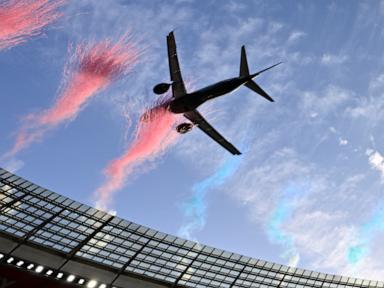
Commercial aviation operating parameters exist within a heavily regulated margin of safety designed to prevent structural failure, spatial disorientation, and catastrophic ground impact. When a national carrier executes a low-level flyby of a packed stadium prior to an international sporting fixture, the operation shifts from routine transport to an exhibition of high-energy kinetic management. Spectators perceive a dynamic spectacle of national pride, but aerospace safety analysts evaluate the event through a cold lens of risk probability, kinetic energy management, and regulatory compliance. The decision by a South African airline to execute a low-altitude pass over a rugby union stadium demands an examination of the operational trade-offs, aerodynamic constraints, and systemic accountabilities governing precision flight in constrained airspace.
The Operational Mechanics of Stadium Flybys
Executing a low-level transit over a ground-based crowd requires adherence to strict vertical and lateral separation thresholds. Standard commercial transport category aircraft possess mass inertia and turning radii that make low-altitude maneuvering inherently sensitive to localized micro-meteorology, wind shear off stadium architecture, and mechanical density altitude variations.
The primary physical constraint governing these maneuvers is kinetic energy relative to reaction time. A wide-body or narrow-body passenger aircraft descending below standard vectoring altitudes enters a regime where ground clutter, thermal updrafts from asphalt and concrete bowls, and visual illusions distort spatial awareness. Flight crews rely on specialized low-flying permits, which require pre-approved flight paths, minimum ceiling and visibility limits, and precise coordination with civil aviation authorities and air traffic management.
When public scrutiny focuses on the visual drama of the maneuver, aviation engineers look at the margin between normal operating limits and stall speeds in configurations that are non-standard for low-altitude flight. The mitigation of risk relies entirely on redundant crew resource management, pre-calculated performance margins, and strict adherence to absolute floor altitudes established during flight planning.
Regulatory Frameworks and Liability Architecture
Civil aviation regulations universally prohibit low-flying over congested areas unless specific operational exemptions are granted for public events, search and rescue, or emergency operations. The legal architecture supporting a stadium flyby requires a dual-track authorization process:
- Aeronautical exemption filings specifying exact coordinates, altitude blocks, and timing windows.
- Local municipal clearance guaranteeing ground-level pedestrian control zones and sterile airspace buffers.
The economic and reputational risk profile for the airline changes drastically upon public critique. If the maneuver remains within the legal boundary of the exemption, the defense typically cites precise execution by experienced captains utilizing flight management systems and visual cues. However, public perception often conflicts with technical safety margins. To an observer situated in the upper tiers of a stadium, an aircraft operating at legally compliant altitudes can appear alarmingly close, creating an optical illusion of proximity that distorts the actual physical separation vector.
The Economic and Brand Equity Equation
Sponsorship activations involving national flag carriers and premier sports teams operate on an exchange of brand equity. The airline leverages the cultural resonance of the rugby team to project reliability, strength, and national identity. The flyby serves as the physical manifestation of this partnership, translating corporate sponsorship into visceral sensory engagement.
The cost function of this marketing expenditure includes direct operating costs of fuel, crew allocation, air navigation service provider fees, and the opportunity cost of asset utilization. More critically, it introduces tail-risk exposure. A single deviation from flight parameters or an adverse meteorological shift introduces existential liability. Therefore, the strategic calculus requires balancing the marginal return on brand sentiment against the catastrophic downside risk of an aviation incident.
Strategic Outlook for High Visibility Aviation Marketing
Aviation authorities face increasing pressure to tighten constraints on public display flying due to evolving public risk tolerance and environmental considerations. Future events of this nature will likely see enhanced telemetry sharing, tighter geofenced flight paths, and increased utilization of augmented reality or drone alternatives for pre-match entertainment. Operators must calculate whether the diminishing returns of physical flybys outweigh the escalating regulatory compliance costs and public relations vulnerabilities inherent in low-altitude urban operations. The calculus moving forward requires institutionalizing a quantitative risk matrix that weighs visual marketing impact directly against the irreducible probability of operational failure in low-level flight corridors.