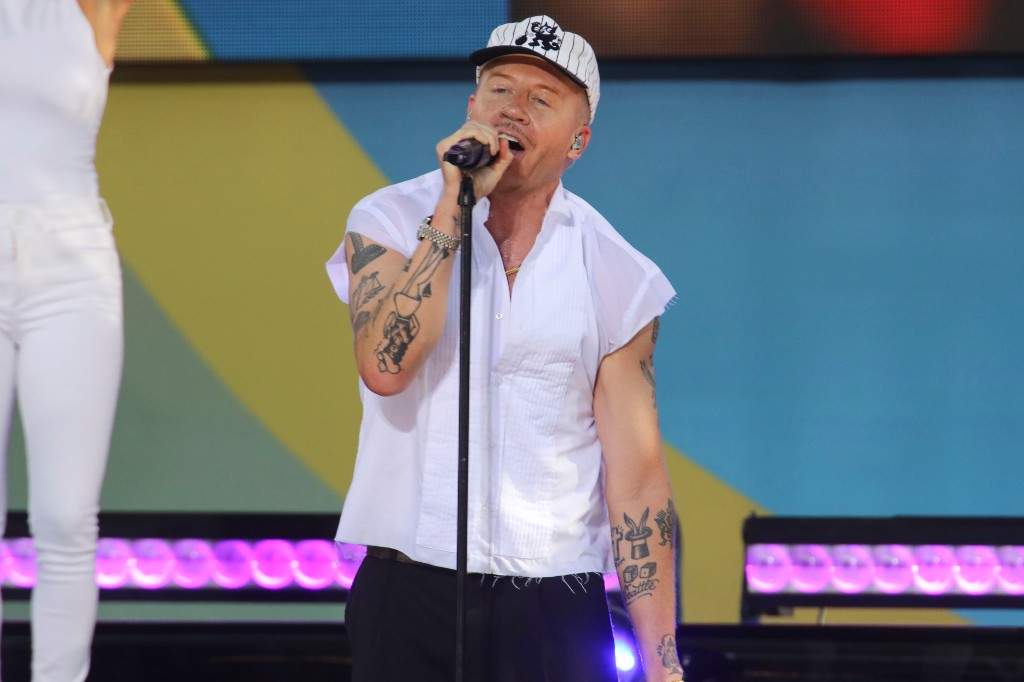
Getting dropped from a stadium tour doesn't usually end a musician's momentum. Sometimes it turns the volume way up.
When Macklemore announced his Free Palestine tour in late September 2026, he wasn't just booking consolation dates after getting cut from the U.S. leg of Ed Sheeran's Loop Tour. He was drawing a line in the sand over who gets to speak on major stages, what apolitical pop stars owe their audiences, and how much pushback artists face behind closed doors.
If you've been following the headlines, the whole sequence moved fast. Macklemore had been confirmed for Sheeran's Loop Tour in late August 2026, delivered a "Free Palestine" speech and performed "Hind's Hall" during a show at MetLife Stadium, and was soon out of the U.S. tour lineup—sparking solidarity exits from other openers, public friction with Sheeran, and a wave of arguments across music and politics.
How the Ed Sheeran Tour Fallout Unfolded
Most standard entertainment recaps stop at "rapper dropped from pop tour." That skips the mechanics of why this blew up into a broader industry fight.
Touring at the stadium and arena level is a giant machine. Promoters, venue owners, sponsors, and headliners all care about liability, ticket sales, and public relations. When Macklemore used his opening slot to call for a free Palestine and criticize U.S. policies and institutions onstage, the pushback hit almost immediately, including petitions calling for his removal from the bill.
Once he was out of the U.S. run, things snowballed. Opening acts including Aaron Rowe, Finneas, Lukas Graham, and Beoga stepped back in solidarity, while artists like Jack Antonoff and Roger Waters weighed in on Sheeran's handling of the situation. Sheeran, long known for keeping his public persona carefully neutral, found himself pressed from both sides—eventually calling the situation in Gaza "unjustifiable" at a subsequent show while dealing with protests outside venues and intense scrutiny over his silence.
Here's the part I've noticed whenever political speech collides with major pop tours: headliners rarely want to become the story. Sheeran wanted to sell out stadiums and sing songs; Macklemore wanted to use the mic he was handed. Those two goals clashed hard.
What Macklemore Said About Censorship and Neutrality
When Macklemore rolled out the Free Palestine tour on September 24, 2026, his message went straight at the business side of live music. He argued that staying apolitical during mass atrocities isn't an option anymore, and he framed his removal around wealthy power brokers trying to police what gets said from a stage.
He also pledged his $1 million tour salary from the Sheeran run toward Palestinian humanitarian aid, and stated that proceeds from the new shows would go to organizations supporting Palestinians. Even if you disagree with his politics, putting real money on the table changes how people read a statement. Fans can spot hollow PR moves a mile away, and donating a seven-figure payday sends a sharper signal than a social media graphic.
Inside the Free Palestine Tour Dates and Venue Pushback
The initial rollout of the Free Palestine tour focused on three European arena stops: Dublin's 3Arena on October 26, Paris's Accor Arena on October 29, and London's OVO Arena Wembley on October 30, 2026. Macklemore noted that details were coming together quickly and promised more artist announcements and U.S. dates down the road.
By early November 2026, though, a major wrinkle surfaced. Macklemore revealed that nine major U.S. arenas—naming spots like Madison Square Garden and Barclays Center in New York, Crypto.com Arena in Los Angeles, and Climate Pledge Arena back home in Seattle—turned him down once his team said the dates would be part of a Free Palestine tour.
That detail is huge, and honestly, it's where the story shifts from celebrity drama to venue gatekeeping. Venues reject bookings all the time for routing, holds, or financial reasons. When an artist publicly names major arenas and says the framing of the tour was the sticking point, it raises real questions about risk tolerance in live entertainment. At the same time, we only have Macklemore's account of those rejections, and venues don't always lay out every internal booking note in public.
Why European Arenas Came First
Starting in Dublin, Paris, and London made practical sense for a fast-moving tour announcement. European live markets have a long history of politically charged concerts and benefit shows, and routing three high-profile cities gave the tour immediate international weight.
Still, booking arenas on short notice is brutal. Production logistics, insurance, security, and routing have to line up fast. Even when tickets move quickly—as supporters highlighted after the initial European run—putting together a politically charged arena tour from scratch takes serious legwork.
The Bigger Debate Around Artists, Stages, and Accountability
If you're wondering why this story keeps pulling people back in, it's because there's no easy consensus on how musicians should handle global conflicts.
On one side, critics of political performances argue that concertgoers buy tickets for escapism and music, not lectures. Some also contend that certain slogans or speeches alienate parts of the crowd or oversimplify a deeply painful conflict involving heavy casualties on both sides since October 7, 2023. From a promoter's chair, fewer headaches usually looks safer.
On the other side, fans and fellow artists argue that big stages carry moral weight—and that staying silent isn't truly neutral when people are dying. Supporters pointed to things like a mural painted by Gazan artists Anne Redwan and Qusai al-Helo on a damaged building in Gaza City as proof that visibility matters to people living through the crisis.
Where do I land? I think audiences have every right to debate whether a pop concert belongs in geopolitical arguments. What bothers me is pretending silence has no cost or pretending venue gatekeeping doesn't shape what culture looks like.
Common Misconceptions About the Fallout
A few shortcuts in casual conversation have muddied what actually happened:
- Myth: Sheeran completely canceled his entire tour because of the backlash. Reality: While opening acts dropped out, protests occurred outside stops, and Sheeran faced heavy criticism and emotional moments onstage, he continued performing with a revised lineup and addressed Gaza directly at a show.
- Myth: Macklemore's streaming numbers tanked after the row. Reality: Reports covering the immediate aftermath noted noticeable streaming bumps for Macklemore and fellow openers who exited, rather than a collapse in listens.
- Myth: Every arena in North America is closed to him forever. Reality: Nine specific major U.S. arenas were cited as turning down dates framed around the tour, which is a serious hurdle—not a blanket ban on every independent room, festival, or future routing option.
How to Follow the Story and Vet Claims Like a Pro
Fast-moving music controversies get distorted fast on social feeds. Clips get cropped, quotes lose context, and partisan accounts fill in the blanks.
If you want to keep track of how the Free Palestine tour and the wider live-music debate play out:
- Read primary statements alongside independent reporting. Compare an artist's social post with coverage from outlets like The Guardian and Global News to separate claims from confirmed facts.
- Check humanitarian funding details. Whenever a tour ties itself to aid, look for clear information on which relief groups receive money and how funds are distributed rather than taking slogans at face value.
- Watch venue and routing announcements closely. Whether future dates land in smaller halls, independent spaces, or eventual U.S. stops will tell you a lot about how the live-music business adapts when politics hits the box office.