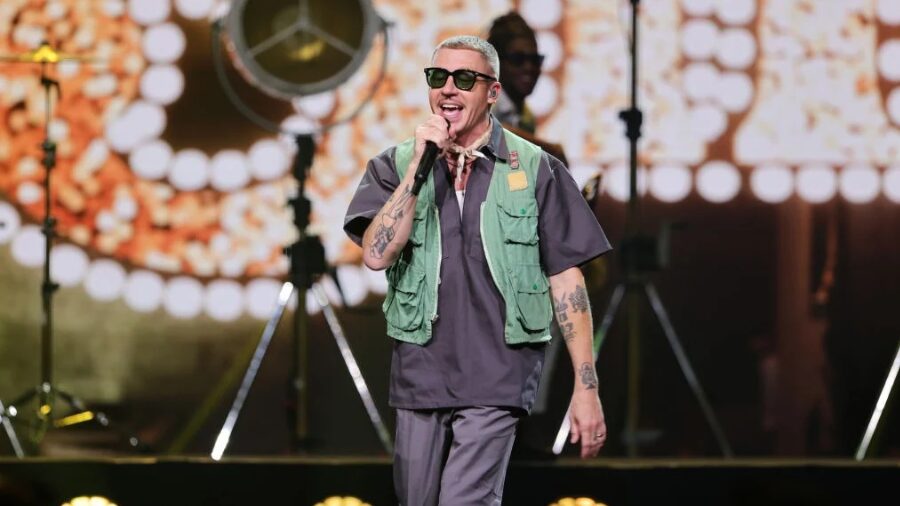
Music has always accommodated a comfortable distance between art and activism. Artists might wear a symbolic ribbon, drop a cautious line in a verse, or headline a charity benefit where the champagne flows freely afterward. It is a transactional arrangement that satisfies the listener's desire for moral validation while protecting the artist's commercial viability. Yet, every so often, a performer disrupts this equilibrium by refusing to keep their convictions safely quarantined from their bottom line.
Macklemore has chosen to occupy this turbulent space. Following the cancellation of his performance in Germany due to his outspoken advocacy for Palestinian rights and subsequent friction surrounding major touring markets, the artist finds himself at the center of a very modern collision between global politics and the live entertainment industry. While mainstream outlets frame these developments as isolated booking disputes or sudden tour dismissals, the reality points to a systemic shift in how the international music business manages ideological dissent.
The mechanics of modern touring leave very little room for political friction. When an artist announces a massive global outing, millions of dollars in insurance, venue guarantees, promoter stakes, and corporate sponsorships hang in the balance. Promoters operate in risk-averse ecosystems. They view controversy not as a badge of honor, but as a liability that threatens ticket sales and corporate partnerships. When Macklemore launched his independent initiatives and vocal stances regarding the conflict in Gaza—including releasing politically charged tracks and addressing crowds directly from the stage—he did not just make a statement. He introduced a volatile risk factor into a tightly choreographed commercial machine.
This commercial anxiety explains the friction with major promoters and venues across Europe and beyond. Venues are frequently tied to municipal authorities, corporate conglomerates, or institutional boards sensitive to geopolitical blowback. When political pressure mounts from local interest groups, city councils, or civic organizations, promoters rarely dig in their heels to defend an artist's freedom of expression. Instead, they calculate the potential cost of security threats, public relations storms, and legal disputes, choosing cancellation as the path of least resistance.
Yet, treating Macklemore as a lone casualty misses the broader industry transformation. The friction he faces highlights a growing ideological polarization within cultural spaces. For years, the pop music industry functioned on the premise of universal appeal. Artists aimed to offend no one and embrace everyone to maximize streaming numbers and arena attendance. By taking an uncompromising stance on a deeply polarizing international issue, Macklemore shattered that illusion. He proved that an artist can no longer thread the needle of neutral ubiquity once they step firmly onto the terrain of geopolitics.
The fallout extends far beyond cancelled dates in specific European cities. It forces a reckoning among fans and industry insiders alike about the true price of artistic independence. Independent artists often champion their freedom from major label censorship, yet the physical infrastructure of global touring remains heavily centralized. Without the protective backing of a monolithic promoter willing to absorb reputational shocks, independent-minded acts find themselves vulnerable to localized pushback and shifting political tides.
Critics of the rapper argue that musicians should stick to music, contending that geopolitical complexities cannot be adequately addressed through stadium chants or emotionally charged rap verses. They suggest that political grandstanding alienates large segments of an audience that looks to entertainment as an escape from the relentless misery of global conflict. From this perspective, the tour dismissals are simply the free market reacting to an artist who misjudged his audience's appetite for sermonizing.
Conversely, supporters view his willingness to absorb financial and professional blows as a rare form of authenticity. In an era where corporate safetyism dictates almost every move a celebrity makes, speaking out against the grain carries a tangible cost. When an artist loses lucrative bookings, faces intense public scrutiny, and risks alienating key booking agents, their convictions are tested beyond the safe confines of social media posts. Whether one agrees with his specific geopolitical positions or finds them simplistic, the refusal to recant under professional pressure distinguishes his approach from standard pop-star activism.
The international touring market will continue to tighten its parameters around political discourse. Promoters and venue owners are learning to preemptively filter out artists whose public profiles threaten administrative calm. This creates a chilling effect across the industry, where rising acts observe the professional penalties levied against those who speak out and adjust their own public postures accordingly. Compliance becomes the safest career strategy.
Macklemore's current trajectory illustrates the heavy gravity of that compliance culture. He has traded the frictionless ascent of mainstream pop stardom for the unpredictable terrain of contested performance spaces. As the music industry navigates an increasingly fractured geopolitical landscape, the questions raised by these cancellations will only multiply. Artists can attempt to separate their art from their politics, but when the world refuses to let them look away, the choices they make will permanently alter their careers. The stage remains open, but the ticket to perform on it has never been more expensive.


