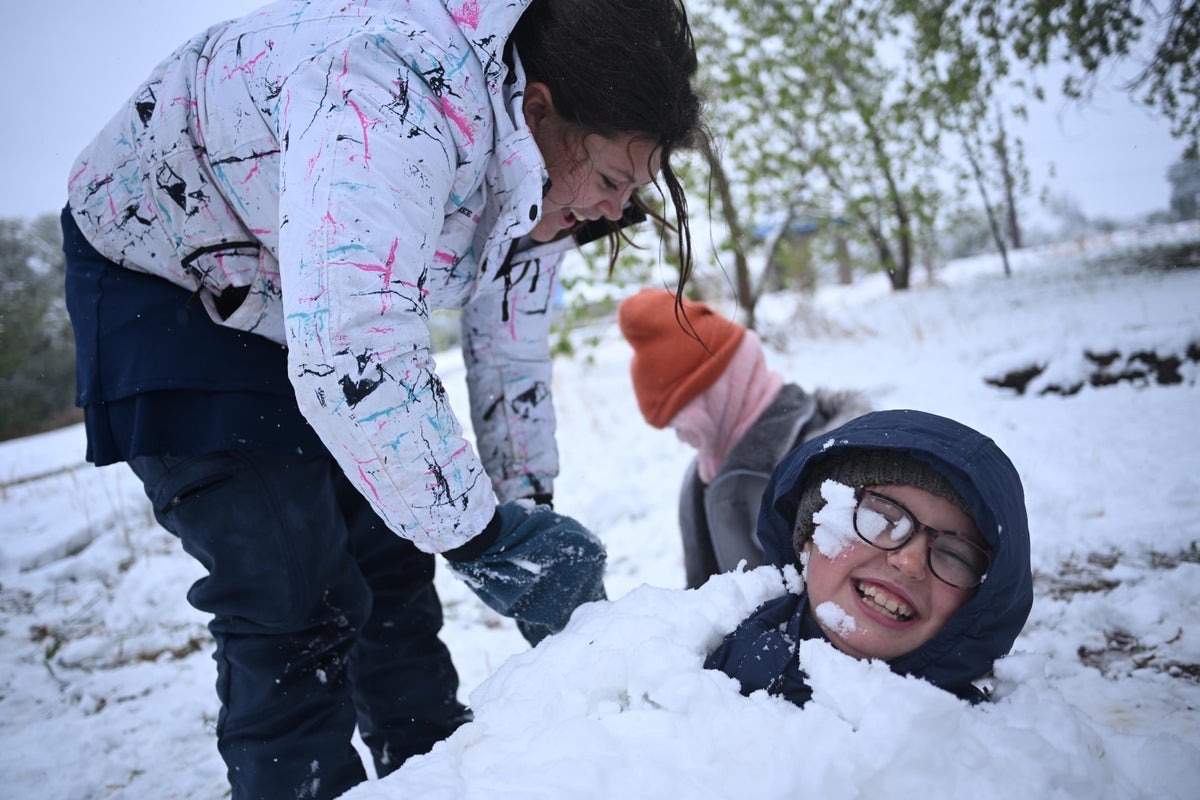
The convergence of a high-pressure block and a stalled cold front has transformed Colorado’s typical spring transition into a sustained winter extension. While anecdotal reports focus on the novelty of May snowfall, the real narrative lies in the intersection of hydrological stability, local economic resilience, and the specific geographic mechanics that dictate these anomalies. This is not merely a weather event; it is a vital replenishment of the Colorado River Basin's natural reservoir system, impacting everything from agricultural futures to the operational life cycles of high-altitude resorts.
The Hydrological Multiplier Effect
The Colorado snowpack functions as a massive, decentralized battery for the Western United States. Unlike rain, which results in immediate runoff and potential soil erosion, late-season snow provides a slow-release mechanism for moisture.
Delayed Sublimation Cycles
In early May, solar radiation increases significantly. However, a fresh layer of high-albedo snow reflects a substantial percentage of this energy back into the atmosphere. This creates a feedback loop:
- Reflectivity: Fresh snow reflects up to 90% of solar radiation.
- Thermal Insulation: The new layer insulates the denser, older "depth hoar" underneath, preventing premature melting.
- Soil Infiltration: Because the ground is not yet baked hard by summer heat, the gradual melt permeates the soil more effectively, recharging groundwater aquifers rather than flowing into drainage systems as surface runoff.
This specific timing is critical. Early spring melt often leads to "peak flow" occurring before agricultural demand hits its zenith in July and August. A May snowpack shifts the hydrograph, ensuring that peak runoff aligns more closely with peak demand from downstream users in the Imperial Valley and the Front Range urban corridor.
The Micro-Economics of the Shoulder Season
Traditionally, May is the "mud season" for Colorado mountain towns—a period of economic contraction where hospitality occupancy rates plummet. The current meteorological shift has inverted this trend, creating a rare secondary peak in consumer activity.
Operational Leverage in the Ski Industry
For the limited number of resorts still operating, such as Arapahoe Basin and Winter Park, late-season snow represents pure margin. The fixed costs of infrastructure—lifts, base lodges, and staff housing—are already sunk for the season.
- Variable Cost Efficiency: Natural snow eliminates the high electricity and labor costs associated with industrial snowmaking.
- Yield Management: High-density snow attracts "pass holders" who spend on high-margin ancillaries like food, beverage, and retail, which typically dry up by late April.
The Opportunity Cost of Logistics
While the recreation sector gains, the municipal sector faces unbudgeted expenses. Snow removal budgets are usually calculated on a fiscal year ending in April.
- Asset Depreciation: Road salt and chemical de-icers accelerate the oxidation of infrastructure and private vehicles.
- Labor Reallocation: Municipal crews intended for spring road repair or landscaping must be redirected back to plowing operations, delaying critical infrastructure maintenance schedules.
Atmospheric Mechanics of the May Surplus
To understand why Colorado is currently buried while the rest of the country moves toward summer, one must analyze the "Omega Block" configuration. This occurs when a high-pressure system is sandwiched between two low-pressure systems, resembling the Greek letter $\Omega$.
This stall pattern traps cold air over the Southern Rockies. The high-altitude geography of the state—specifically the "Front Range Squeeze"—forces moisture-rich air from the Gulf of Mexico to rise rapidly as it hits the mountains (orographic lift). The cooling that occurs during this ascent forces the moisture to crystallize, resulting in the heavy, "wet" snow characteristic of May in Colorado. This moisture profile, often referred to as "Sierra Cement," has a high water-to-snow ratio, making it far more valuable for drought mitigation than the light, "cold smoke" powder found in January.
Risk Assessment and Ecological Impact
The benefits of a late snowpack are balanced by specific structural risks that can destabilize the local ecosystem if the temperature shifts too rapidly.
The Threat of "Rain-on-Snow" Events
The primary danger of a deep May snowpack is a sudden atmospheric river event. If warm rain falls on top of this uncompacted snow:
- Mass Loading: The snow absorbs the rain, increasing its weight exponentially.
- Thermal Transfer: Rain transfers heat to the snowpack much faster than air does.
- Flash Flooding: The resulting melt can exceed the capacity of riverbanks and culverts, leading to catastrophic downstream flooding.
Biological Stasis
For local flora and fauna, this weather serves as an evolutionary filter.
- Delayed Phenology: Plants that have already begun their budding cycle face frost damage, which can decimate the fruit crop in the Western Slope regions (e.g., Palisade peaches).
- Ungulate Survival: High-elevation snow prevents elk and deer from accessing early-season grasses, forcing them to remain in lower-elevation valleys where they are more prone to vehicle collisions and predation.
Analyzing the Drought Mitigation Buffer
The United States Drought Monitor has historically shown significant volatility in the Colorado River Basin. A heavy May snowpack acts as a "buffer asset" against a dry summer. By keeping the soil moisture levels high through June, the state reduces the "priming" required for the summer monsoon. In drier years, the first few weeks of monsoon rain are entirely absorbed by parched soil; in years with May snow, that rain can immediately contribute to reservoir levels in Lake Powell and Lake Mead.
Strategic Direction for Stakeholders
Property owners and local municipalities must shift from a "seasonal" mindset to a "volatility" mindset. The current conditions suggest that the traditional May 1st "switch" from winter to spring operations is an outdated model.
Investments should be prioritized in:
- Permeable Infrastructure: To handle the high-volume melt-off and prevent erosion on mountain grades.
- Adaptive Labor Contracts: Moving away from fixed-date seasonal hiring toward "on-call" structures that can capitalize on late-season snow events.
- Micro-Grid Reliability: Late-season heavy snow is the primary cause of line-snaps and power outages due to the weight of the snow on budding trees. Undergrounding power lines in high-density mountain corridors is the only long-term mitigation strategy for this recurring risk.
The strategic play for Colorado is to institutionalize this late-season moisture as a core component of its water management strategy rather than treating it as a meteorological fluke.