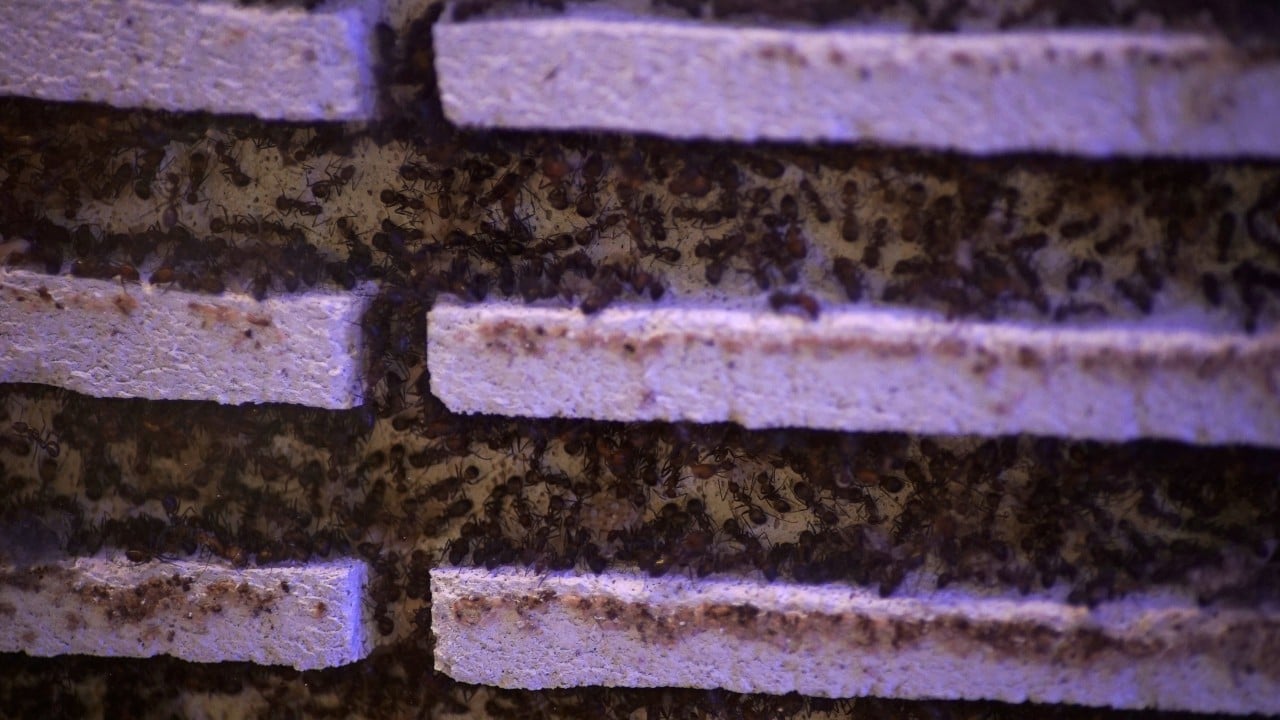
The seizure of 2,238 ants from a Chinese national at Jomo Kenyatta International Airport (JKIA) is not an isolated breach of customs but a data point in a sophisticated, high-margin arbitrage market. While large-scale charismatic megafauna trafficking—ivory, rhino horn, and pangolin scales—commands the majority of enforcement resources, the emergence of invertebrate smuggling represents a shift toward low-mass, high-value biological assets. This trade operates on a fundamental imbalance: the biological diversity of the East African Rift Valley serves as the supply, while the burgeoning "exotic pet" and "scientific specimen" markets in East Asia provide the demand.
The illicit movement of these insects is governed by three primary structural drivers: Regulatory Asymmetry, Arbitrage Potential, and Logistical Low-Visibility.
The Logistics of Invertebrate Arbitrage
Traditional smuggling involves heavy, detectable volumes. In contrast, 2,238 ants can be transported in a space no larger than a standard carry-on bag. The specimen-to-volume ratio allows traffickers to bypass standard thermal imaging and canine detection units optimized for organic decay or gunpowder.
The value chain of a single Camponotus (carpenter ant) or Polyrhachis (weaver ant) colony from Kenya scales exponentially upon reaching the Chinese market. A queen ant, the reproductive engine of a colony, can fetch between $200 and $500 depending on the rarity of the subspecies and the perceived difficulty of its captive husbandry. By capturing over 2,000 specimens, the individual in question was likely attempting to establish a "founder population" or a commercial distribution hub within the massive underground ant-keeping hobbyist community in China.
The Cost Function of Ecological Displacement
The removal of 2,238 ants from a localized ecosystem involves more than just the loss of individuals; it is the extraction of ecological services. Ants function as "ecosystem engineers" through several specific mechanisms:
- Pedogenesis (Soil Formation): Through tunneling, ants aerate soil and facilitate the infiltration of water, directly impacting the primary productivity of Kenyan grasslands.
- Seed Dispersal (Myrmecochory): Many indigenous African plant species rely on ants to transport seeds to nutrient-rich underground chambers.
- Nutrient Cycling: Ants are the primary processors of organic waste, converting dead matter into nitrogen and phosphorus accessible to flora.
When traffickers target specific "high-aesthetic" species, they create a localized vacuum. The removal of a dominant ant species can lead to a "trophic cascade" where herbivorous insects, previously controlled by ant predation, proliferate and damage local agriculture. The economic cost of replacing these natural services with chemical fertilizers or pesticides far outweighs the localized profit generated by the smuggler.
Biosecurity Risks and Pathogen Transfer
The movement of 2,238 ants across borders represents a significant biosecurity threat known as Invasive Species Introduction. If these ants were to escape or be intentionally released into a non-native environment, they could become an "Invasive Alien Species" (IAS).
The biological success of an invasive ant colony is defined by Unicoloniality. In their native range, ant colonies of the same species often fight for territory. In an invasive range, they may lose this aggression, forming "super-colonies" that span hundreds of kilometers, out-competing all native fauna and devastating local biodiversity.
Furthermore, the risk of "pathogen spillover" is high. Ants carry mites, fungi, and viruses. Transporting them without quarantine protocols introduces these biological agents to new environments where native species have no evolved immunity. This creates a high-probability risk for agricultural collapse if the introduced pathogen affects pollinators like honeybees.
Enforcement Gaps at JKIA
The JKIA seizure highlights a critical failure in current biodiversity protection frameworks. The Kenya Wildlife Service (KWS) and the Kenya Plant Health Inspectorate Service (KEPHIS) operate under statutes often designed for larger animals or bulk agricultural products.
The "Invisibility of the Small" creates a bottleneck in enforcement. Customs officers are trained to look for tusks and skins. The detection of 2,000+ insects requires a transition from visual inspection to High-Resolution X-Ray Analysis and the integration of AI-Driven Pattern Recognition in luggage scanning. Current algorithms are calibrated to identify the density of metals (weapons) or specific organic shapes (bottles, fruit). They are not currently optimized to detect the granular density signatures of small glass or plastic vials used to house insects in damp cotton.
The Economic Incentive of the "Ant-Keeping" Industry
The rise in ant smuggling is fueled by the digitalization of the hobby. Online marketplaces and social media groups have globalized the demand for "exotic" queens. In China, the "pet economy" has moved beyond traditional mammals into "niche invertebrates."
This market is characterized by Information Asymmetry. Buyers often do not know—or choose not to know—the legal status of their purchase. The trafficker at JKIA was likely a "middle-tier" operative, tasked with the physical extraction of the resource to fulfill pre-orders or speculative demand in the Shanghai or Beijing markets.
Strengthening the Biosecurity Perimeter
To mitigate the rise of invertebrate trafficking, the strategy must shift from reactive seizures to proactive structural deterrents.
- Legislative Recalibration: Penalties for wildlife trafficking must be indexed to "potential ecological damage" rather than the physical size of the animal. Smuggling 2,000 ants should carry legal weight comparable to smuggling a high-value mammal due to the invasive species risk.
- Digital Intelligence: Intelligence agencies must monitor the "clear web" and "dark web" forums where specific African species are requested. Identifying demand spikes allows for targeted surveillance of travelers arriving from high-biodiversity zones.
- Cross-Agency Interoperability: KWS and customs must share a unified database of "high-risk biological signatures." This ensures that when a suspicious container is found, it is immediately identified as a biological asset rather than discarded as a low-value commodity.
The capture of 2,238 insects is a warning. It signals that the next frontier of wildlife crime is microscopic. The global community must recognize that the extraction of a queen ant is as strategically significant as the poaching of a rhinoceros; both are essential components of a complex, fragile system that, once broken, cannot be easily repaired.
Increase investment in automated sensor fusion at major transit hubs to identify low-mass organic anomalies.