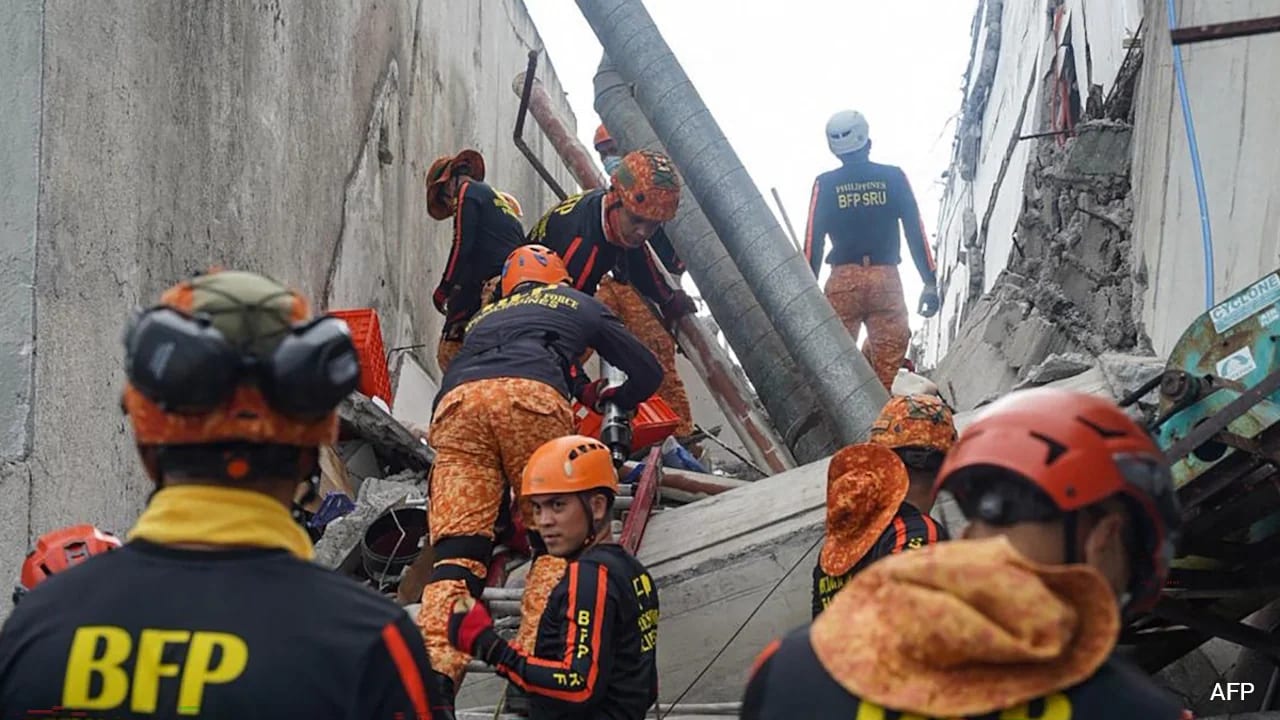
The ground shifted violently beneath the southern coast of Mindanao, and in less than two minutes, decades of assumptions about structural safety crumbled.
A massive magnitude-7.8 earthquake has struck off the coast of Maasim, Sarangani. The numbers coming out of the disaster zone are grim. At least 41 people are dead, over 480 are injured, and more than 22,000 residents are completely displaced.
But behind those sterile statistics lies a chaotic reality on the ground. This isn't just a story about a natural disaster. It's a vivid demonstration of how quickly modern infrastructure fails under real tectonic pressure. If you want to know what the immediate aftermath of a true disaster looks like, look no further than the makeshift medical zones currently operating under a brutal tropical sun.
Medics Forced into the Sun
Hospitals are supposed to be sanctuaries during a crisis. Instead, they became liabilities.
Fearing total structural failure after the main shock, municipal engineers condemned multiple medical facilities across the region. In Glan municipality, a hospital severely damaged by the shaking evacuated more than 60 patients directly onto the streets. Nurses and doctors moved beds onto lawns and asphalt because staying inside meant risking burial under falling concrete.
Imagine trying to manage complex trauma or run an emergency triage center in the middle of a parking lot. At an outdoor facility just outside General Santos City, medical teams had to set up a makeshift screen to assist a young mother in active labor. She gave birth to her child on a mattress under a scorching sun, surrounded by the ambient noise of a disaster zone.
That's the kind of raw grit required when a community's frontline defenses are rendered unusable. People like Lourdes Camia, whose brother-in-law was being treated outside for a heart attack, told local reporters that even with the heat, going back inside wasn't an option. The walls are visibly cracked. When you can see through the structural columns of a building, you stay outside.
Cut Off by Landslides and Broken Bridges
The situation gets worse when you look at the map of Sarangani province. Rescue teams aren't just dealing with collapsed buildings; they're dealing with total isolation.
The earthquake triggered catastrophic landslides that buried homes, including a single slide in Glan that claimed at least 13 lives. Simultaneously, the violent shaking ripped through regional transit lines, destroying 19 roads and collapsing nine crucial bridges. The infrastructure damage is already estimated at over 900 million pesos ($14.6 million).
Right now, multiple remote communities are completely cut off from land-based aid. Emergency workers estimate it will take at least a week just to clear enough debris or establish temporary bypasses to reach these areas by truck. Until then, the only way in or out is by helicopter.
Compounding the problem is an unprecedented seismic tantrum from the Sarangani fault line. State seismologists at Phivolcs have already logged more than 1,100 aftershocks. Twenty-three of those tremors were strong enough to be felt by terrified residents, with some hitting magnitudes as high as 6.7.
Every time the ground rolls, rescue operations halt. Regional civil defense chief Rodrigo Sosmena acknowledged that rescuers are moving with extreme caution. You can't send search teams into a unstable, half-collapsed grocery store when a major aftershock could flatten the remaining structure at any second. In General Santos, search dogs are currently picking through the mangled steel and concrete of a collapsed commercial building where two employees remain trapped. Local crews admit the mission has grimly shifted from a rescue operation to a recovery effort.
The Failure of Commercial Structures
This disaster has exposed massive vulnerabilities in commercial and educational infrastructure. While the early tsunami warnings sparked panic and forced thousands to flee toward high ground in both the Philippines and Indonesia, those maritime alerts were luckily canceled by midday. The real danger wasn't the ocean; it was the built environment.
Videos verified across social media show a modern shopping center housing a major Jollibee restaurant in General Santos completely pancaking. In another locality, an entire school building crumpled into dust. Footage from a separate school showed young children screaming and clinging desperately to their teachers as the ground whipped back and forth, toppling nearby steel structures.
While that specific school structure was empty at the exact moment of collapse, the Department of Education has reported that 1,159 classrooms across 231 public schools suffered severe damage. Had this quake struck during peak classroom hours, the death toll would be exponentially higher.
The recurring nature of these events makes the damage unacceptable. This same region of Eastern Mindanao was hit by 7.4 and 6.7 magnitude quakes just last October. The earth is telling us exactly where the weak points are.
Next Steps for Survival and Local Relief
If you want to help or if you're trying to navigate the immediate aftermath of this disaster, stop waiting for standard institutional responses. The local systems are overwhelmed. Take these immediate, practical steps.
- Rely on Satellite and Intact Tech: While major roads and bridges are gone, the Department of Information and Communications Technology reports that most telecommunications infrastructure is actually functioning. Use lightweight text alerts or low-bandwidth emergency check-in features on social platforms to keep lines open for emergency services.
- Support Local Air-Drop Initiatives: Because communities are cut off by collapsed bridges, coordinate donations exclusively with groups that have direct supply pipelines to the Philippine Air Force or certified private helicopter networks operating out of GenSan Airport. Material aid stuck in a warehouse in Davao won't save someone in an isolated Sarangani village.
- Examine Structural Integrity Personally: If you are returning to a home or business anywhere in southern Mindanao, do not assume a building is safe just because it's standing. Look for diagonal cracks in concrete columns, shifting floorboards, or signs of soil liquefaction, like mud spurting up through tiles, which casino worker Eduardo Gutierrez Jr. reported experiencing firsthand before his apartment row began to sway. If you see these signs, vacate immediately. The aftershocks are projected to last for more than a month.