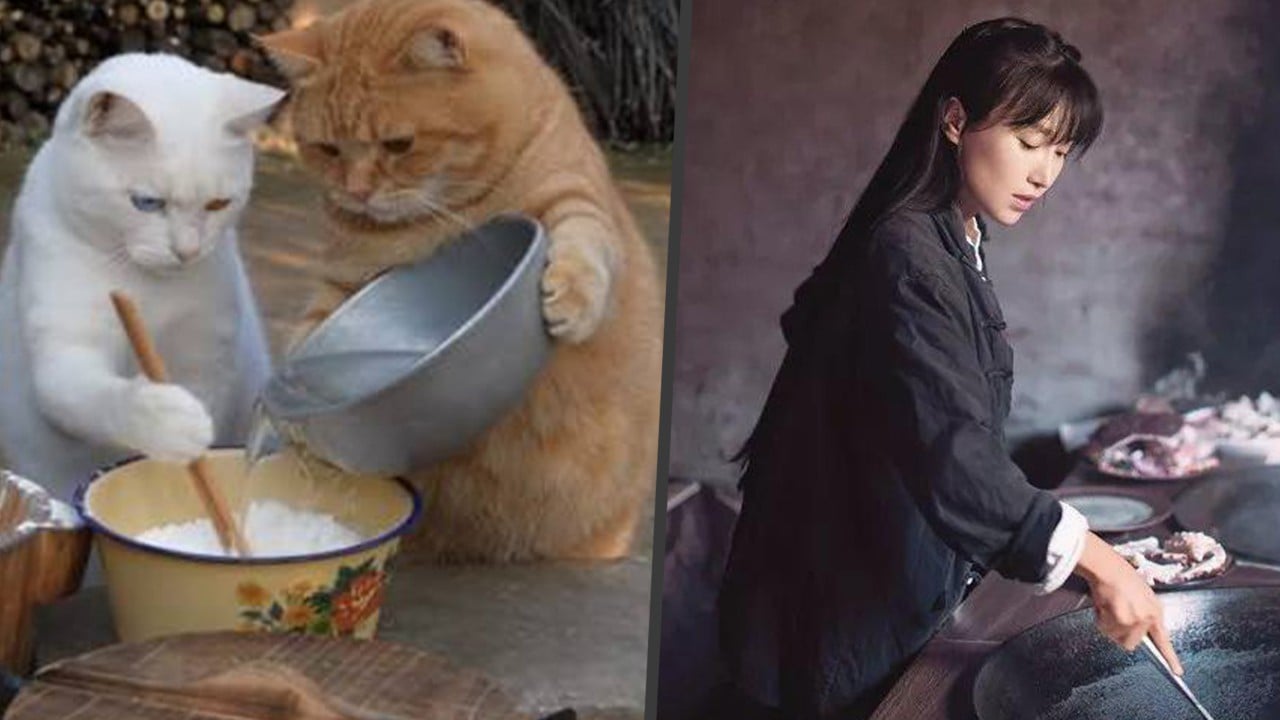
Major consumer brands are pouring marketing budgets into synthetic influencers, specifically AI-generated cats showcasing rural life and Chinese cuisine, because these virtual creators deliver massive global engagement without the financial liability, creative friction, or PR scandals of human talent. On platforms like Douyin, TikTok, and Xiaohongshu, hyper-realistic felines wearing traditional aprons while chopping vegetables over wood-fired stoves regularly pull in tens of millions of views. For corporate marketing directors, these digital animals represent the ultimate predictable asset—a brand-safe vessel that requires no contracts, demands no creative control, and never wakes up to post an offensive tweet.
This is not a passing internet novelty. It is a calculated restructuring of the creator economy. Over the last twenty years of covering digital media, I have watched brands migrate from print to television, from banner ads to human influencers, and now to synthetic archetypes. Every shift is driven by the same corporate desire to lower customer acquisition costs while eliminating human unpredictability. When a plush, wide-eyed tabby carefully plates hand-pulled noodles in a sunlit village courtyard, it triggers an immediate neurological response in viewers while quietly dismantling the bargaining power of human content creators.
The Anatomy of a Synthetic Sensation
To understand why these accounts are capturing corporate ad spend, you have to look at the mechanics of algorithmic retention. Human food and lifestyle creators rely on personality, storytelling, and pacing. An AI-generated cat preparing traditional regional dishes relies on pure sensory compression.
The visual formula is remarkably consistent across the top-performing accounts. Creators use advanced image-to-video diffusion models to render anthropomorphic cats with ultra-detailed fur textures, seated at rustic wooden tables in idyllic rural settings. Steam rises realistically from bamboo steamers. Knives slice cleanly through bright green scallions. The lighting mimics the golden hour of a quiet countryside afternoon, borrowing heavily from the aesthetic grammar established by real-life rural lifestyle pioneers like Li Ziqi.
Watch time on these clips is unusually high. Viewers linger not just because the animals are cute, but because the brain instinctively scans the frame for visual artifacts—a sixth toe on a paw, a melting chopstick, or an impossible physics interaction with boiling broth. That micro-scrutiny translates directly into retention metrics, which platform algorithms reward with exponential distribution.
Cultural Portability Without Translation
Human creators hit a hard ceiling when crossing linguistic and cultural borders. A chef speaking Mandarin or English requires subtitles, cultural context, and an audience willing to engage with a specific human persona.
An animated cat cooking dumplings requires zero translation. The visual language of comfort food paired with domestic animals bypasses regional barriers entirely. A viewer in Tokyo, São Paulo, or Frankfurt understands the emotional beat within two seconds. For multinational brands selling kitchenware, packaged sauces, or consumer electronics, sponsoring a single synthetic account offers simultaneous reach across Asian and Western social feeds without the cost of localized ad campaigns.
Why Corporate Marketing Teams Prefer Algorithms Over Talent
Ask any brand manager who has run a seven-figure influencer campaign, and they will tell you the same thing off the record. Managing human talent is an operational nightmare. Creators miss deadlines, push back on talking points, inflate their rates mid-negotiation, and occasionally implode in public view, forcing companies into expensive crisis management.
Synthetic creators strip out every single one of those variables.
- Zero Reputational Risk: An AI cat will never get caught in a tax evasion scandal, express a controversial political opinion, or alienate a core demographic. In markets where a single misstep by a celebrity endorser can wipe out millions in market value overnight, brand safety is worth more than authenticity.
- Total Creative Dictatorship: When a brand sponsors a traditional food blogger, the creator insists on maintaining their "authentic voice," often burying the product mention in the final ten seconds of a three-minute video. With a synthetic account, the studio behind the avatar can render the sponsor's exact rice cooker, soy sauce bottle, or induction stove directly into the center of the frame, seamlessly integrated into the narrative arc of the meal.
- Infinite Scalability: A human creator can film, edit, and publish maybe three high-production cooking videos a week before burning out. A small team utilizing generative video workflows can output localized variations of the same viral concept daily, testing different products, camera angles, and emotional hooks in real time.
Consider a hypothetical scenario involving a major condiment manufacturer launching a new chili oil. Hiring a top-tier human culinary creator might cost fifty thousand dollars for a single integrated post, require four weeks of back-and-forth script approvals, and yield a video locked into one language. Partnering with the studio operating a viral AI cat channel costs a fraction of that fee, takes four days from concept to upload, and allows the brand to place the jar right next to the cutting board while the cat wipes away a tiny tear from the spice.
The Economics Behind the Curtain
The public likes to imagine these accounts are run by lone hobbyists tinkering on home computers. In reality, the most lucrative channels are operated by agile digital media studios and multi-channel networks (MCNs) that treat generative AI as an industrial assembly line.
Production costs for these videos have collapsed. Eighteen months ago, generating thirty seconds of coherent, artifact-free video required massive compute power and tedious frame-by-frame manual cleanup. Today, subscription access to commercial video generation tools, paired with basic audio design software for the ASMR-style chopping and sizzling sounds, puts the hard production cost of a viral clip well below a hundred dollars.
Yet the sponsorship rates these accounts command mirror those of mid-to-upper-tier human influencers. Because their engagement rates and raw view counts routinely outperform human lifestyle accounts, studios can charge tens of thousands of dollars for product placements, custom brand integrations, and affiliate storefront links. The profit margins are staggering. Unlike traditional media companies burdened by studio leases, camera crews, and talent retainers, an AI content studio operates with a handful of prompt engineers and video editors.
The Nostalgia Trap and Rural Romanticism
There is a deeper psychological engine driving the success of these specific channels. It is not merely about cats, and it is not merely about food. It is about an idealized, sanitized version of rural life.
Rapid urbanization across East Asia and the West has left millions of young adults working high-stress, screen-bound jobs in dense cities. For this demographic, traditional village life—growing vegetables, chopping firewood, simmering broth over an open flame—represents an unattainable fantasy of slow living.
Real rural life, however, is grueling, dirty, and economically precarious. When real human creators document countryside living, audiences occasionally confront the harsh realities of agricultural labor or rural poverty. AI-generated cats sanitize the aesthetic completely. They deliver all the visual warmth of a rustic farmhouse kitchen—the woven baskets, the ceramic bowls, the sunlit courtyards—while stripping away the human struggle. It is pastoral nostalgia engineered for a thirty-second dopamine hit.
Brands love this emotional environment because viewers watching these clips are in a relaxed, receptive state. They are not primed for skepticism the way they are when watching a polished commercial or an aggressive sales pitch. When a branded kitchen appliance appears inside this cozy digital daydream, the viewer associates the product with comfort, warmth, and effortless domesticity.
Where the Synthetic Model Breaks Down
Despite the enthusiasm from corporate media buyers, treating AI influencers as a permanent replacement for human creators carries severe structural flaws. Industry veterans have seen similar hype cycles around virtual idols and CGI models before, and the cracks are already visible.
First, there is the problem of algorithmic homogenization. Because generative models rely on the same underlying training data and popular prompt structures, these accounts are beginning to look identical. Once ten thousand copycat channels flood the feed with fluffy cats making braised pork belly, novelty evaporates. Engagement rates inevitably regress toward the mean, and brands find themselves paying premium rates for background noise.
Second, synthetic accounts lack true community conversion. Viewers will passively watch, like, and share an AI cat video while commuting on the train. They rarely form the deep parasocial trust required to buy high-ticket items. A human chef who has spent five years teaching an audience how to season a carbon-steel wok can sell a two-hundred-dollar pan because their followers trust their physical expertise. Nobody believes an AI cat actually tasted the soup. For low-cost impulse buys like snacks, sauces, or novelty kitchen gadgets, the illusion works. For considered purchases, conversion rates drop off a cliff.
Third, platform policies and copyright frameworks remain unstable. Both Chinese and Western social networks are tightening disclosure rules around synthetic media, requiring prominent labels indicating that content is AI-generated. As platforms adjust their recommendation engines to prevent synthetic spam from drowning out human creators, channels built entirely on generative shortcuts face existential distribution risk overnight. A single tweak to a platform's feed ranking algorithm can wipe out eighty percent of a studio's reach before breakfast.
The Squeeze on Human Creators
The real casualties of this shift are not the mega-celebrities at the top of the creator pyramid, whose fame is tied to their distinct personal identities. The damage is hitting the middle class of digital creators—the mid-tier food bloggers, recipe developers, and lifestyle videographers who rely on steady brand sponsorships to pay their rent.
These creators spend real money on groceries, studio lighting, camera gear, and hours of physical labor filming and editing. They cannot compete on price or turnaround speed against a studio generating synthetic footage on a laptop. Worse, their own past work—millions of hours of human cooking videos uploaded to the open web—served as the foundational training data that taught AI models how light reflects off a knife blade and how steam rises from a pot.
Marketing departments rarely express sympathy for labor displacement when quarterly metrics look good. Right now, the spreadsheets favor the synthetic felines. Cost per thousand impressions is down, brand safety scores are spotless, and engagement curves are steep. Until audiences grow numb to the novelty or platforms throttle synthetic reach to protect user retention, corporate ad dollars will keep flowing toward the glowing screens where digital cats knead dough in villages that never existed.